

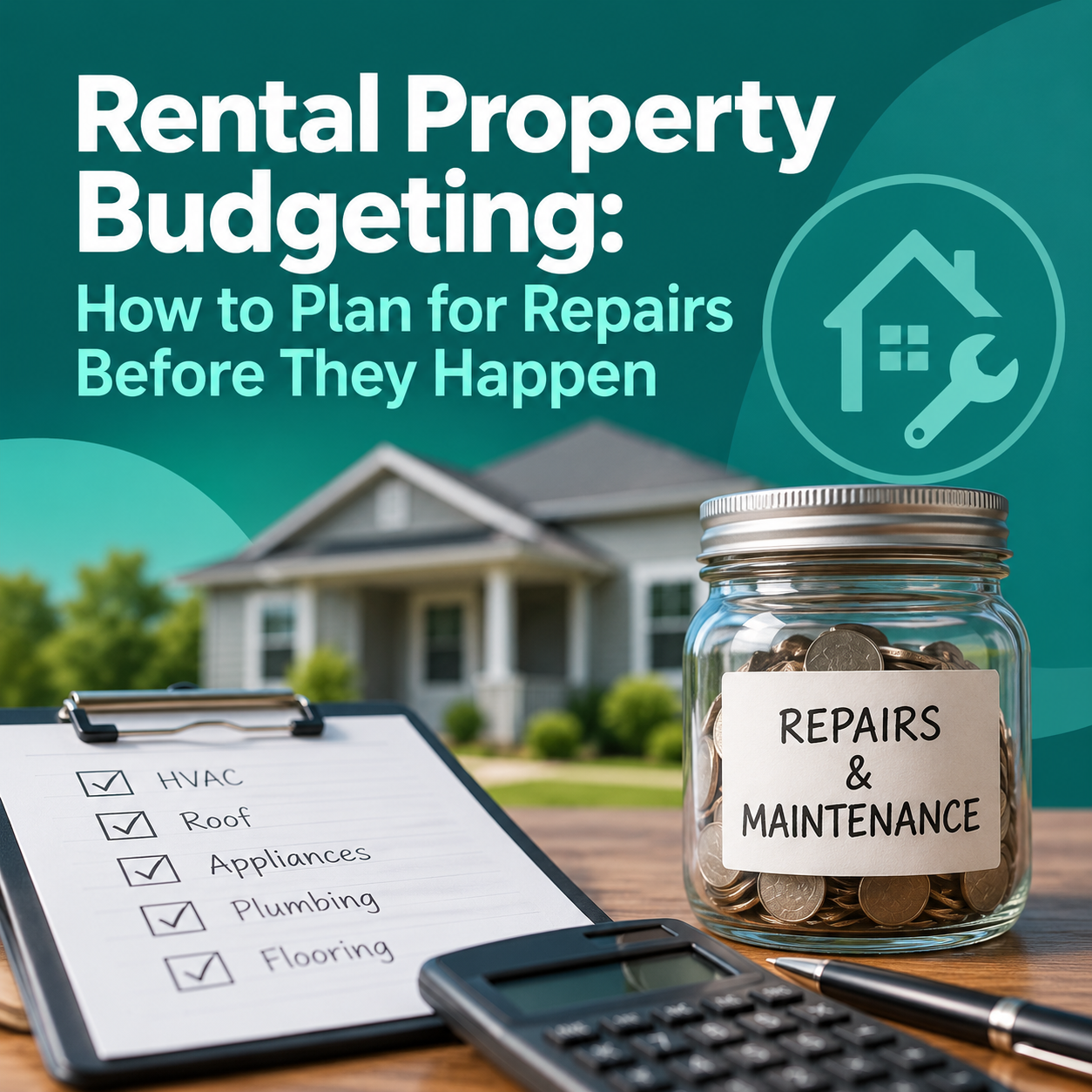
Owning a rental property comes with unexpected expenses. A leaking roof, broken water heater, or malfunctioning HVAC system can quickly turn a profitable month into a financial headache.
The problem isn't necessarily that repairs happen. It's that many landlords don't plan for them until something breaks.
Rental property budgeting helps you prepare for maintenance costs before they become emergencies. By setting aside money regularly, you can protect your cash flow, avoid unnecessary debt, and keep your property in good condition.
Here's how to build a realistic repair budget that works for your rental property.
Rental properties experience wear and tear, even with responsible tenants.
Appliances eventually stop working, plumbing systems develop problems, and roofs require maintenance or replacement.
Without a dedicated repair budget, these expenses can force landlords to use personal savings, credit cards, or money intended for other investments.
Planning ahead helps you:
A rental property that generates positive monthly cash flow can still become financially challenging if maintenance expenses aren't included in the budget.
The first step is determining how much money to reserve for repairs.
Although actual maintenance costs depend on your property's age, condition, location, and equipment, landlords commonly use a few budgeting guidelines.
One starting point is to budget approximately 1% of the property's value annually for maintenance.
For example, if your rental property is worth $300,000:
This doesn't mean you'll spend exactly $3,000 every year. Some years may require very little maintenance, while others may involve major repairs.
The goal is to build a reserve that can handle fluctuations.
Another approach is to allocate approximately 5%–10% of monthly rental income toward routine maintenance.
If your property generates $2,000 in monthly rent, that means setting aside roughly $100–$200 each month.
These percentages are planning estimates, not guarantees. Older properties or those with aging systems may require larger reserves.
Tip: Compare multiple budgeting methods and adjust your savings based on your property's actual maintenance history.
Not all property expenses happen on the same schedule.
Routine maintenance is generally predictable, while major repairs and replacements may occur only every several years.
For more accurate budgeting, separate them into two categories.
Routine maintenance expenses include HVAC servicing, gutter cleaning, minor plumbing repairs, pest control, landscaping maintenance, and small appliance fixes.
Major repairs and replacements include roof replacement, HVAC system replacement, major plumbing work, water heater replacement, and significant structural repairs.
Separating these expenses helps you avoid spending your entire maintenance reserve on smaller repairs when a major replacement may be approaching.
A repair reserve is money specifically set aside for future maintenance and unexpected property expenses.
Instead of waiting until something breaks, contribute to this fund every month.
For example, suppose you own a rental property generating $2,000 in monthly rent.
You decide to allocate $200 monthly toward maintenance and repairs.
This reserve can help cover repairs without immediately affecting your operating cash flow.
However, reserve contributions are not themselves deductible maintenance expenses. Record actual repair spending separately for accurate accounting.
One of the biggest rental property budgeting mistakes is ignoring equipment that will eventually need replacement.
Major systems have limited useful lives, and replacement costs can be significant.
Rather than waiting for a complete breakdown, estimate when each component may need replacement and start saving in advance.
For example, if an HVAC system is expected to require replacement in five years and the estimated replacement cost is $6,000, you would need to save approximately $100 per month.
Here's an illustrative replacement planning guide.
These are hypothetical costs and timelines, not national averages. Actual costs and remaining useful lives depend on the property's condition and local market. Monthly figures are rounded.
This approach is often called a capital replacement reserve.
It allows you to spread large future expenses across multiple years instead of absorbing the entire cost at once.
Your property's previous expenses can provide valuable information when creating a realistic budget.
Review maintenance transactions from the past 12–24 months, or longer if records are available.
Look for recurring costs, unexpected repairs, seasonal maintenance, and systems that frequently require attention.
For example, if your property consistently experiences plumbing problems, it may be wise to increase your repair reserve or investigate whether a larger repair would be more economical.
Historical data helps you move beyond generic budgeting rules and create a plan based on your property's actual needs.
Creating a maintenance budget is only the beginning. You also need to track what you're actually spending.
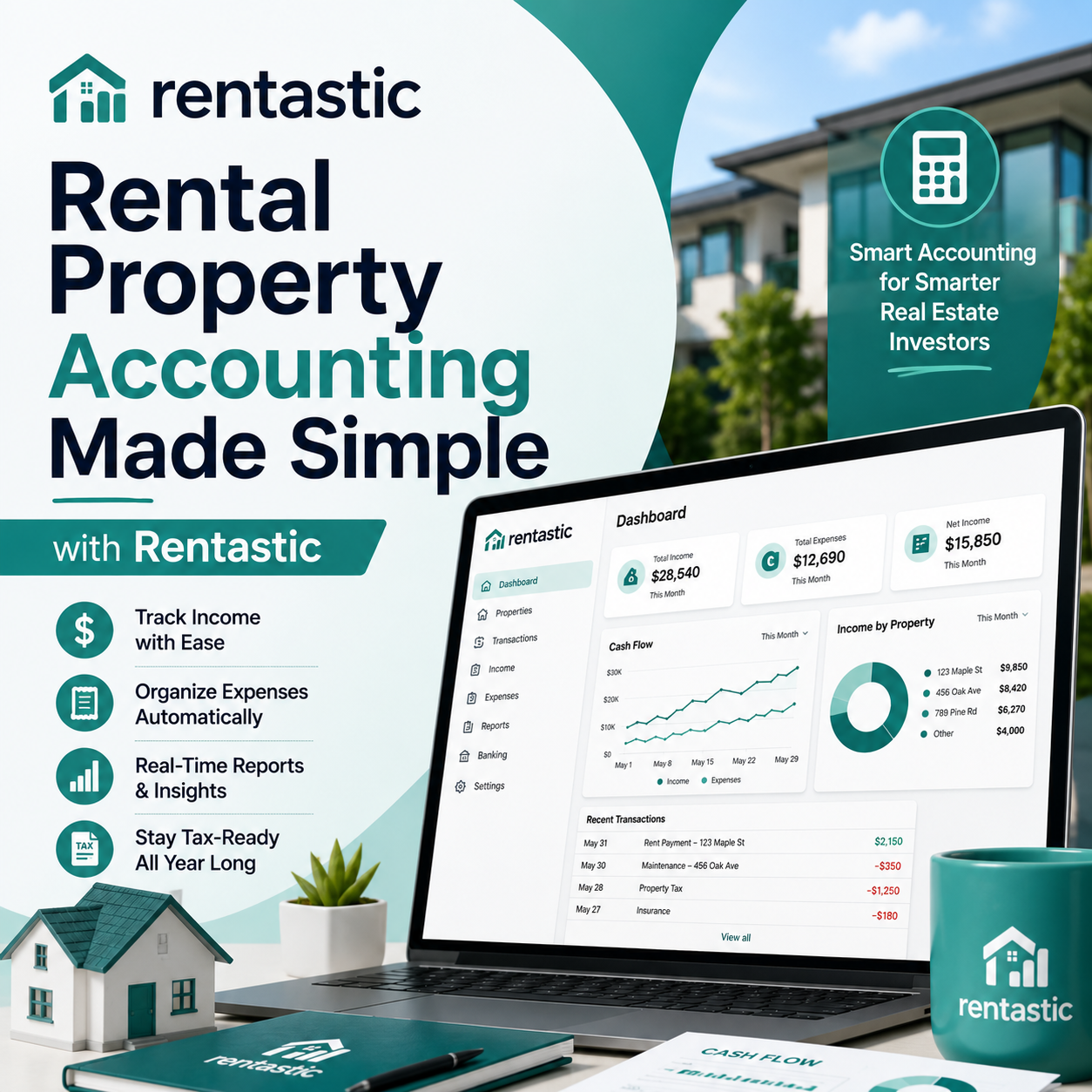
Using Rentastic, landlords can organize property-related financial transactions and review expenses for individual rental properties.
Instead of sorting through bank statements or manually calculating repair expenses, you can keep your financial records organized in one place.
With Rentastic, you can:
For example, if you budget $2,400 annually for routine maintenance but your recorded expenses reach $3,000, you'll know your spending exceeded the planned amount by $600.
That information can help you adjust next year's budget.
Keep in mind: Rentastic can help you track and analyze expenses, but setting aside funds and forecasting future replacement costs still require a budgeting plan.
Your rental property maintenance budget shouldn't remain the same forever.
Property expenses can change as buildings age, labor costs increase, and equipment approaches replacement.
Review your maintenance budget at least once per year, and preferably every quarter.
Ask yourself:
If your property consistently exceeds its maintenance budget, increase your monthly contributions or investigate the underlying causes.
A realistic budget should evolve with your property.
Even experienced landlords can underestimate repair expenses.
One common mistake is treating positive cash flow as money that's entirely available to spend. A property generating $500 in monthly cash flow may not actually provide $500 in sustainable discretionary income if future repairs haven't been accounted for.
Another mistake is using the same maintenance budget for every property. A newly renovated home and a 40-year-old rental may have very different maintenance requirements.
Landlords should also avoid confusing maintenance expenses with capital improvements. Routine repairs and major property improvements may receive different accounting and tax treatment.
Finally, don't wait until the reserve is completely depleted before rebuilding it. Continue making contributions whenever possible, and replenish funds after major repairs.
Rental property repairs are inevitable, but financial surprises don't have to be.
By estimating maintenance costs, building a dedicated reserve, and planning for major replacements, landlords can protect their cash flow and make rental property ownership more predictable.
The key is consistency.
Even modest monthly contributions can make a significant difference when an expensive repair eventually occurs.
And when you combine a realistic maintenance budget with organized financial tracking, you'll have a clearer understanding of your rental property's true profitability.
Take control of your rental property finances with Rentastic. Track expenses, organize transactions, and make more informed financial decisions for your rental portfolio.
RECENT POSTS


© 2025 Rentastic
Rentastic is registered as a trademark. Terms and conditions, features, support, pricing, and service options subject to change without notice.











































































Comments