
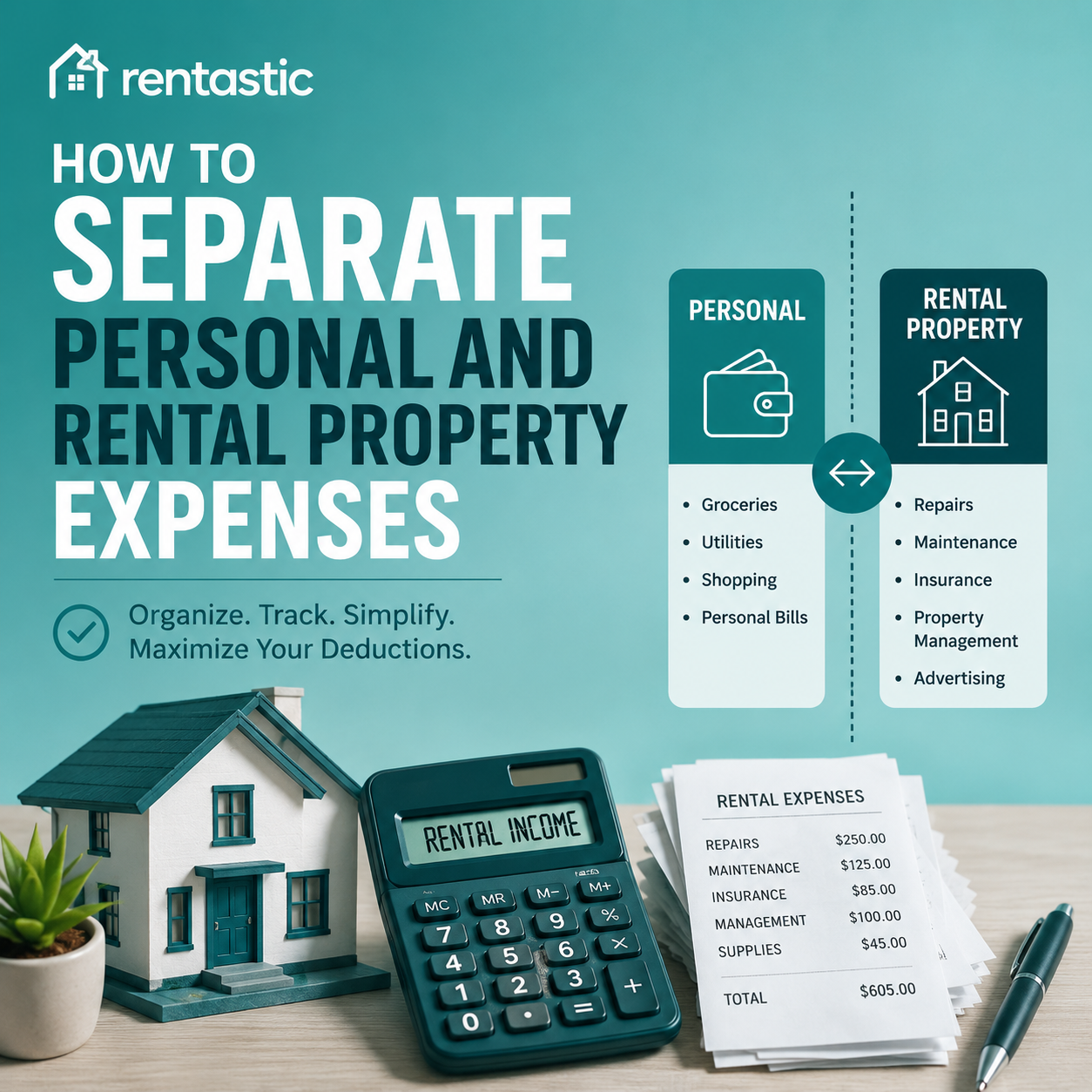
Managing a rental property means managing more than tenants and maintenance—you also need to keep your finances organized. One of the most important habits a landlord can develop is keeping personal and rental property expenses separate.
Mixing expenses can make bookkeeping confusing, complicate tax preparation, and make it harder to understand whether your rental property is actually profitable. A clear separation makes it easier to track cash flow, document deductions, and provide organized records to your accountant.
Here’s how to do it.
When rental and personal transactions are mixed together, determining which expenses belong to your property becomes much more difficult.
Keeping them separate can help you:
Even if you only own one rental property, establishing a separate financial system early can save significant time later.
One of the easiest ways to separate your finances is to use a dedicated bank account for your rental property activity.
Ideally, rental income should be deposited into this account, while rental-related expenses should be paid from it.
For example, you might use the account for:
Income
Expenses
This creates a much clearer financial trail than using the same checking account for groceries, personal bills, and rental expenses.
A separate credit card used exclusively for rental property expenses can make bookkeeping even easier.
Suppose you purchase a new faucet for your rental property. Paying with your rental credit card immediately creates a transaction associated with the rental business.
Using your personal card, on the other hand, means you will need to remember to identify and categorize the purchase later.
The key is consistency: avoid using the rental card for personal purchases whenever possible.
Separating accounts is helpful, but you still need an organized system for tracking transactions.
Record rental income and expenses throughout the year instead of waiting until tax season.
For each transaction, consider keeping track of:
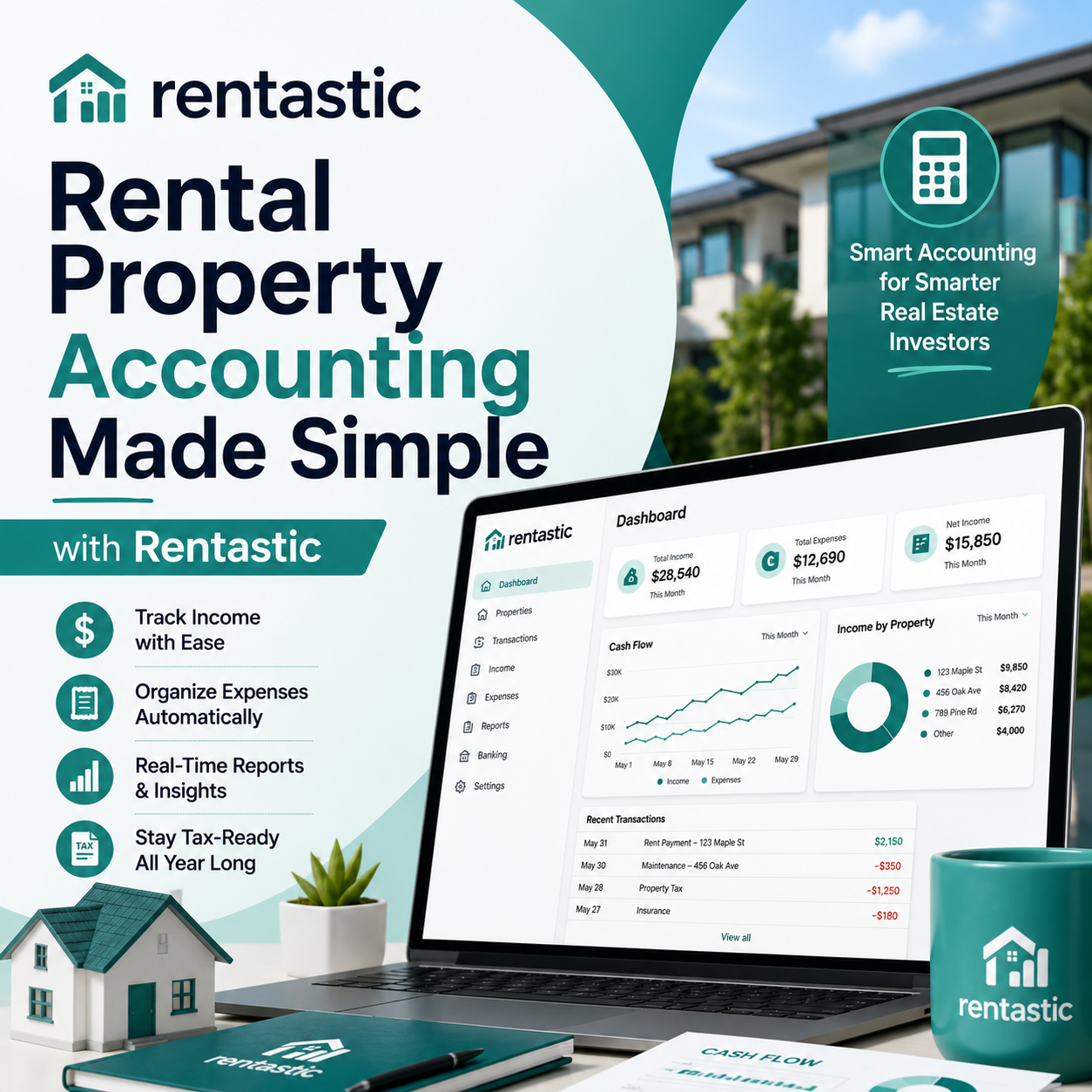
Rental property accounting software such as Rentastic can help landlords organize transactions, categorize income and expenses, and keep financial information associated with their rental properties.
A bank or credit card transaction tells you that money was spent, but it may not explain exactly why it was spent.
That's where receipts and supporting documentation become important.
Consider retaining documentation such as:
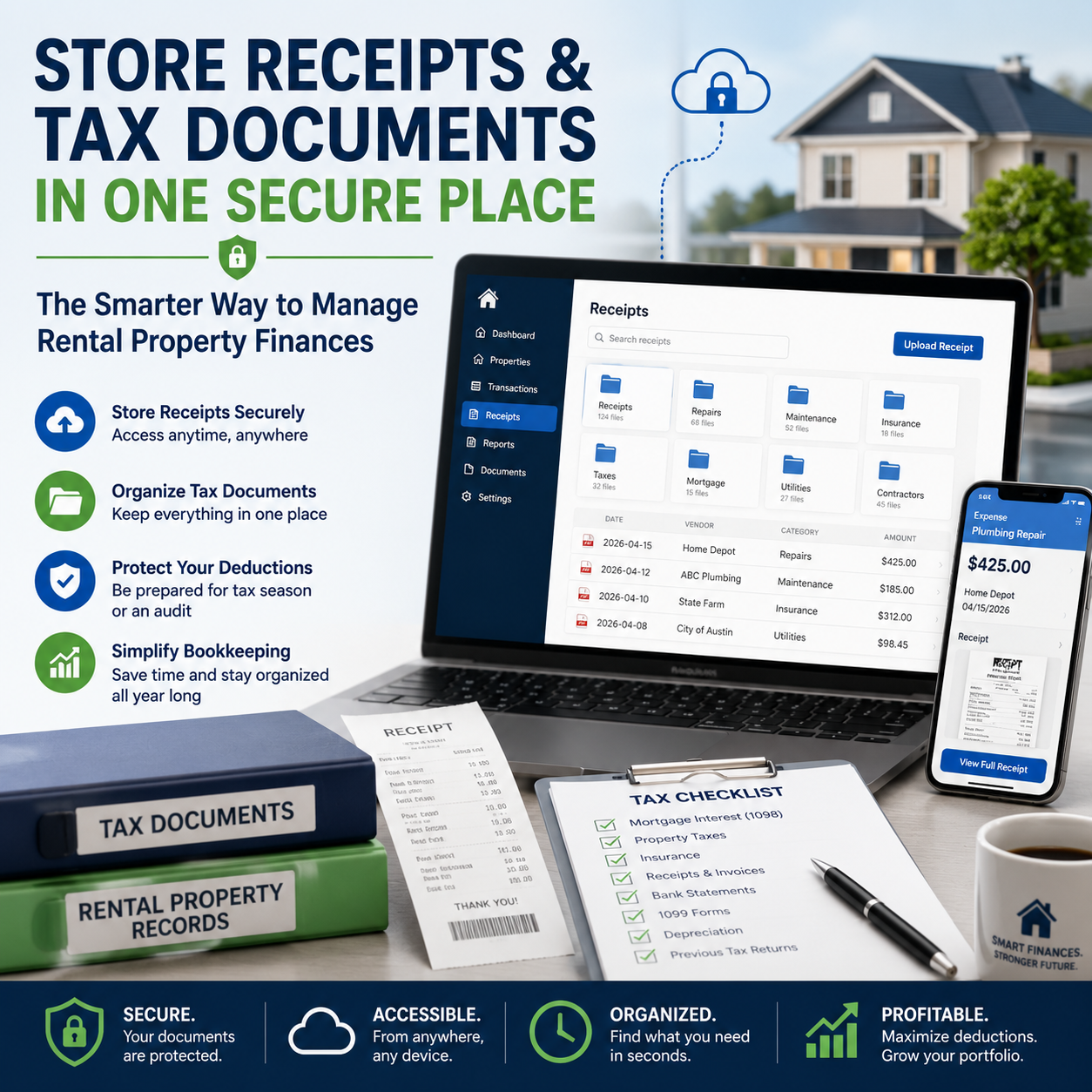
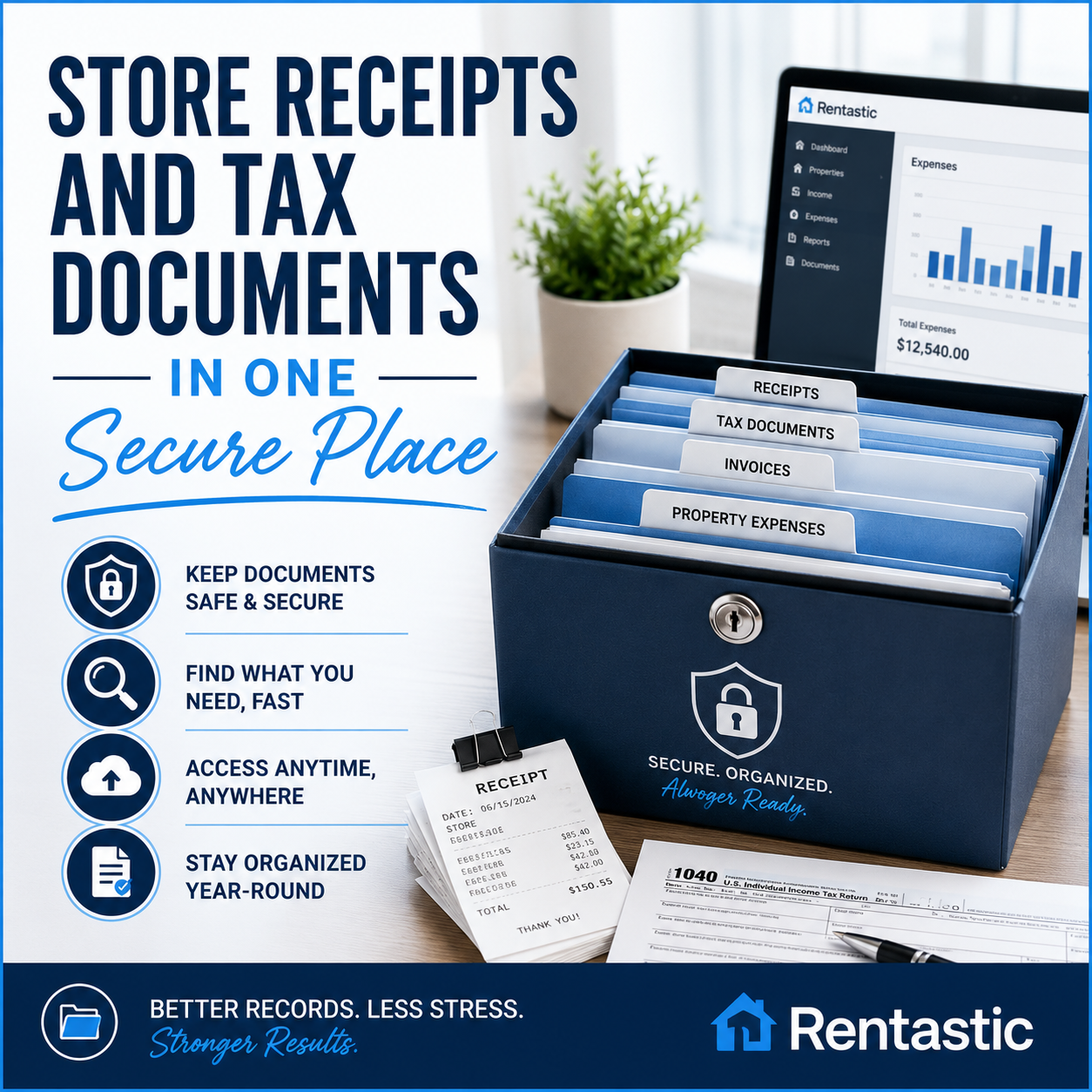
Keeping digital copies can make documents much easier to retrieve later, particularly when preparing your tax return or working with an accountant.
If you own multiple rental properties, separating personal and rental expenses is only the first step.
You should also track which property each expense belongs to.
For example, imagine you own three rentals and spend:
If everything is simply categorized as "Repairs," you know you spent $1,950—but you don't immediately know how much each property cost to operate.
Property-level tracking provides a much clearer picture of performance.
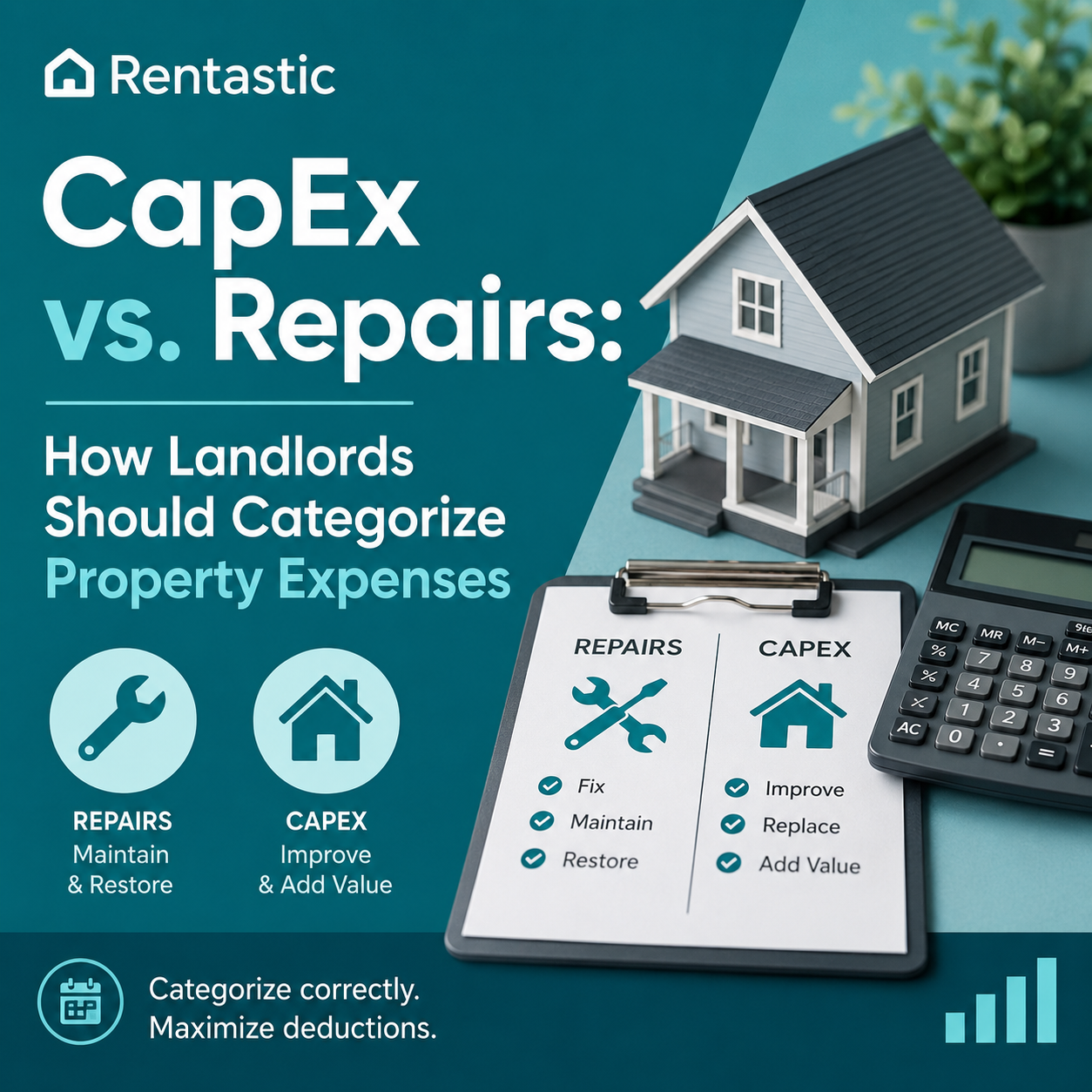
Not every expense associated with your rental should necessarily be treated the same way for tax purposes.
Some costs may qualify as ordinary rental operating expenses, while others may be considered improvements or capital expenditures that are handled differently.
For example, repairing a small section of damaged flooring may be treated differently from replacing all of the flooring throughout the property.
When you're uncertain about how an expense should be classified, keep the receipt and a detailed description and consult a qualified tax professional.
Some expenses may have both personal and rental purposes.
Common examples include:
Instead of automatically assigning the entire expense to your rental activity, document the portion associated with the rental business.
For example, if an expense is partly personal and partly related to managing your properties, your tax professional can help determine the appropriate treatment.
Separating finances works both ways.
Don't just avoid paying rental expenses from personal accounts—also avoid using your rental account to pay personal expenses.
Things like groceries, vacations, entertainment, and household purchases should generally remain outside your rental bookkeeping system.
The cleaner the separation, the easier your records are to understand.
Don't wait until the end of the year to discover missing or incorrectly categorized transactions.
Set aside time each month to review your rental finances.
Check that:
A short monthly review can prevent hours of cleanup during tax season.
Imagine a landlord receives $2,000 in monthly rent.
The rent goes into the same checking account used for their salary, groceries, car payment, subscriptions, and other household expenses.
During the month, they also pay $350 for a rental repair and $125 for landscaping.
At tax time, they now have to search through hundreds of personal transactions to identify the rental activity.
With a dedicated rental account, the picture becomes much simpler:
Rental income: $2,000
Repair: $350
Landscaping: $125
Net before other expenses: $1,525
The financial activity is easier to identify, categorize, and review.
Keeping personal and rental expenses separate becomes much easier when you have a system built specifically for rental property finances.
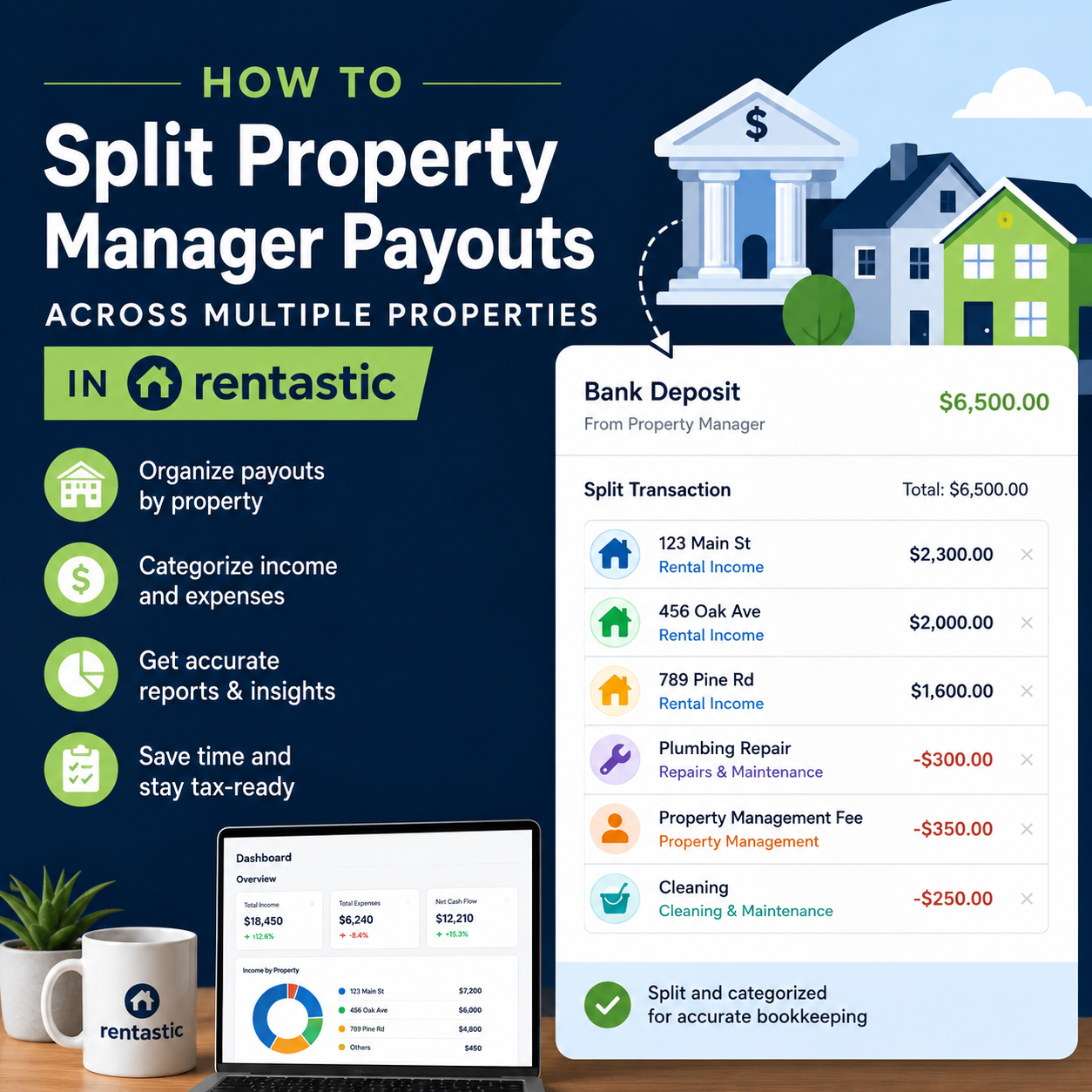
With Rentastic, landlords and real estate investors can organize rental income and expenses, connect financial accounts, categorize transactions, associate activity with properties, store financial records, and generate reports.
Instead of sorting through personal transactions at the end of the year, you can maintain organized rental property records throughout the year.
Better bookkeeping doesn't just make tax season easier—it also gives you a clearer picture of how your properties are performing.
Separating personal and rental property expenses is one of the simplest ways to improve your bookkeeping.
Start with a dedicated bank account, consider a separate credit card, track transactions consistently, retain your receipts, and review your records regularly.
The goal is simple: every rental transaction should be easy to identify, document, and connect to the appropriate property.
When your financial records are organized, it's easier to understand cash flow, prepare for taxes, and make better decisions about your rental portfolio.
This article is for general informational purposes and is not tax, accounting, or legal advice. Consult a qualified professional regarding your specific situation.


© 2025 Rentastic
Rentastic is registered as a trademark. Terms and conditions, features, support, pricing, and service options subject to change without notice.



















.png)





























.png)















Comments