
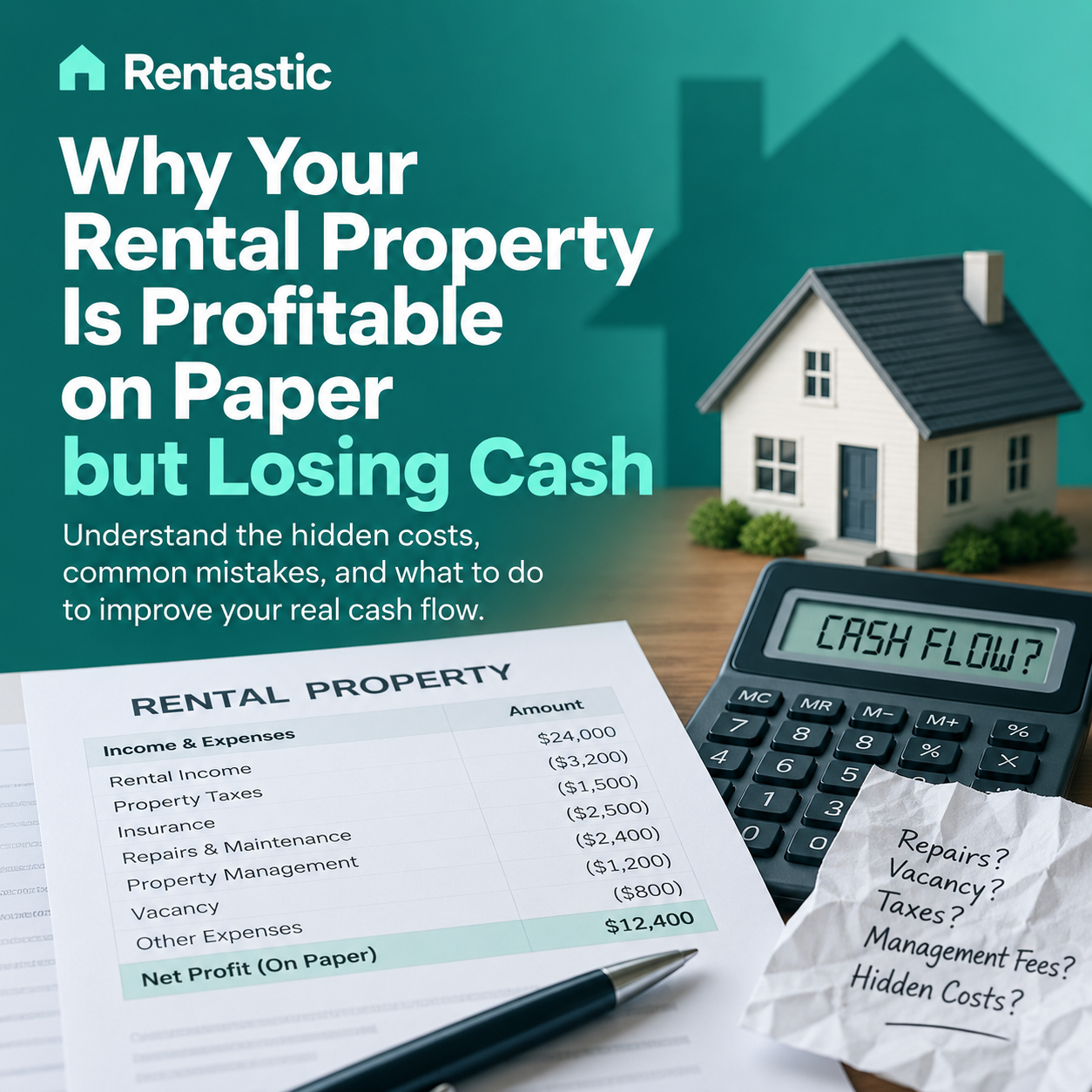
Your rental property looks profitable. The rent is higher than the mortgage payment, your property value may be increasing, and your tax return might even show favorable numbers.
So why does your bank account tell a different story?
This is a common problem for rental property owners. A property can appear profitable on paper while producing little cash—or even negative cash flow—in the real world.
Understanding the difference between profit, taxable income, and cash flow can help you identify where your money is going and make better decisions about your rental portfolio.
One of the biggest mistakes new real estate investors make is assuming that profit automatically means positive cash flow.
They measure profitability using a simple calculation:
Rental Income − Expenses = Profit
While that calculation is useful, your actual finances can be more complicated.
Cash flow measures the money that actually comes into and leaves your accounts during a specific period.
A property may look profitable based on an annual report but still create cash shortages because of loan payments, large repairs, vacancies, capital improvements, or expenses that weren't properly accounted for.
Let's look at some of the most common reasons.
Suppose your tenant pays $2,000 per month and your mortgage payment is $1,400.
At first glance, you might think:
$2,000 − $1,400 = $600 monthly profit
But that $600 isn't necessarily profit.
You may also have:
Once those costs are included, your $600 monthly margin could quickly disappear.
This is why landlords should track all property-related expenses, not just their largest bills.
Mortgage payments can make rental property accounting confusing.
A typical mortgage payment includes both principal and interest.
Interest is generally an expense associated with financing the property. Principal, however, reduces the outstanding loan balance and builds equity.
That means money used to pay down principal leaves your bank account even though it isn't treated like an ordinary operating expense.
For example, if your mortgage payment is $1,500 and $500 goes toward principal, the full $1,500 affects your available cash.
This is one reason your cash balance may feel lower than your income-and-expense report suggests.
Rental properties don't generate perfectly consistent expenses every month.
You could have six months with very few repairs and then suddenly need to replace an HVAC system, water heater, roof, or major appliance.
Imagine your rental generates $400 in positive monthly cash flow.
That's:
$400 × 12 = $4,800 per year
Now imagine you unexpectedly spend $5,500 on a major repair.
Your property may have looked healthy throughout the year, but that single expense can consume more than an entire year's worth of cash flow.
Maintaining a rental property reserve can help prevent these expenses from creating a personal cash-flow emergency.
Vacancy is one of the easiest expenses to underestimate because there isn't always a bill associated with it.
Instead, you simply stop receiving rent.
Consider a property renting for $2,000 per month.
If it sits vacant for one month, you've lost $2,000 in potential rental income. But many of your expenses continue.
You may still need to pay the:
You might also have cleaning, advertising, repairs, or tenant turnover costs before the next tenant moves in.
A property that appears profitable at 100% occupancy can perform very differently after realistic vacancy assumptions are included.
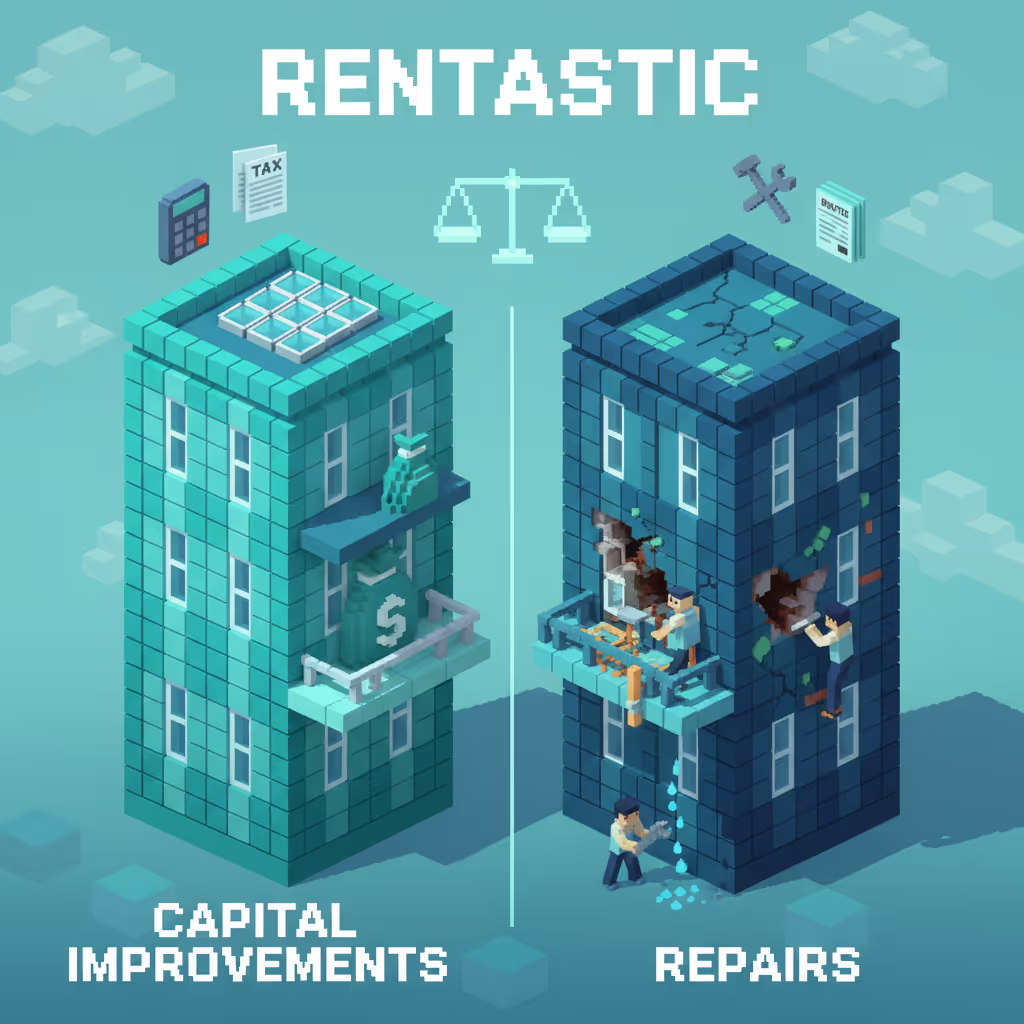
Not every property expense is a routine repair.
Replacing a roof, installing a new HVAC system, renovating a kitchen, or making another substantial improvement can require thousands of dollars upfront.
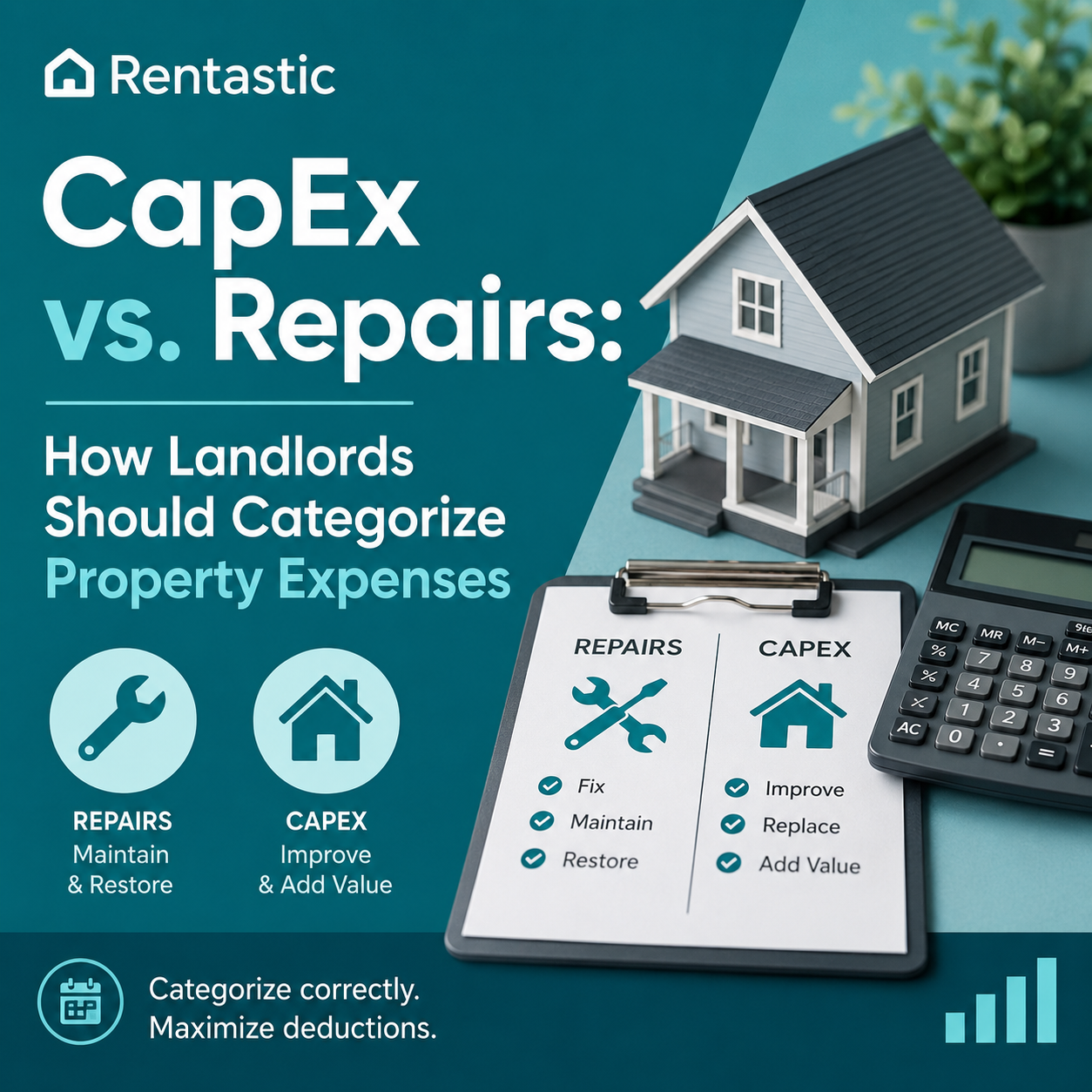
These improvements may add value to your property and may be treated differently from ordinary repairs for tax purposes.
But regardless of their accounting treatment, the immediate impact on your bank account is real.
If you spend $15,000 renovating a property, that's $15,000 less cash available today—even if the investment benefits you for years.
It's easy to notice a $4,000 repair.
It's harder to notice dozens of smaller expenses quietly reducing your returns.
For example:
Individually, these expenses may seem insignificant.
Together, they can consume thousands of dollars each year.
Accurate rental property bookkeeping helps reveal these patterns before they become a major problem.
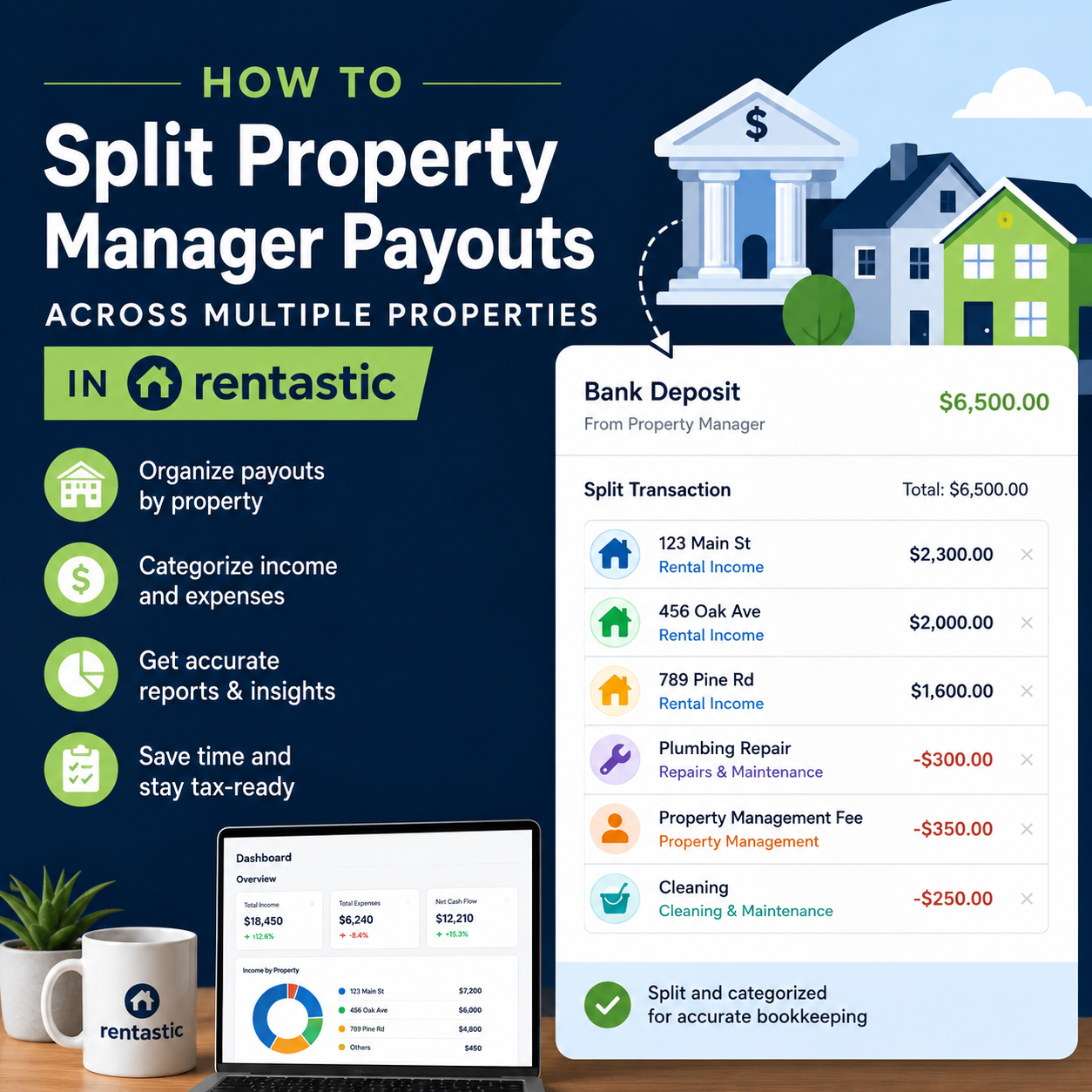
If you use a property management company, the amount deposited into your bank account may already have expenses deducted.
For example:
Rent collected: $2,000
Management fee: $200
Bank deposit: $1,800
If you only look at the deposit, you may lose visibility into the property's true gross income and management costs.
Tracking income and expenses separately can give you a clearer picture of how the property is actually performing.
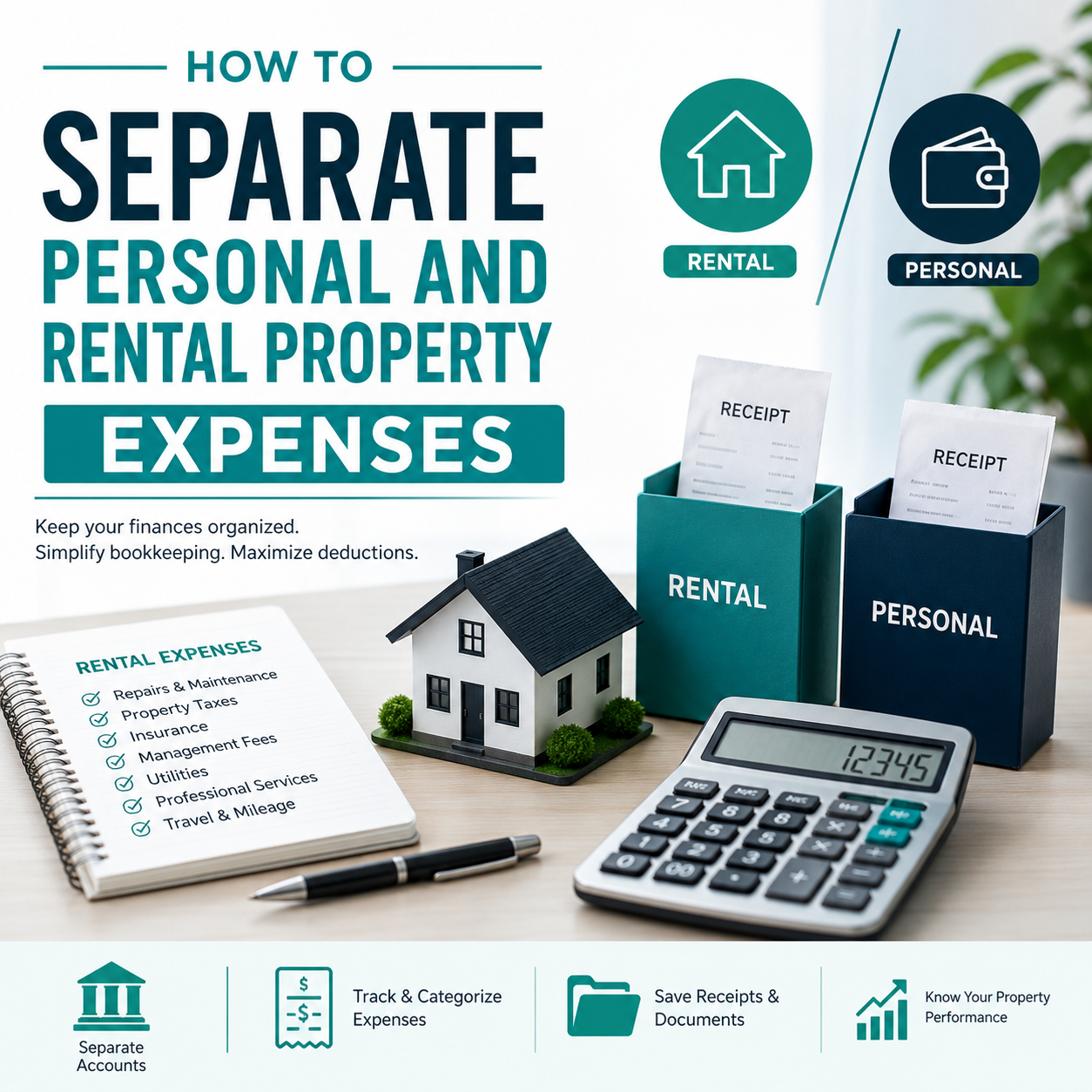
Mixing personal and rental transactions makes it much harder to understand cash flow.
If rental income goes into your personal checking account and property expenses come from several different credit cards, determining whether your property is actually profitable becomes difficult.
Keeping rental finances organized can make it easier to answer a simple but important question:
How much money is this property actually making me?
Separate bank accounts and consistent transaction categorization can make your financial reports significantly easier to understand.
Taxes add another layer of complexity.
Depreciation, for example, can reduce taxable rental income without requiring you to spend that amount of cash during the year.
This can create situations where your tax return shows a relatively small rental profit—or even a tax loss—while the property produces positive cash flow.
The opposite can also happen.
Large principal payments or capital expenditures can reduce your available cash without reducing taxable income dollar-for-dollar in the same year.
That's why landlords shouldn't rely exclusively on taxable income when evaluating investment performance.
Consider a property generating $2,500 per month in rent, or $30,000 annually.
Annual cash expenses might look like this:
ItemAnnual AmountRental Income$30,000Mortgage Payments-$16,800Property Taxes-$3,200Insurance-$1,500Repairs & Maintenance-$2,500Property Management-$2,400HOA & Other Expenses-$1,200
That leaves approximately:
$2,400 in annual cash flow
or just:
$200 per month
A landlord looking only at the difference between the $2,500 rent and $1,400 mortgage might have expected $1,100 per month.
That's a huge difference.
And one unexpected $3,000 repair could turn the property's positive annual cash flow negative.
You don't necessarily need to make more rental income to improve your property's performance.
First, you need visibility.
Review your rental property's:
Income: Track gross rent and other property-related income rather than relying solely on the amount deposited into your bank account.
Operating expenses: Categorize repairs, insurance, taxes, management fees, utilities, HOA fees, professional services, and other costs.
Debt payments: Understand how much of your mortgage payment goes toward principal versus interest.
Capital expenditures: Track major improvements separately from ordinary operating expenses.
Vacancy: Measure lost income and turnover expenses rather than assuming your property will remain occupied 100% of the time.
Cash flow: Regularly compare the cash entering your accounts with the cash leaving them.
Rental property profitability isn't just about how much rent you collect.
It's about understanding where your money goes.
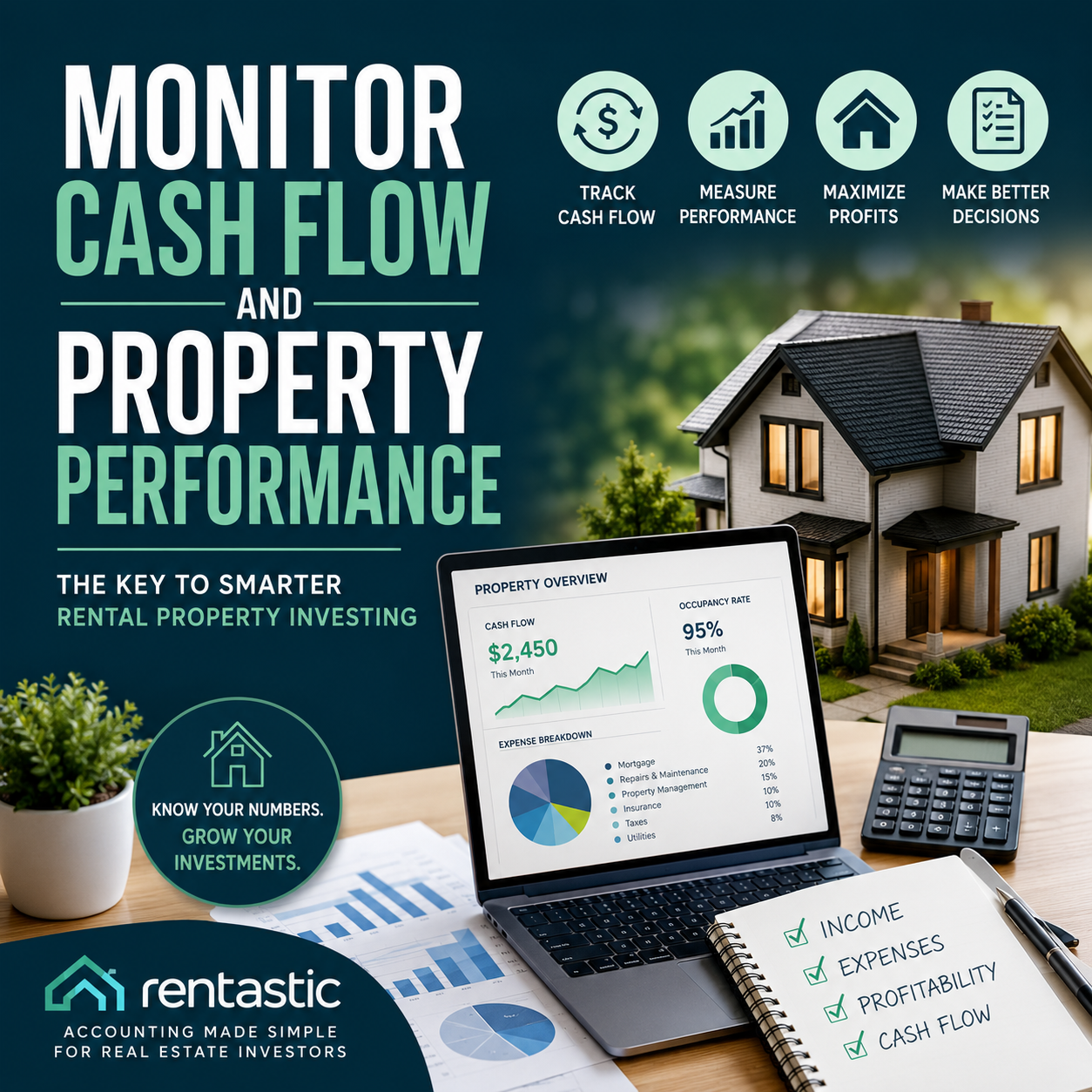
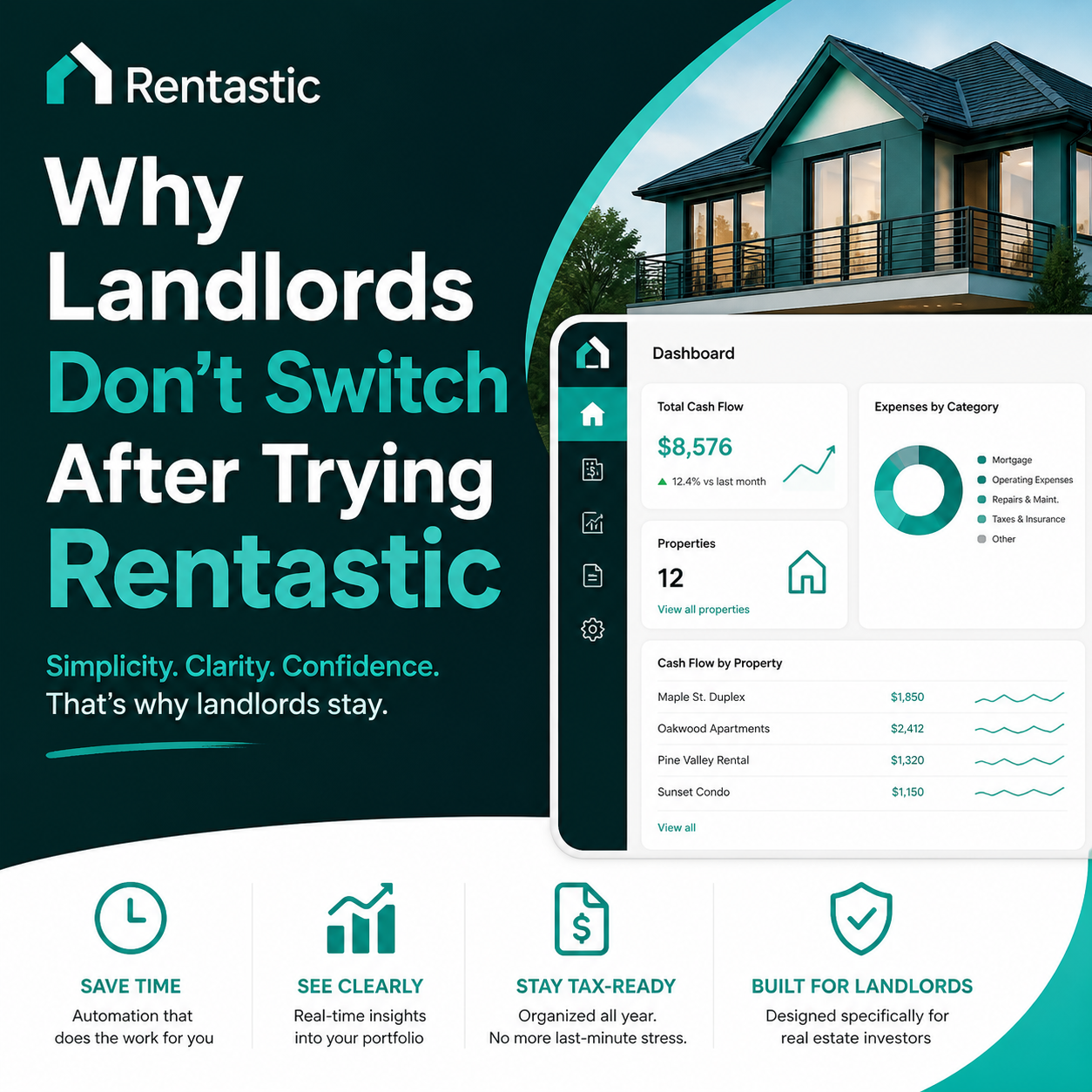
Rentastic helps landlords and real estate investors organize rental income and expenses, categorize transactions, track property-level finances, and generate reports that provide a clearer picture of their rental portfolio.
Instead of waiting until tax season to discover where your money went, you can keep your rental finances organized throughout the year.
When your rental property looks profitable but your bank account keeps shrinking, the answer is usually somewhere in the numbers.
The sooner you find it, the sooner you can make better decisions about your property.
A profitable rental property and a cash-flow-positive rental property are not always the same thing.
Mortgage principal, vacancies, repairs, capital improvements, management fees, and overlooked recurring expenses can all cause a property to consume more cash than expected.
The key is to stop looking at rent and mortgage payments alone.
Track your true income, true expenses, and actual cash flow.
Because ultimately, a rental property's financial performance isn't determined by what it looks like on paper—it's determined by what the numbers actually show.


© 2025 Rentastic
Rentastic is registered as a trademark. Terms and conditions, features, support, pricing, and service options subject to change without notice.













.png)



























.png)













Comments