
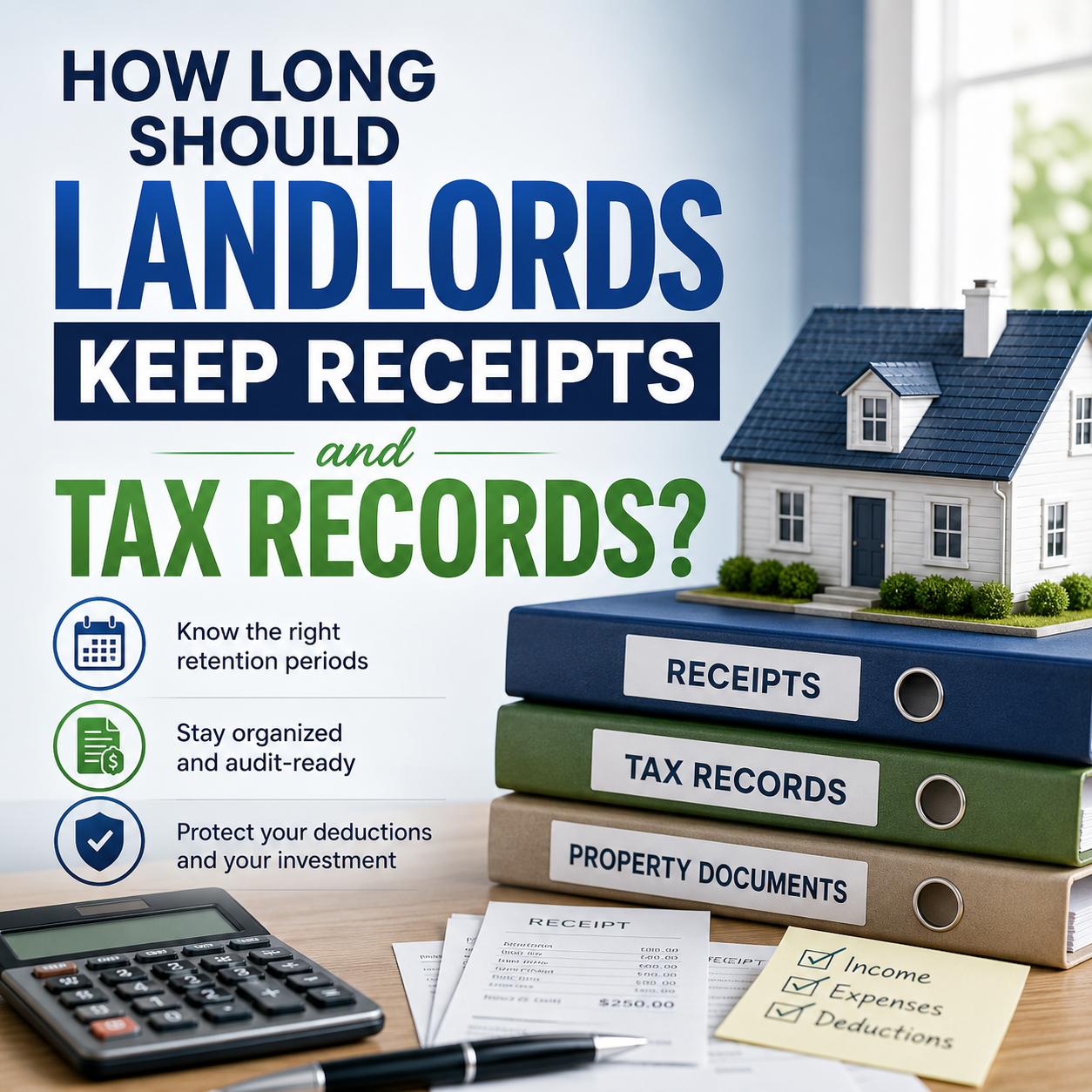
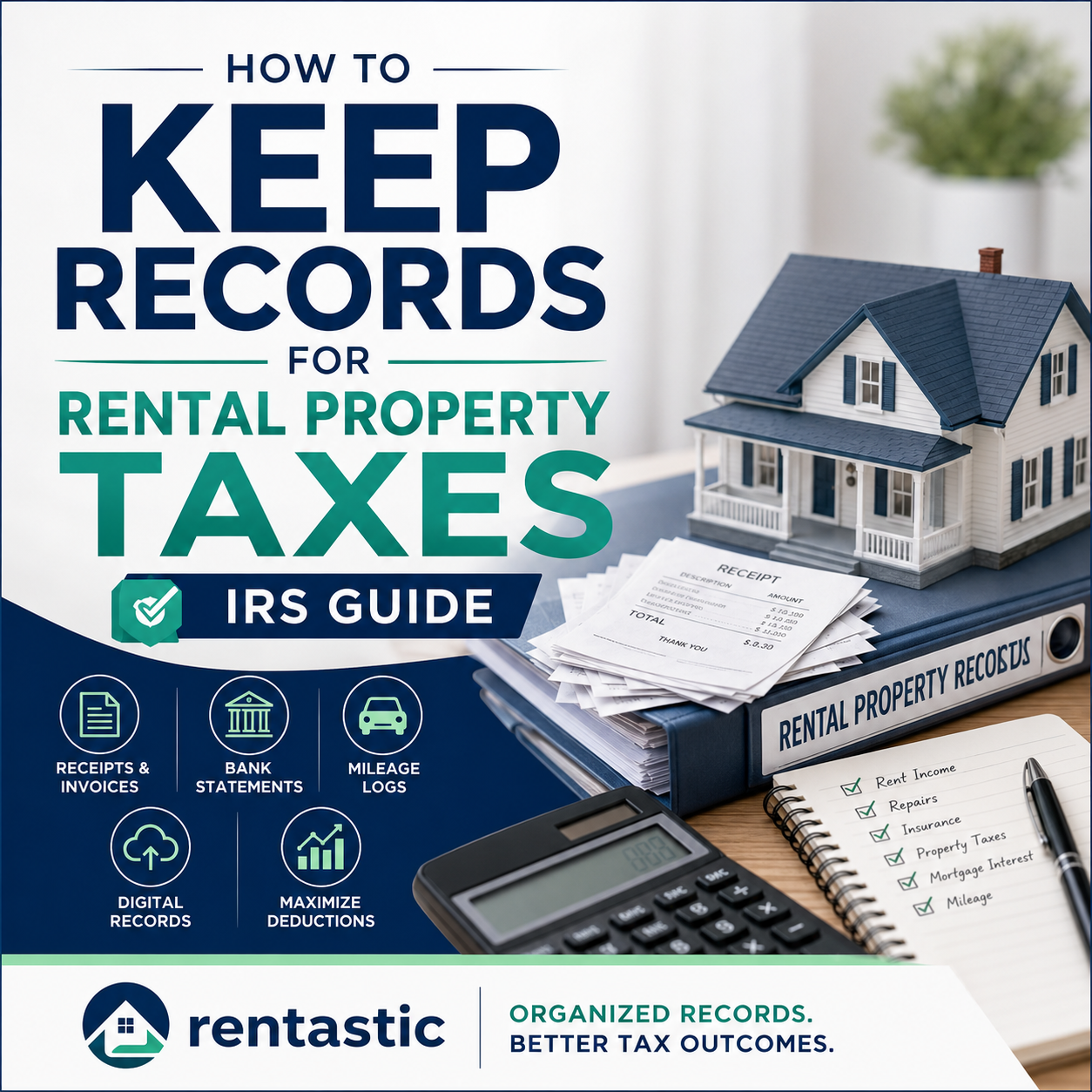
Managing a rental property creates a steady stream of receipts, invoices, bank statements, tax forms, and other financial documents. Keeping these records organized is important not only for tax preparation but also for supporting deductions and tracking the financial performance of your properties.
But how long do landlords actually need to keep all those records?
While the right retention period can depend on the document and your individual tax situation, landlords should generally keep important tax and financial records for at least three to seven years, with certain property-related documents kept for much longer.
Accurate records help you prove the income you received and the expenses you deducted on your tax return.
Rental property records may also help you:
Good record keeping also makes it easier to understand whether each rental property is actually generating a profit.
For many federal tax records, three years is a common minimum starting point because the IRS generally has three years to audit a return after it is filed.
However, there are circumstances where the IRS can review returns further back. Because rental properties often involve depreciation, improvements, loans, and eventual property sales, many landlords choose to keep tax records for seven years as a more conservative approach.
Some documents should be kept even longer.
Landlords should generally consider keeping supporting documents for income and expenses reported on their tax returns.
Examples include:
These documents can help establish that an expense was legitimate and related to your rental activity.
Some records shouldn't be discarded after seven years.
Documents related to purchasing, improving, depreciating, or selling a property can affect its tax basis and the calculation of capital gains or losses.
Consider keeping documents such as:
These documents should generally be retained for as long as you own the property and for the appropriate tax-record retention period after you sell it.
For example, if you replace a roof, remodel a kitchen, or install a new HVAC system, those costs may affect the property's adjusted basis. Years later, those records could become important when calculating taxes after a sale.
Depreciation is especially important for rental property owners.
Landlords typically depreciate residential rental buildings and certain improvements over multiple years. Because depreciation can affect both annual deductions and taxes when a property is sold, you should keep depreciation-related records throughout the ownership of the property.
These may include:
Don't discard these records simply because the original expense happened many years ago.
Yes. Digital record keeping can make managing rental property documentation significantly easier.
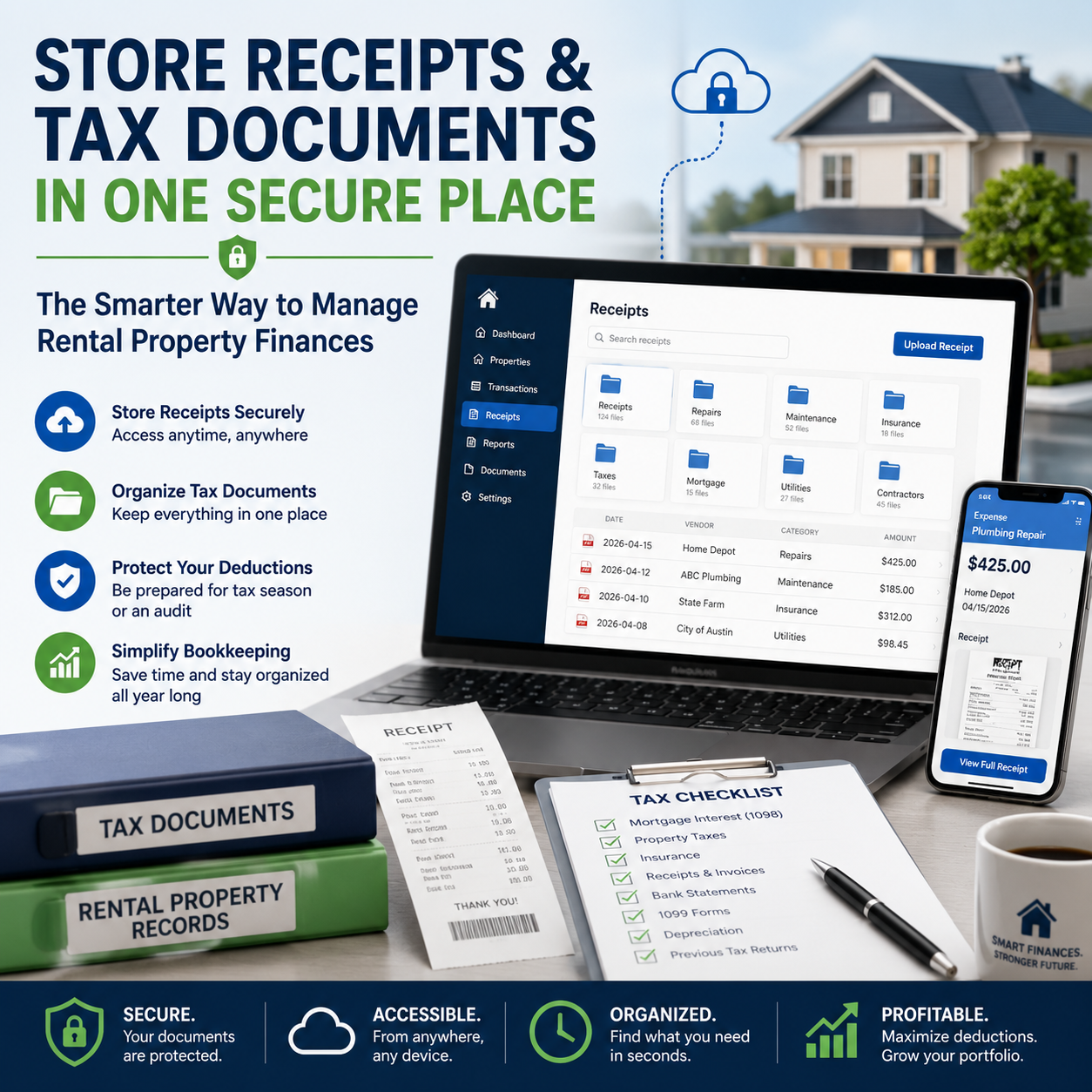
Instead of keeping boxes filled with paper receipts, landlords can organize digital copies of receipts, invoices, and other supporting documents.
A good system should make it easy to connect documentation with the corresponding transaction and property.
For example:
Roof repair → Property A → Repair Expense → Receipt
This makes records easier to locate when preparing taxes or answering questions from your accountant.
Paper receipts can fade surprisingly quickly, especially thermal receipts from hardware stores, gas stations, and other retailers.
A good habit is to digitize important receipts soon after receiving them.
You can photograph or scan the receipt and record important information such as:
The easier your documentation is to understand later, the more useful it becomes.
The biggest challenge for many landlords isn't knowing which documents to save—it's keeping everything organized throughout the year.
Rather than waiting until tax season, establish a simple process for recording rental income and expenses as they occur.
Using rental property bookkeeping software such as Rentastic can help landlords organize transactions, receipts, properties, and financial reports in one place.
This can make it easier to review your finances throughout the year and prepare organized information when tax season arrives.
So, how long should landlords keep receipts and tax records?
For many records, keeping documentation for at least three years is a useful minimum, while retaining important tax records for up to seven years can provide additional protection.
However, records related to your property's purchase price, cost basis, depreciation, capital improvements, and sale should generally be kept throughout your ownership of the property and beyond the sale for the applicable tax-record retention period.
A simple rule to remember is:
If a document could affect your property's current or future taxes, don't rush to throw it away.
Keeping organized records today can make tax preparation easier, support your deductions, and save considerable time when you eventually sell the property.
This article is for general educational purposes and is not tax or legal advice. Record-retention requirements can vary depending on your circumstances, so consider consulting a qualified tax professional or CPA for guidance specific to your situation.
RECENT POSTS


© 2025 Rentastic
Rentastic is registered as a trademark. Terms and conditions, features, support, pricing, and service options subject to change without notice.

















.png)

























.png)








Comments