
An empty rental property may look like a simple loss of one month’s rent. But for landlords, the true cost of vacancy can be much higher.
Your mortgage payment doesn’t stop. Property taxes continue. Insurance premiums are still due. Utilities, maintenance, advertising, cleaning, and tenant turnover costs can keep adding up—even while the property generates zero rental income.
Understanding the real cost of vacancy can help landlords set better cash reserves, evaluate property performance, and make smarter decisions about pricing and tenant retention.
A rental vacancy occurs whenever a property or unit is available but is not generating rental income.
Vacancies commonly happen when:
Even a well-performing rental can experience occasional vacancy. The important question is not simply whether a vacancy happens, but how much each vacant month actually costs you.
Start with the easiest number: monthly rent.
Suppose your property normally rents for $2,000 per month.
If it sits vacant for one full month, you immediately lose:
$2,000 in potential rental income.
But that is only the beginning.
The property still has expenses, which means the financial impact is greater than the rent you failed to collect.
Most rental property expenses do not disappear when the tenant moves out.
Depending on the property, you may still have to pay for:
Mortgage payments: Principal and interest remain due regardless of occupancy.
Property taxes: Taxes continue accumulating whether the property is occupied or vacant.
Insurance: Landlord insurance premiums still need to be paid, and landlords should check whether extended vacancies affect their coverage.
HOA fees: If the property belongs to an HOA, those fees generally continue.
Utilities: Landlords may need to cover electricity, water, gas, trash, or other utilities between tenants.
Maintenance: Landscaping, pest control, security, inspections, and routine maintenance may still be necessary.
This is why vacancy can create a double financial impact: you lose income while continuing to pay expenses.
Consider a simplified example.
A rental property generates $2,000 in monthly rent and normally has the following monthly or allocated expenses:
ExpenseAmountLost rental income$2,000Mortgage$1,050Property taxes$300Insurance$125HOA$100Utilities$150Lawn/maintenance$100
At first glance, you might say the vacancy cost $2,000 because that is the rent you did not receive.
From a cash-flow perspective, however, the landlord also has $1,825 of property-related cash obligations during that month.
That means the landlord goes from receiving $2,000 in rent to receiving $0, while still needing cash to cover ongoing expenses.
And we haven't included turnover costs yet.
Vacancy often happens alongside tenant turnover, and turnover comes with its own expenses.
You might need to pay for:
Imagine spending another $900 preparing the property for the next tenant.
Suddenly, one tenant transition has created a much larger financial hit than the monthly rent alone suggests.
That is why landlords should evaluate vacancy and turnover together rather than treating them as completely separate events.
One vacant month might not sound significant when you look at an investment over an entire year.
But consider a property renting for $2,000 per month.
With full occupancy, potential annual rent is:
$2,000 × 12 = $24,000
With one vacant month:
$2,000 × 11 = $22,000
You have already lost about 8.3% of your potential annual rental income before considering additional turnover expenses.
Two vacant months would reduce potential rental income by roughly 16.7%.
For a property operating on relatively thin margins, that difference can turn a profitable year into a disappointing one.
Vacancy can also change several metrics landlords and investors use to evaluate rental properties.
Lower rental income means less annual cash flow. If your original investment stays the same while cash flow decreases, your cash-on-cash return can fall.
Vacancy can reduce effective rental income and therefore lower net operating income (NOI).
Because cap rate is based on NOI relative to property value, lower NOI can negatively affect the property's calculated cap rate.
For landlords with multiple properties, one vacancy may be absorbed by income from other rentals. Several simultaneous vacancies, however, can put significant pressure on portfolio cash flow.
This is why tracking each property individually can be just as important as looking at your portfolio as a whole.
Sometimes landlords hesitate to lower rent because they do not want to sacrifice monthly income.
But keeping the rent too high can be more expensive if it causes the property to remain vacant.
Suppose you want $2,000 per month, but qualified tenants are willing to pay around $1,900.
Accepting $1,900 means giving up:
$100 × 12 = $1,200 per year
But holding out for $2,000 and experiencing one additional month of vacancy could mean losing $2,000 in rent alone.
The exact decision depends on your market, expenses, demand, lease terms, and expected time to find a tenant. Still, it illustrates an important principle:
The highest advertised rent does not always produce the highest annual return.
Finding good tenants is important. Keeping good tenants can be just as valuable.
When a reliable tenant renews, you may avoid many costs associated with turnover, including advertising, cleaning, repairs, screening, leasing work, and vacant days.
That does not mean landlords should avoid reasonable rent increases or accept unfavorable lease terms simply to prevent turnover.
Instead, tenant retention should be treated as part of the property's financial strategy.
A stable tenant who pays consistently and takes care of the property may provide value beyond the monthly rent amount.
Vacancy should not automatically be treated as an unexpected financial emergency.
It can be incorporated into your planning.
For example, an investor could set aside a percentage of rental income as a vacancy reserve. The appropriate amount will vary based on factors such as:
A property with strong demand and long-term tenants may require different assumptions than a short-term or frequently turning rental.
Vacancy is one reason maintaining adequate rental property reserves matters.
Your reserve can help cover the mortgage, utilities, maintenance, repairs, and other obligations when rental income temporarily stops.
Without reserves, even a profitable property can create financial stress when a tenant unexpectedly leaves.
Instead of thinking only about monthly profit, landlords should consider whether the property has enough liquidity to handle periods when income drops.
Vacancy becomes easier to manage when you understand the property's actual financial performance.
Instead of focusing only on rent collected, track:
Income: Rent and other property-related income.
Operating expenses: Insurance, taxes, repairs, maintenance, utilities, management, HOA fees, and other costs.
Cash flow: The amount remaining after cash expenses.
Vacancy: How often the property sits empty and how much potential rent is lost.
Turnover costs: Cleaning, repairs, advertising, leasing, and other expenses associated with replacing tenants.
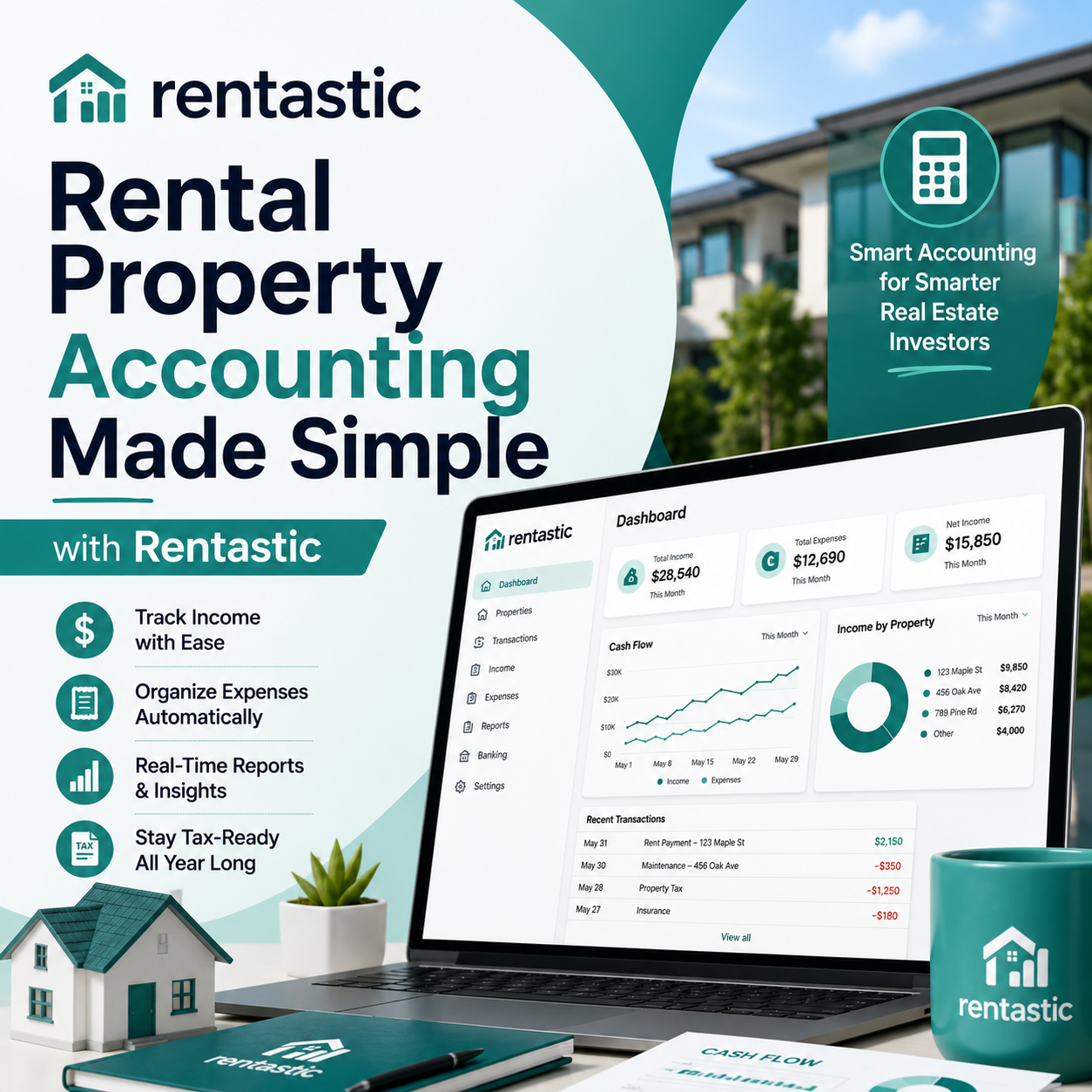
Tools like Rentastic can help landlords organize rental income and expenses by property, making it easier to understand how vacancies and unexpected costs affect overall performance.
You cannot eliminate every vacancy, but you can reduce its financial impact by preparing ahead.
Start marketing before the current tenant moves out when appropriate. Keep the property well maintained so fewer repairs are required between tenants. Monitor comparable rentals so your asking rent remains competitive. Respond quickly to qualified applicants and streamline your screening and leasing process.
Most importantly, pay attention to your numbers.
If your property regularly takes 30, 45, or 60 days to rent, that pattern should be included in your investment assumptions rather than treated as a surprise each year.
One empty month can cost much more than one month of rent.
The landlord loses rental income while mortgage payments, taxes, insurance, maintenance, utilities, and other expenses may continue. Add cleaning, repairs, advertising, and leasing costs, and tenant turnover can create a substantial hit to annual cash flow.
For rental property investors, the goal should not simply be maximizing monthly rent.
It should be maximizing sustainable annual performance.
By tracking vacancy, maintaining cash reserves, monitoring property expenses, and understanding your true cash flow, you can make better decisions about rent pricing, tenant retention, and your overall rental strategy.
Know where your rental income is going. Track your properties, expenses, and cash flow with Rentastic and make decisions based on the numbers—not guesswork.
RECENT POSTS


© 2025 Rentastic
Rentastic is registered as a trademark. Terms and conditions, features, support, pricing, and service options subject to change without notice.




























.png)






























.png)









Comments