
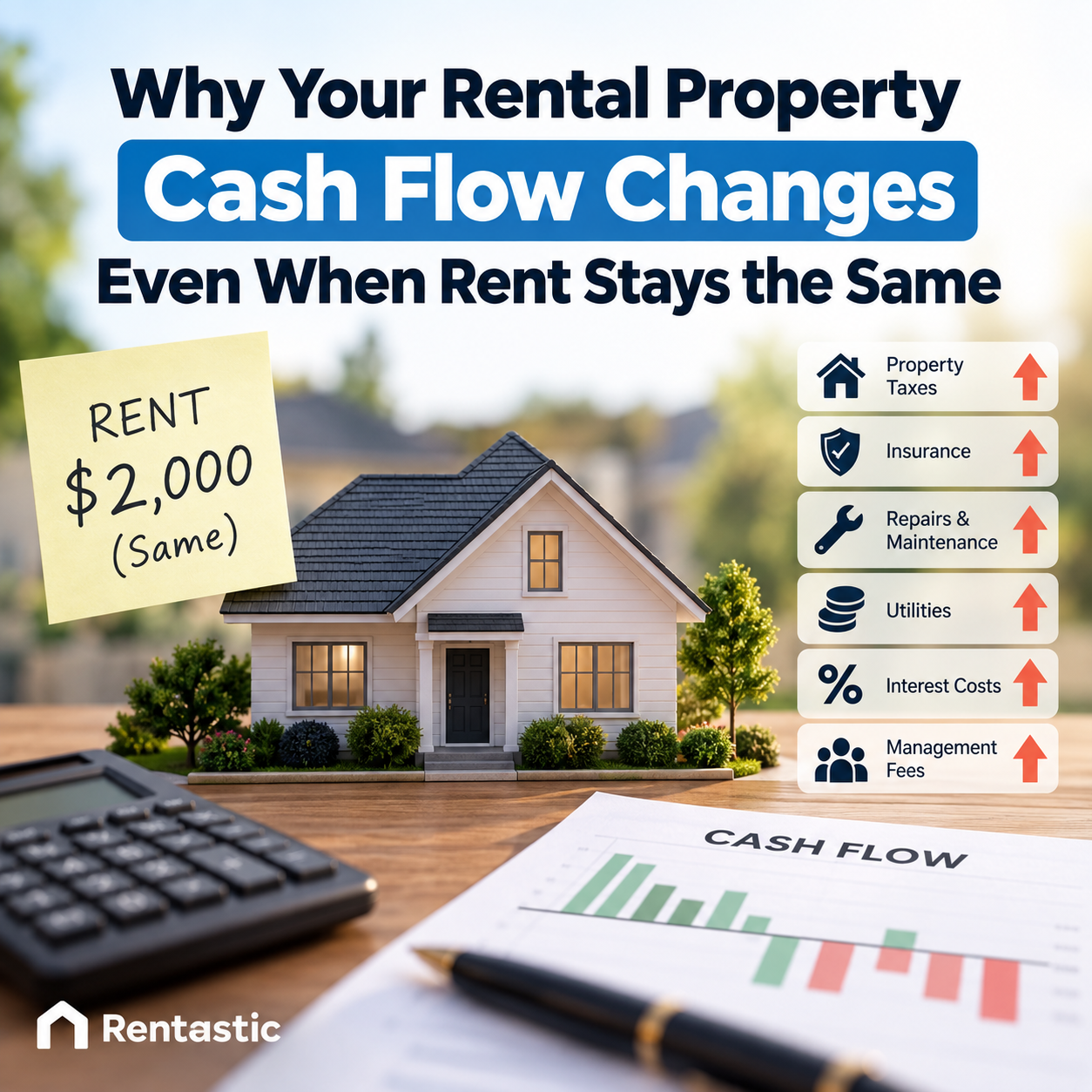
Your tenant pays the same rent every month, so your rental property should generate roughly the same amount of cash flow—right?
Not necessarily.
Rental income is only one side of the equation. Even when your monthly rent stays exactly the same, changes in operating expenses, financing costs, vacancies, repairs, taxes, insurance, and other costs can cause your actual cash flow to rise or fall.
Understanding these changes can help landlords identify problems earlier, create more accurate budgets, and make better decisions about their rental properties.
Rental property cash flow is the money remaining after you subtract the property's expenses from the income it generates.
A simple formula is:
Cash Flow = Rental Income – Property Expenses
For example, suppose your property generates $2,000 per month in rent and costs $1,500 per month to operate and finance.
$2,000 – $1,500 = $500 monthly cash flow
If rent remains at $2,000 but expenses increase to $1,750, your cash flow falls to only $250.
That's why stable rent doesn't necessarily mean stable profitability.
Property taxes are one expense landlords don't always notice immediately.
Your local government may reassess your property's value, tax rates can change, or exemptions may expire. These changes can increase your annual property tax bill even though nothing has changed with your rental income.
If your mortgage payment includes an escrow account, an increase in property taxes may also cause your monthly mortgage payment to rise.
A relatively small monthly increase can become significant over an entire year.
Landlord insurance is another expense that can fluctuate.
Premiums may increase because of changing insurance markets, property characteristics, coverage changes, claims history, or regional risk factors.
Imagine your insurance increases from $1,500 to $2,100 per year.
That's an additional $600 annually, or an average of $50 per month in expenses.
Your tenant may still be paying exactly the same rent, but your cash flow has decreased.
Rental properties rarely have perfectly predictable maintenance expenses.
One month might require nothing more than a minor repair. The next could involve replacing an appliance, fixing plumbing, repairing an HVAC system, or addressing damage.
For example:
Month 1
Rent: $2,000
Expenses: $1,400
Cash flow: $600
Month 2
Rent: $2,000
Expenses: $1,900
Cash flow: $100
The rental income didn't change. The difference came entirely from expenses.
Looking only at rent can therefore give landlords an incomplete picture of property performance.
Even without a major repair, normal operating expenses can gradually become more expensive.
Landscaping, pest control, cleaning, materials, contractor labor, and routine maintenance may all cost more than they did when you originally purchased the property.
A $20 or $30 increase in several different expense categories can eventually create a noticeable reduction in annual cash flow.
This is one reason landlords should periodically review their expenses instead of relying on an old budget.
A fixed-rate mortgage generally provides predictable principal-and-interest payments, but not every rental property loan works this way.
If you have an adjustable-rate mortgage or another variable-rate financing arrangement, changes in interest rates may affect your payment.
Even with a fixed-rate loan, your total monthly payment can change if taxes or insurance are paid through escrow.
This means the amount leaving your bank account each month may increase even though your base mortgage rate hasn't changed.
If you pay any utilities for your rental property, changing utility rates or tenant usage can affect your cash flow.
These expenses might include:
A few modest increases across several services can add hundreds or even thousands of dollars to your annual operating costs.
A property may rent for the same amount when occupied, but that doesn't mean it generates the same amount of income every year.
Suppose the monthly rent is $2,000.
If the property is occupied for all 12 months, gross scheduled rent is:
$24,000
But if the property sits vacant for one month between tenants, collected rent could fall to:
$22,000
The advertised monthly rent hasn't changed, yet the property's annual cash flow has.
Vacancy and turnover should therefore be considered when evaluating rental performance.
Vacancy isn't the only cost associated with changing tenants.
You may also need to pay for:
These costs can temporarily reduce cash flow even if the new tenant pays the same rent as the previous tenant.
Some property expenses happen only occasionally but can have a major financial impact.
Examples include replacing a:
Roof, HVAC system, water heater, major appliance, flooring, or exterior component.
Suppose your property normally generates $500 per month in positive cash flow.
That equals $6,000 per year.
If you suddenly need a $5,000 HVAC replacement, much of that year's cash flow could effectively disappear.
This is why maintaining adequate cash reserves is important for rental property owners.
If you use a property manager, management costs may increase over time.
There can also be additional charges for tenant placement, lease renewals, maintenance coordination, inspections, or other services.
Similarly, HOA dues and other recurring property fees can change.
These expenses may appear small individually, but together they can significantly affect your property's bottom line.
Looking at a single month doesn't always tell you whether your rental is performing well.
Instead, compare performance across longer periods, such as:
Month over month, quarter over quarter, and year over year.
For example, imagine your property generated:
YearRental IncomeExpensesCash FlowYear 1$24,000$17,000$7,000Year 2$24,000$18,500$5,500Year 3$24,000$20,000$4,000
Rent remained exactly the same.
But cash flow dropped from $7,000 to $4,000 because expenses increased.
Without tracking both income and expenses, this gradual decline could easily go unnoticed.
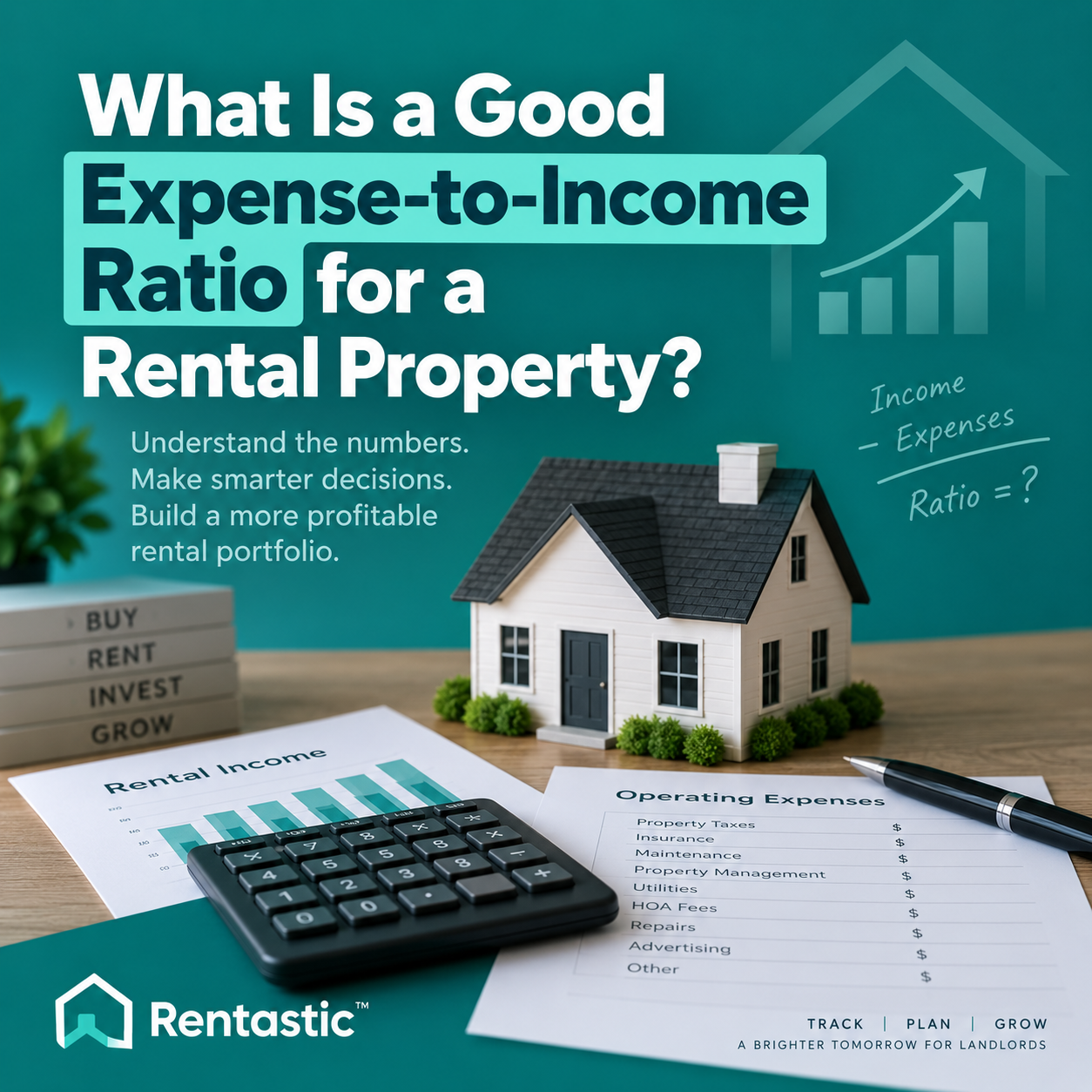
Another useful metric is your expense-to-income ratio.
Expense-to-Income Ratio = Total Expenses ÷ Total Rental Income × 100
If your expenses are $18,000 and your rental income is $24,000:
$18,000 ÷ $24,000 × 100 = 75%
If expenses rise while rent stays flat, this ratio increases.
Tracking it over time can help you spot when a property is becoming more expensive to operate.
If you own multiple rental properties, portfolio-wide totals can sometimes hide an underperforming property.
One rental may be generating strong positive cash flow while another is gradually becoming more expensive to operate.
Tracking income and expenses by property makes it easier to see:
This becomes increasingly important as your rental portfolio grows.
Keeping track of income and expenses manually can become complicated, especially when you own multiple properties.
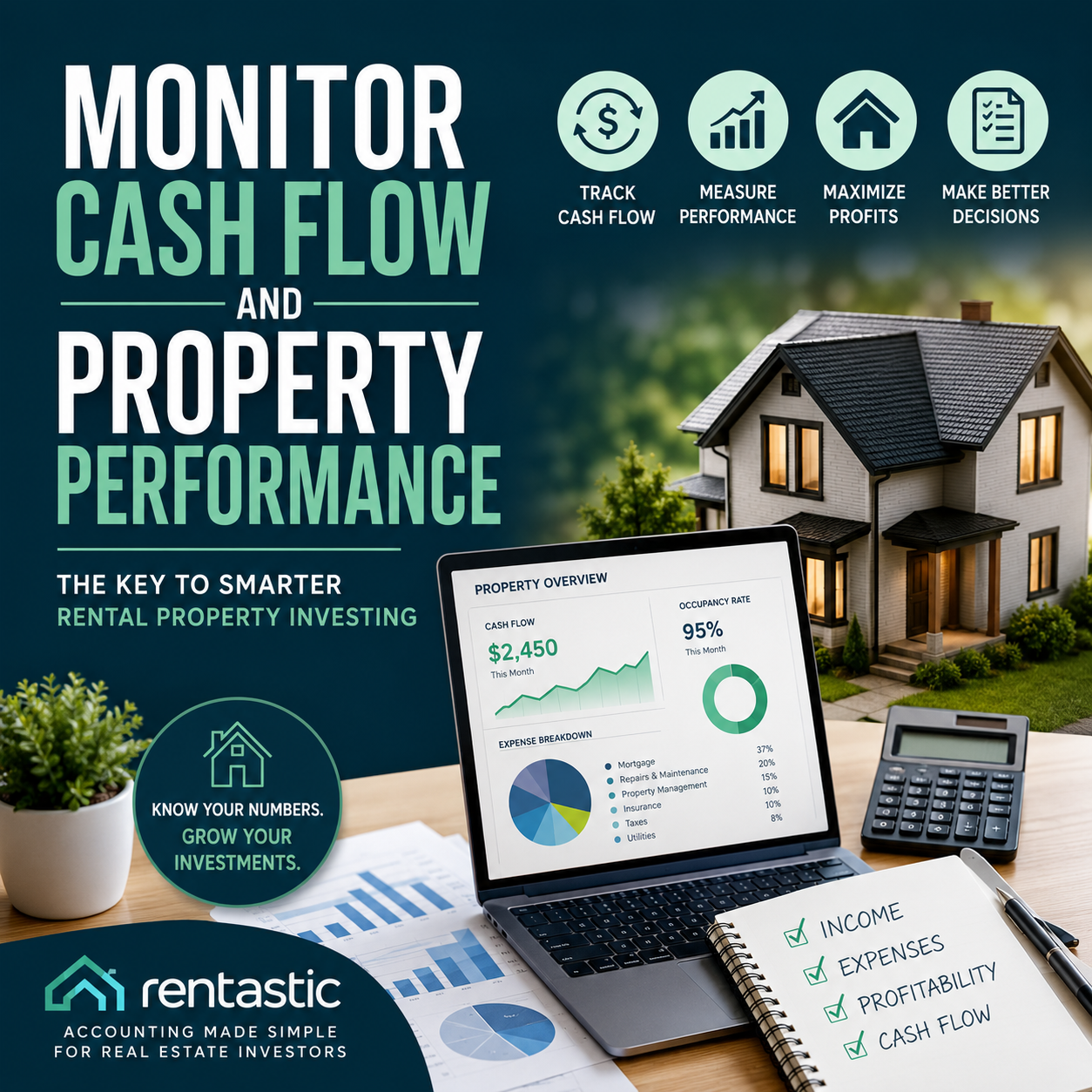
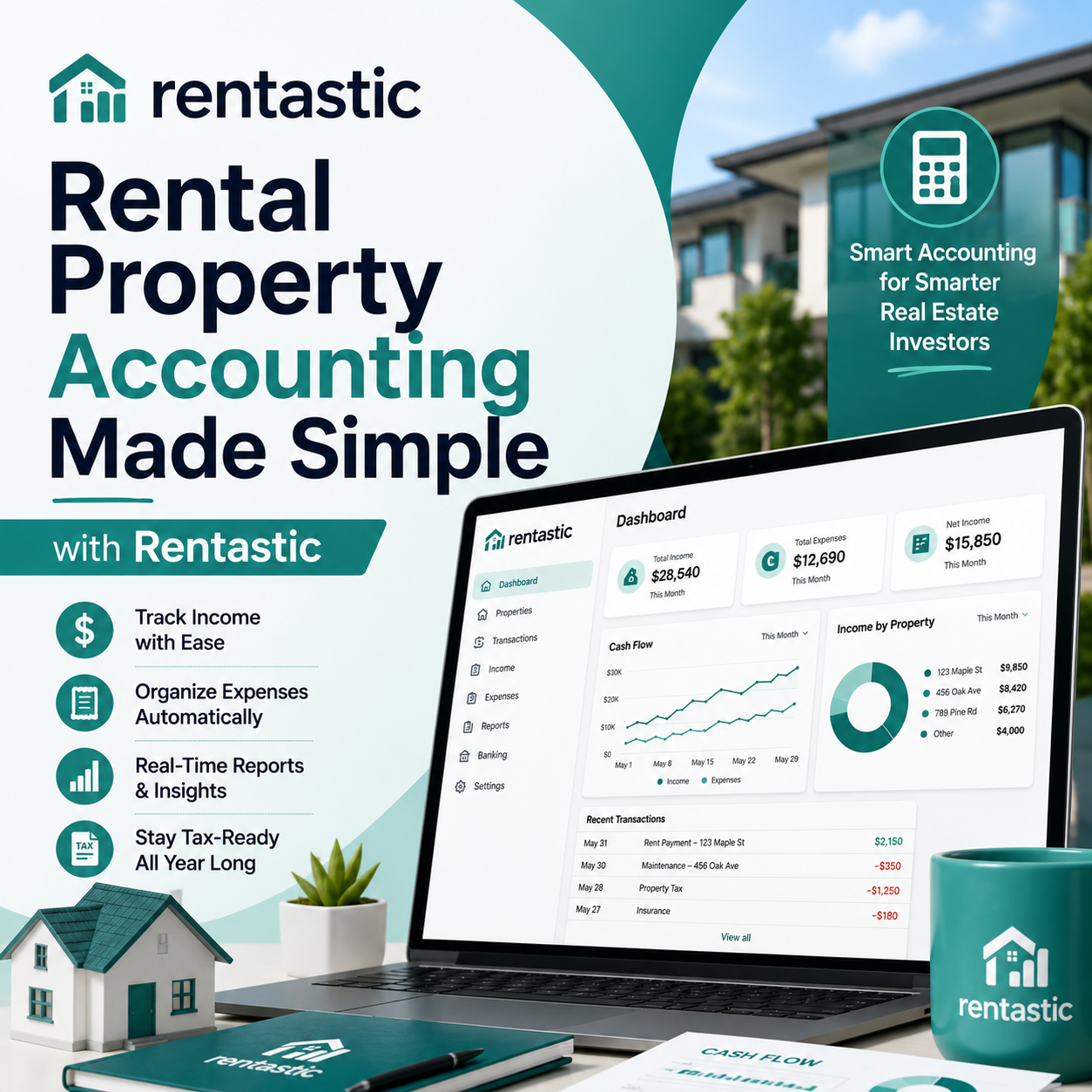
Rentastic helps rental property owners organize their financial activity and understand how their properties are performing.
By keeping rental income and property expenses organized, you can more easily monitor cash flow, review property performance, and identify changes that may otherwise be difficult to spot.
Instead of simply asking:
"Did my tenant pay the rent?"
You can ask a more important question:
"How much money did this property actually make?"
Stable rent does not guarantee stable cash flow.
Your rental property's financial performance can change because of higher taxes, insurance premiums, repairs, maintenance, financing costs, vacancies, turnover, utilities, management fees, and major capital expenses.
That's why successful rental property management requires more than tracking rent payments.
Regularly reviewing your income, expenses, and cash flow by property gives you a much clearer picture of how your investment is actually performing.
The earlier you notice changes, the more time you have to adjust your budget, build reserves, control unnecessary expenses, and make informed decisions about your portfolio.
Rent may stay the same—but your property's numbers never stand still.
RECENT POSTS


© 2025 Rentastic
Rentastic is registered as a trademark. Terms and conditions, features, support, pricing, and service options subject to change without notice.

























.png)




























.png)








Comments