
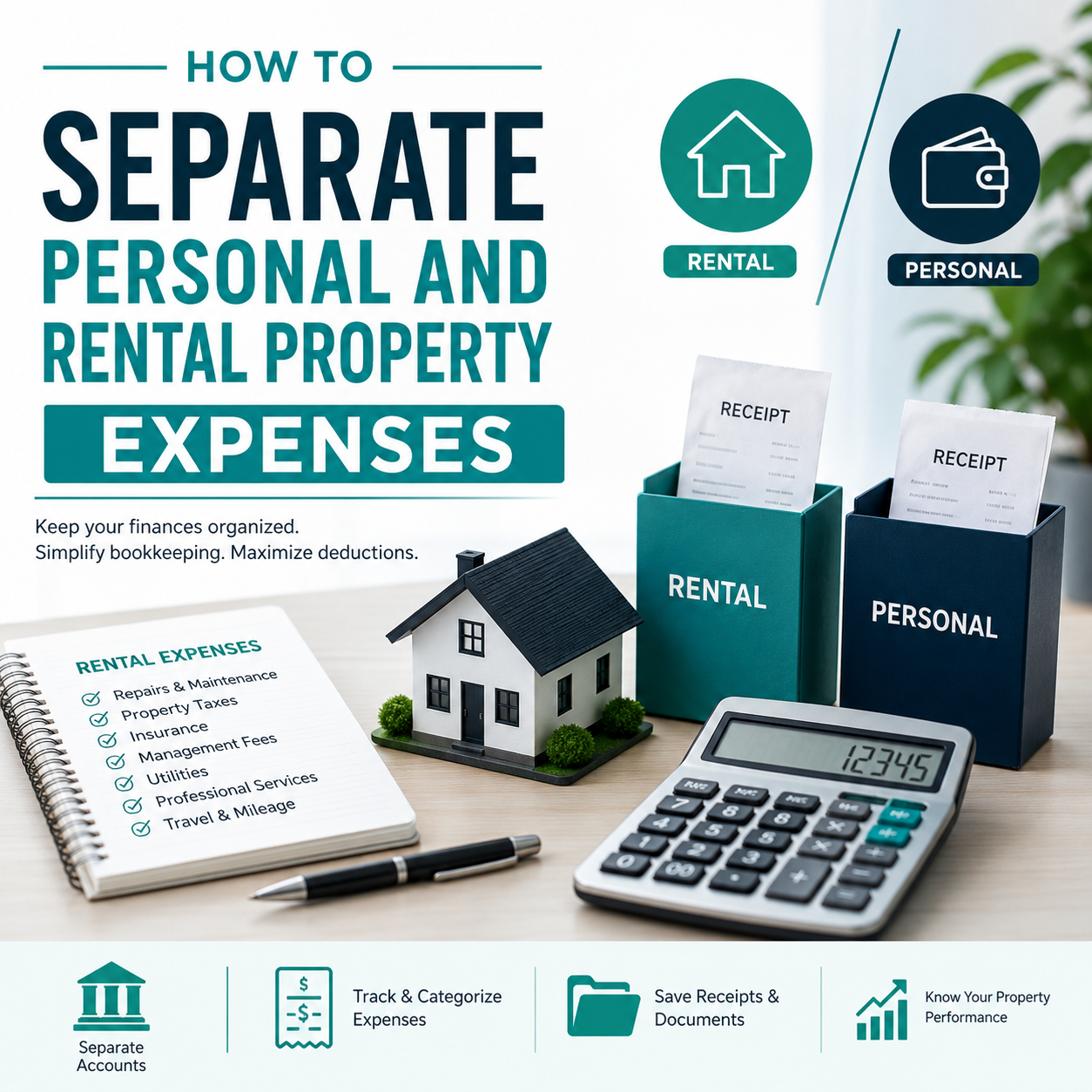
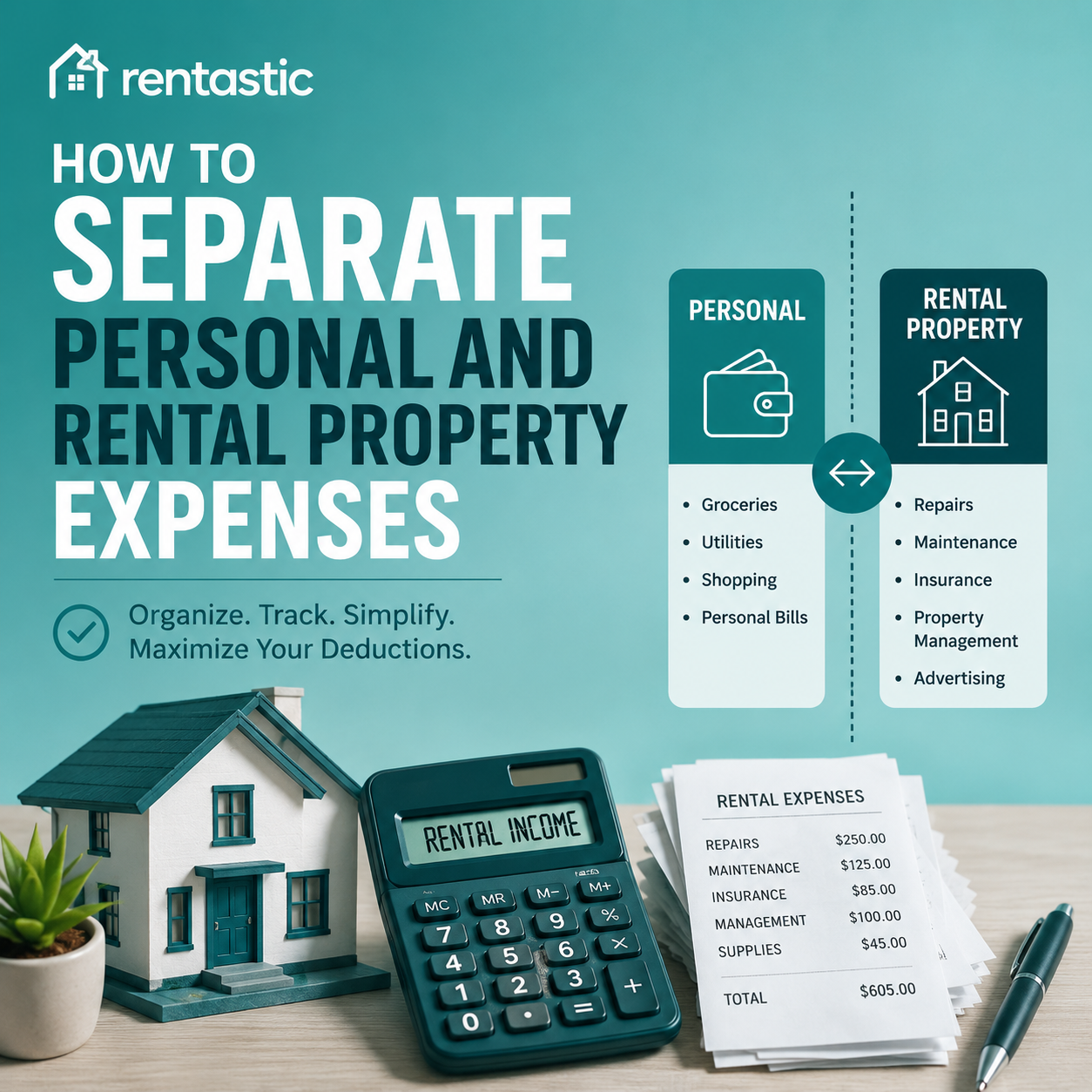
Owning a rental property means managing more than tenants and maintenance—you also need to keep your finances organized. One of the most important habits for landlords and real estate investors is keeping personal expenses separate from rental property expenses.
Mixing the two can make bookkeeping confusing, complicate tax preparation, and make it harder to understand whether your rental properties are actually profitable. The good news is that a few simple systems can make separating your finances much easier.
Rental properties operate like a business, even if you only own one property. When personal purchases and rental expenses flow through the same accounts, determining what belongs to the property becomes more difficult.
Keeping them separate helps you:
Clean records also give you a better picture of your rental property's actual cash flow.
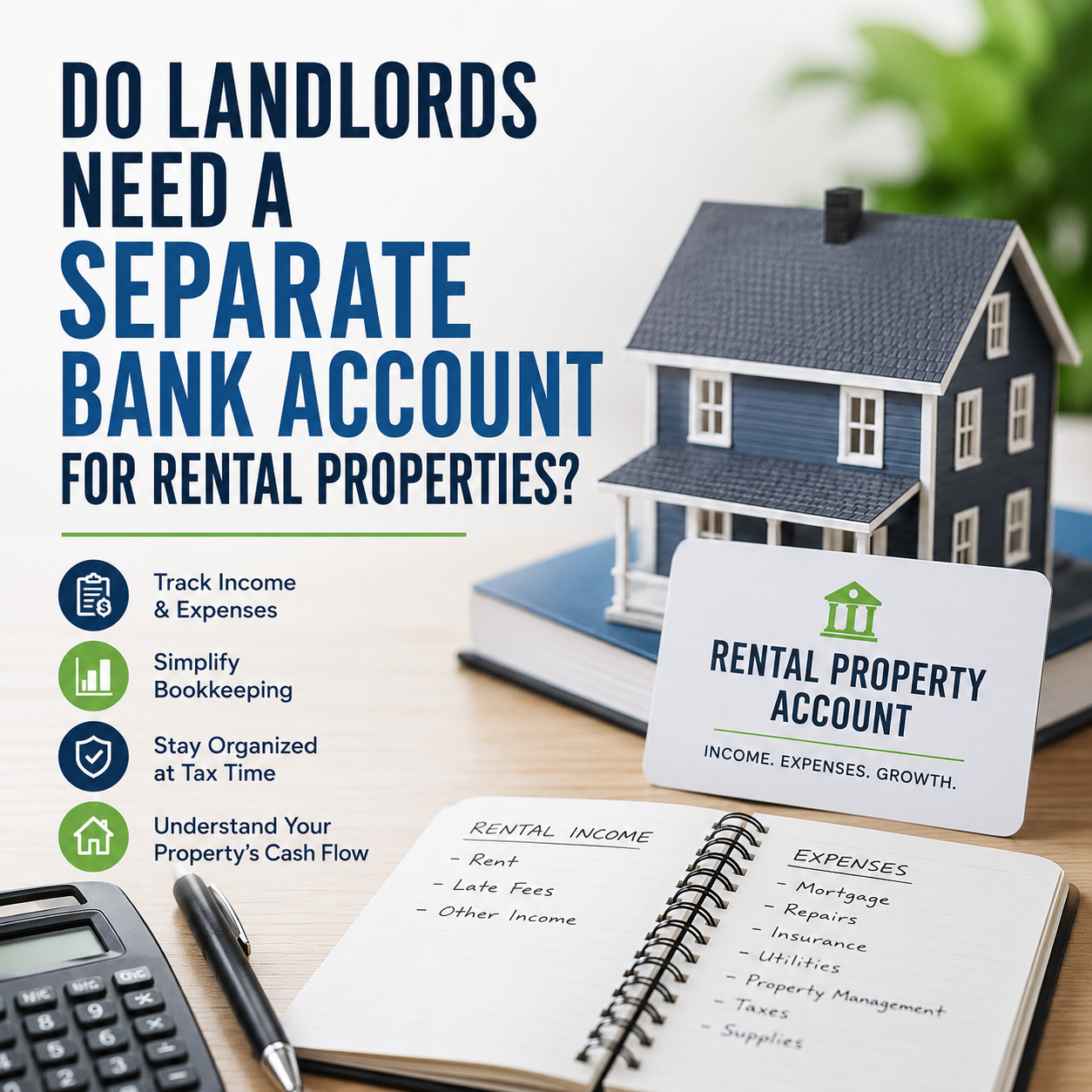
One of the easiest ways to separate your finances is to use a dedicated bank account for your rental property activities.
Ideally, rental income should be deposited into this account, while rental-related expenses should be paid from it.
For example, your rental account might handle:
Income
Expenses
Instead of reviewing a personal checking account filled with groceries, subscriptions, entertainment, and rental expenses, you'll have a much cleaner record of property activity.
A separate credit card can also make rental expense tracking easier.
Use the card exclusively for expenses related to your rental business, such as purchasing maintenance supplies, paying contractors, buying appliances, or covering other property costs.
The key is consistency. Avoid using the rental card for personal purchases, even if you plan to reimburse yourself later.
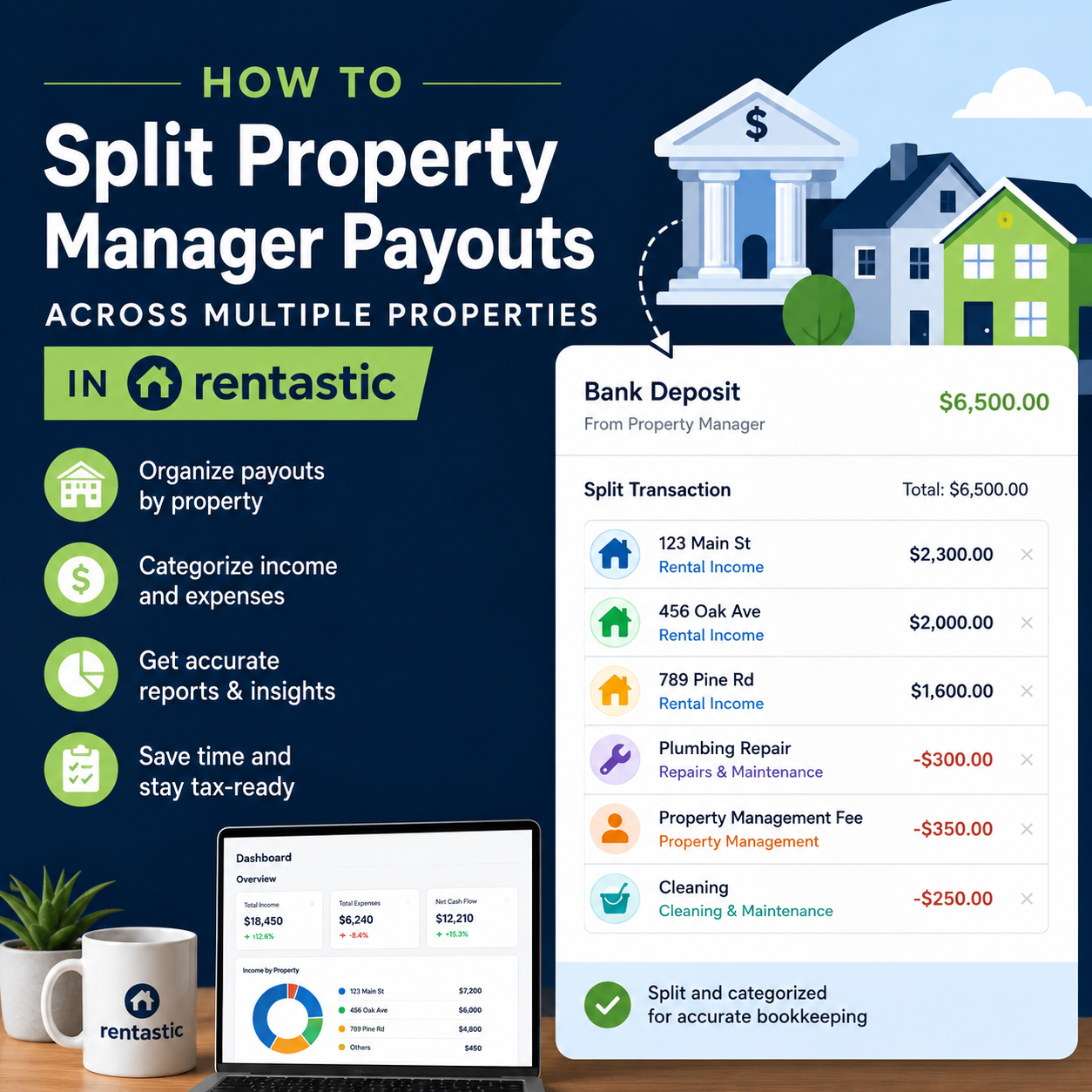
If you own multiple rental properties, separating business and personal expenses is only the first step. You should also know which property each expense belongs to.
Suppose you own three rentals and spend $650 repairing a plumbing issue at Property B. That expense should be assigned specifically to Property B rather than simply recorded as a general repair expense.
Property-level tracking makes it easier to compare:
This can help you identify which properties are performing well and which may require additional attention.
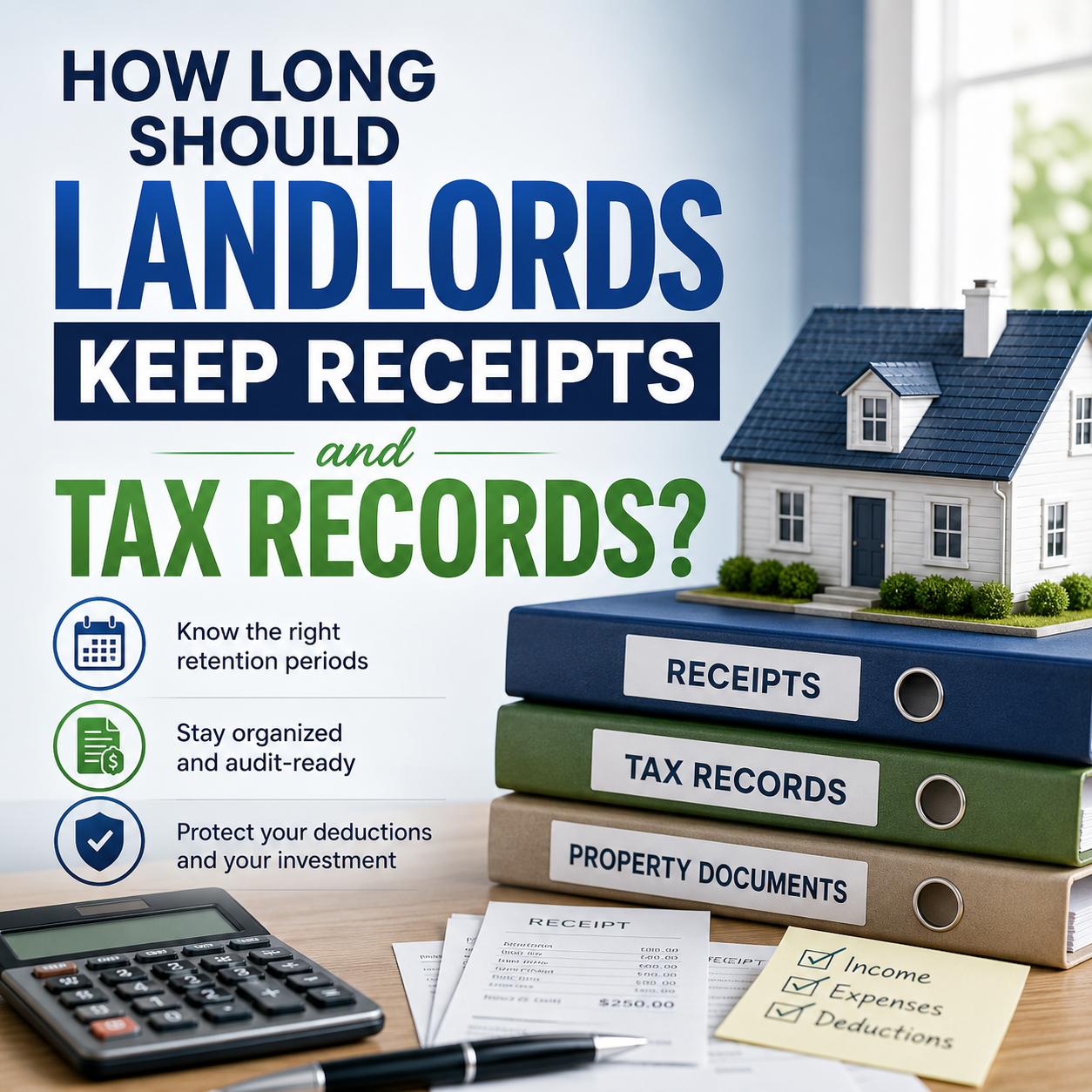
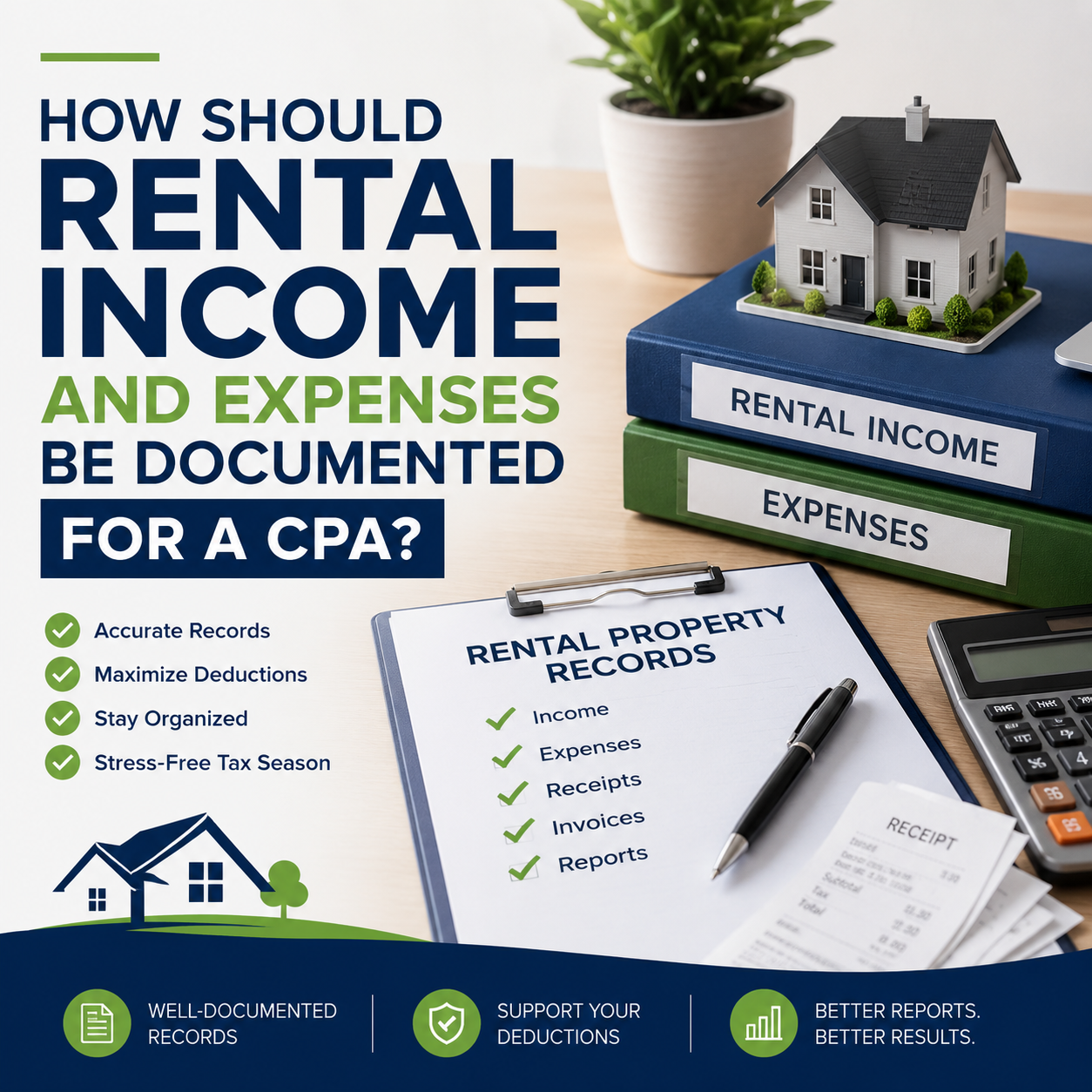
Bank and credit card statements show that money was spent, but they don't always explain exactly what was purchased or why it was related to your rental property.
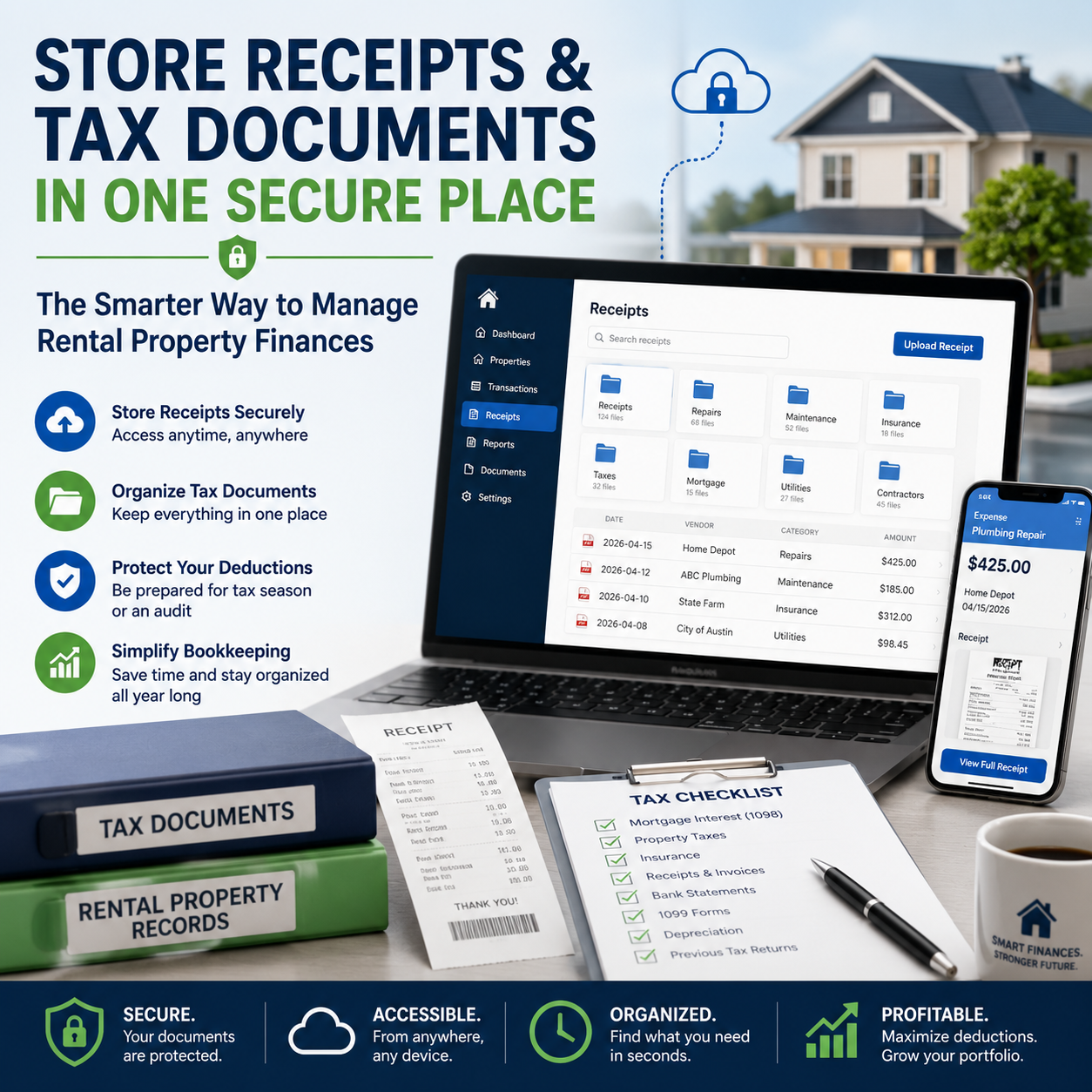
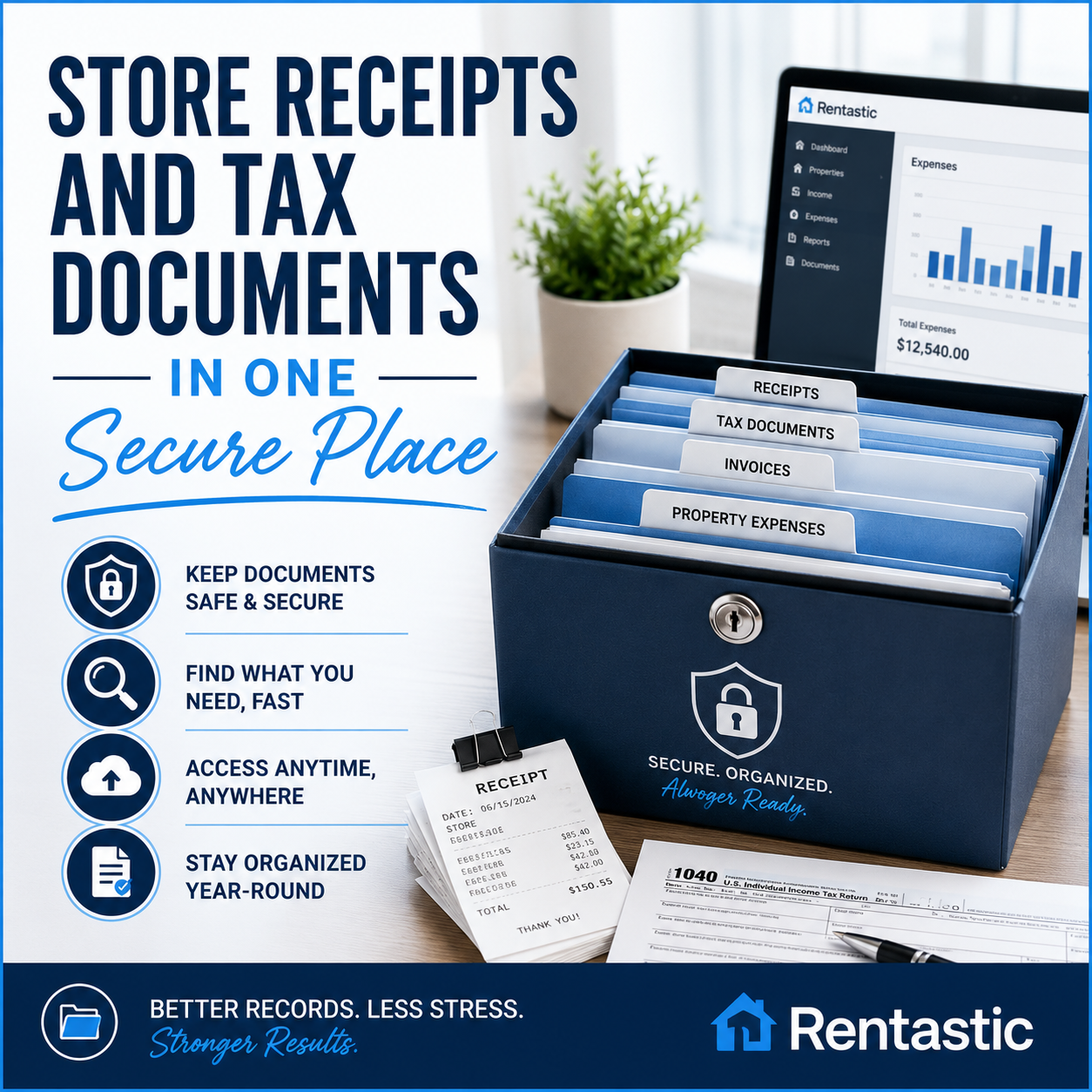
Keep supporting documentation such as:
Digital recordkeeping can make these documents easier to organize and retrieve when you or your tax professional needs them.
Consistent expense categories make bookkeeping and tax preparation significantly easier.
Common rental property expense categories may include:
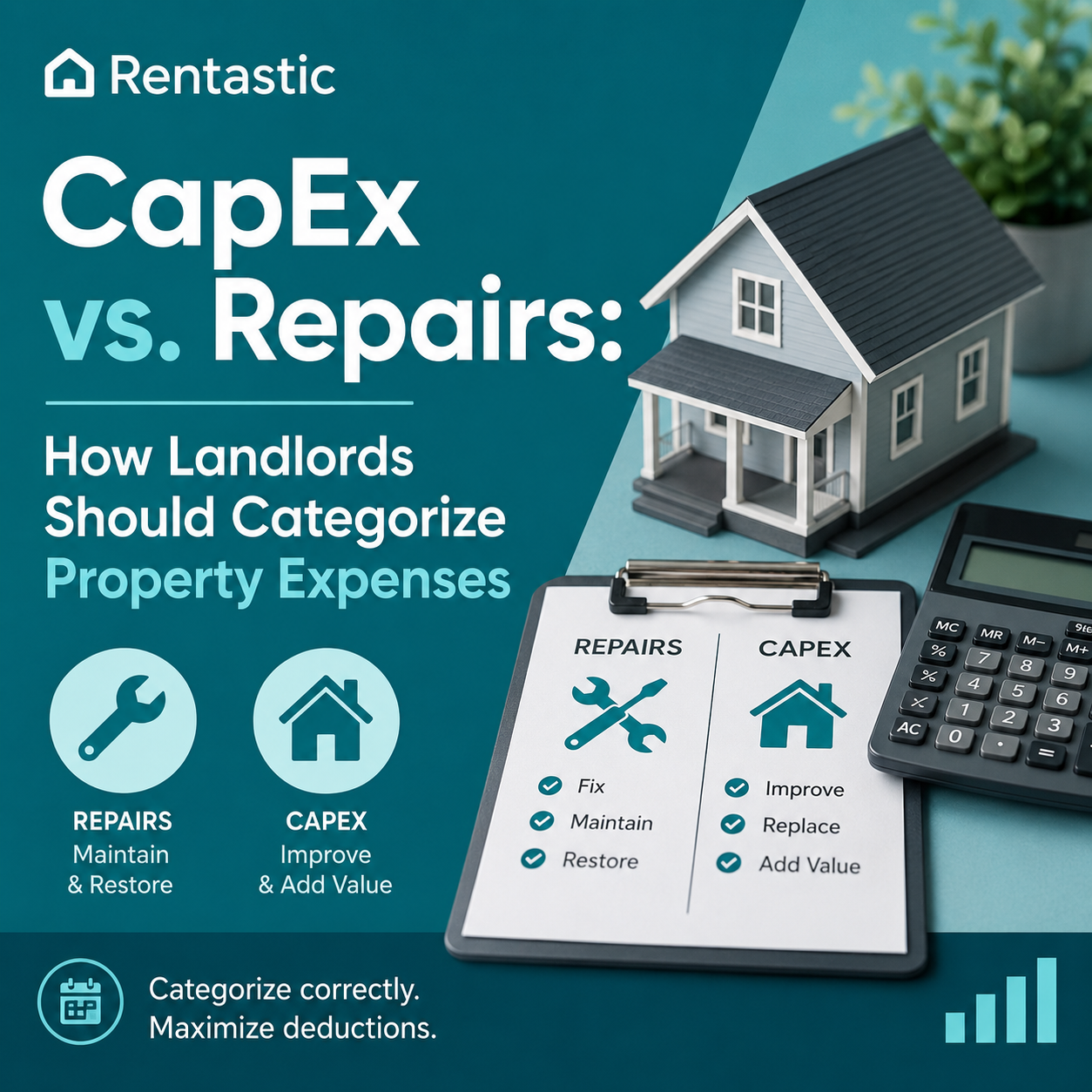
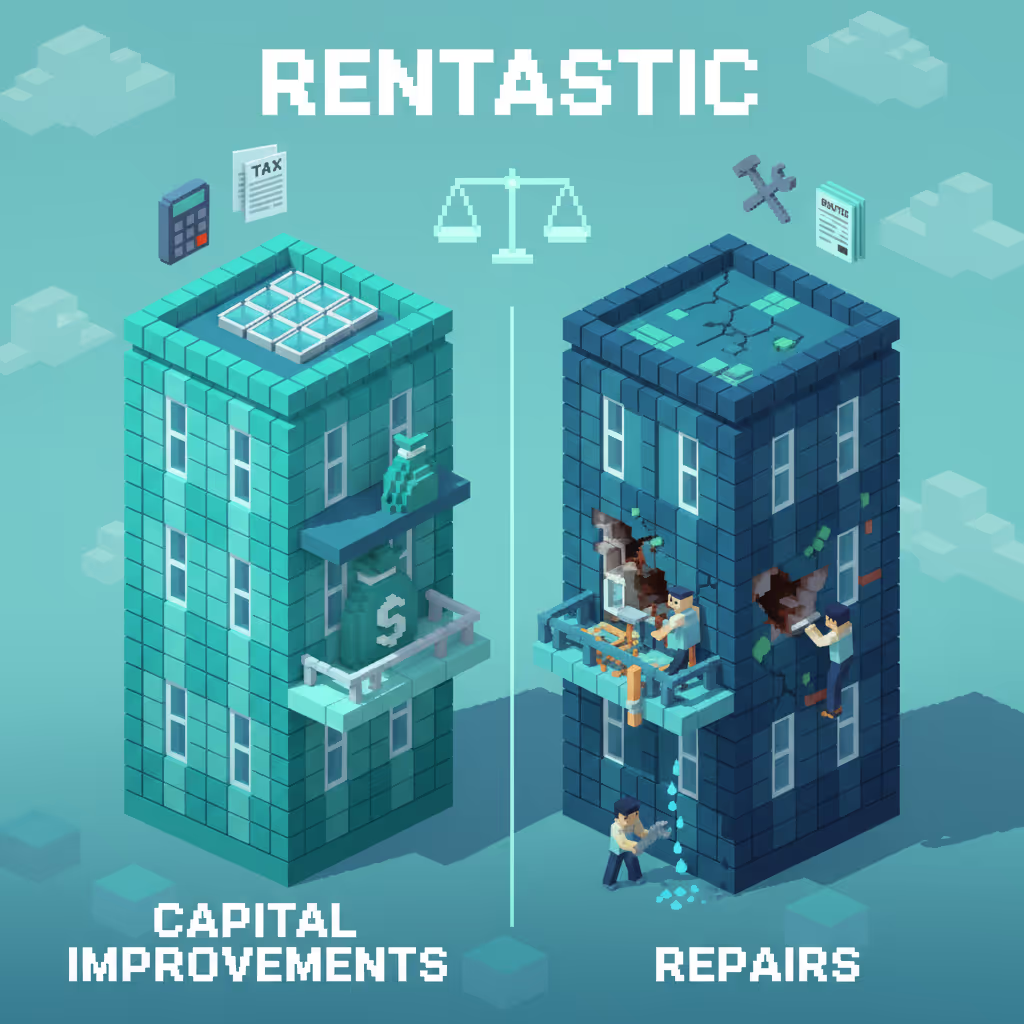
Remember that not every expense is treated the same way for tax purposes. Some larger improvements or purchases may need to be capitalized and depreciated rather than deducted immediately.
When you're uncertain about how an expense should be treated, consult a qualified tax professional.
Separating finances works both ways.
Just as you should avoid paying rental expenses from your personal account, avoid using your rental bank account or credit card for personal purchases.
For example, don't use your rental account to pay for:
Keeping these transactions out of your rental accounts creates a much cleaner financial trail.
Sometimes using a personal account for a rental expense is unavoidable.
Maybe you're at a hardware store and accidentally use your personal card to purchase $175 of supplies for a rental repair.
Don't ignore the transaction.
Save the receipt and record the purchase in your rental bookkeeping records with the correct property and expense category. If appropriate for your ownership structure, you may also need to record it as an owner contribution or reimbursement.
The important thing is maintaining documentation showing what the expense was and why it was related to the rental.
Some expenses may have both personal and rental purposes.
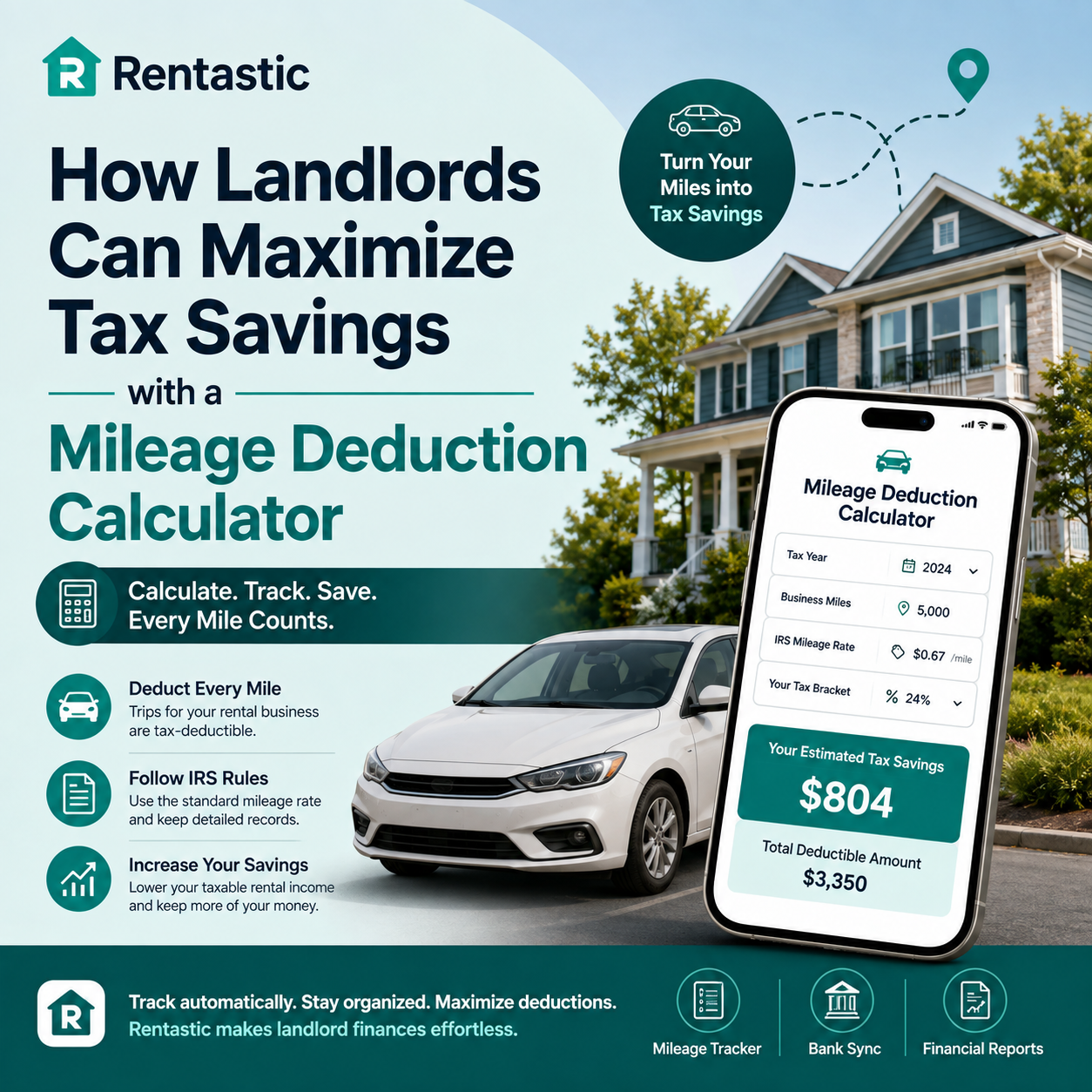
A common example is a mobile phone used for personal calls as well as managing tenants and contractors. Vehicle expenses can create similar situations.
Rather than automatically treating the entire expense as a rental expense, maintain reasonable records supporting the rental-related portion.
Tax rules can vary depending on the expense and your circumstances, so mixed-use expenses are a good area to discuss with a CPA or tax professional.
Don't wait until tax season to organize an entire year's worth of transactions.
Set aside time at least once a month to review your rental finances.
Check that:
A short monthly review can prevent hours of cleanup later.
Spreadsheets can work when you're starting out, but they often become harder to manage as your portfolio grows.
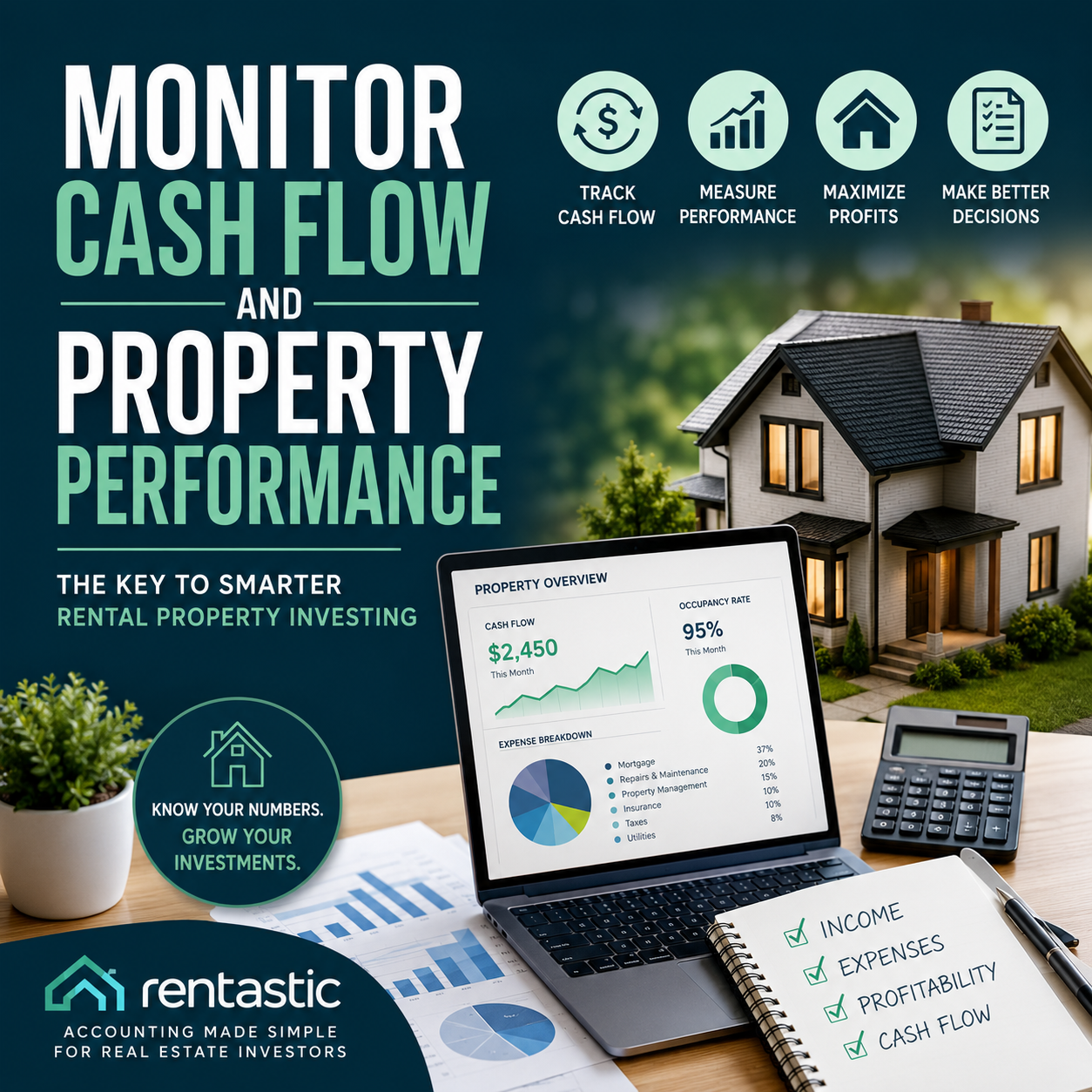
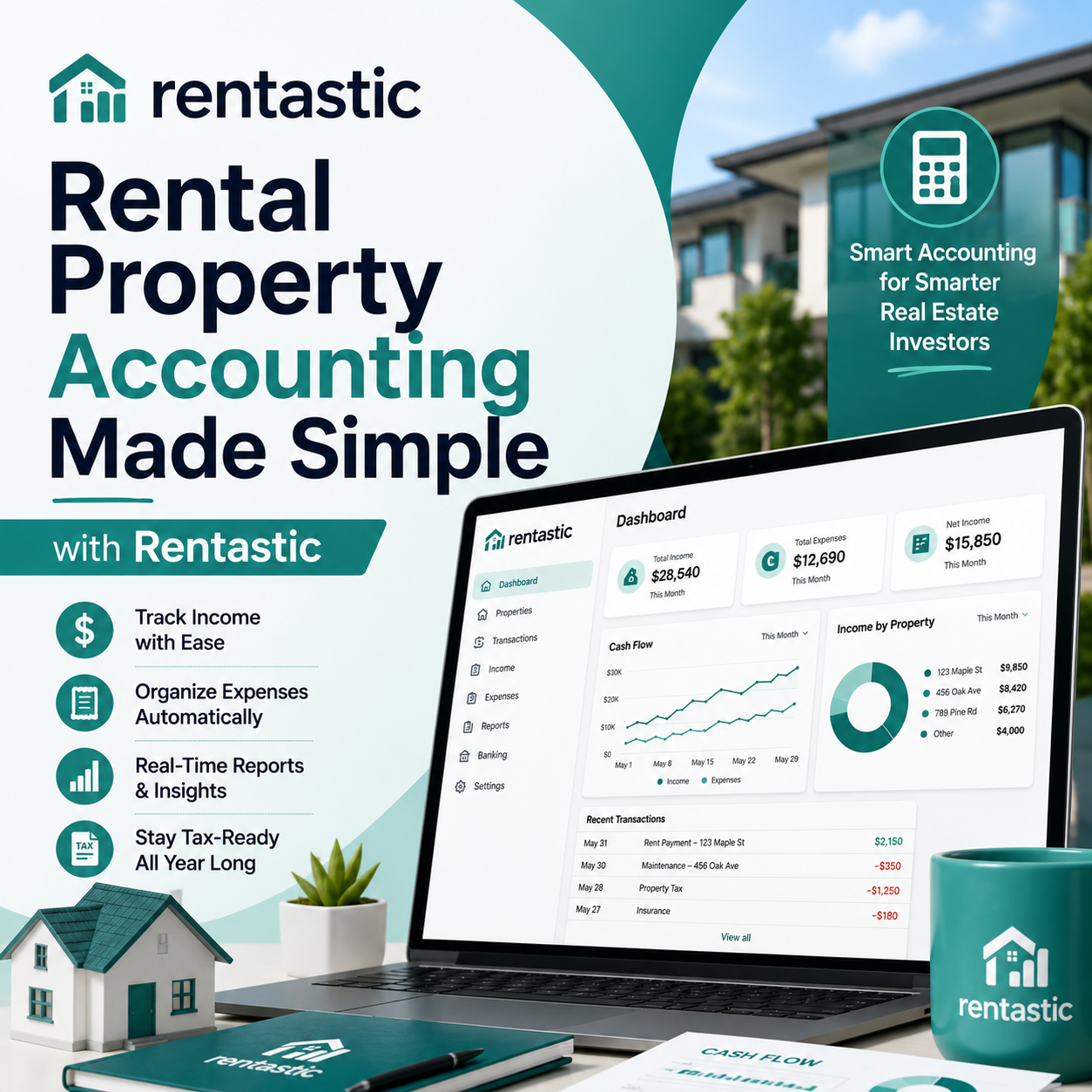
Rental property accounting software can help organize transactions, categorize income and expenses, store financial records, and track performance by property.
With Rentastic, landlords and real estate investors can connect bank accounts, organize rental income and expenses, assign transactions to properties, track receipts, and generate financial reports from one place.
Instead of sorting through months of personal and rental transactions at tax time, you can maintain organized records throughout the year.
Imagine a landlord collects $2,000 in monthly rent and deposits it into a personal checking account.
That same account is also used for groceries, car payments, streaming services, rental repairs, insurance, and utility bills.
At the end of the year, the landlord has hundreds—or potentially thousands—of transactions to review manually.
Now imagine the same landlord uses a dedicated rental account.
The $2,000 rent enters the rental account, and property expenses are paid from the same account. Personal purchases stay completely separate.
When it's time to review the property's finances, the records are already significantly cleaner.
You don't need an overly complicated accounting system to keep rental finances organized.
A practical approach is:
The most important factor is consistency.
Separating personal and rental property expenses is one of the simplest ways to improve your bookkeeping.
Dedicated accounts, consistent transaction categories, organized receipts, and regular financial reviews can help you understand how your properties are performing while making tax preparation much easier.
As your portfolio grows, having a clear financial system becomes even more important. Tools like Rentastic can help landlords keep rental finances organized without relying on complicated spreadsheets or sorting through personal transactions at the end of the year.
Better separation creates cleaner books—and cleaner books make it easier to manage a profitable rental portfolio.
Disclaimer: This article is for general informational purposes and is not tax, accounting, or legal advice. Consult a qualified professional regarding your specific situation.


© 2025 Rentastic
Rentastic is registered as a trademark. Terms and conditions, features, support, pricing, and service options subject to change without notice.














.png)



























.png)















Comments