
Owning a rental property can generate monthly income and build long-term wealth—but collecting rent doesn't automatically mean your investment is profitable.
Between mortgage payments, property taxes, insurance, maintenance, vacancies, property management fees, and unexpected repairs, a property can bring in thousands of dollars in rent while still struggling to produce positive cash flow.
That's why every real estate investor should understand their rental property break-even point.
Your break-even point tells you how much rental income your property needs to generate before it actually starts producing positive cash flow.
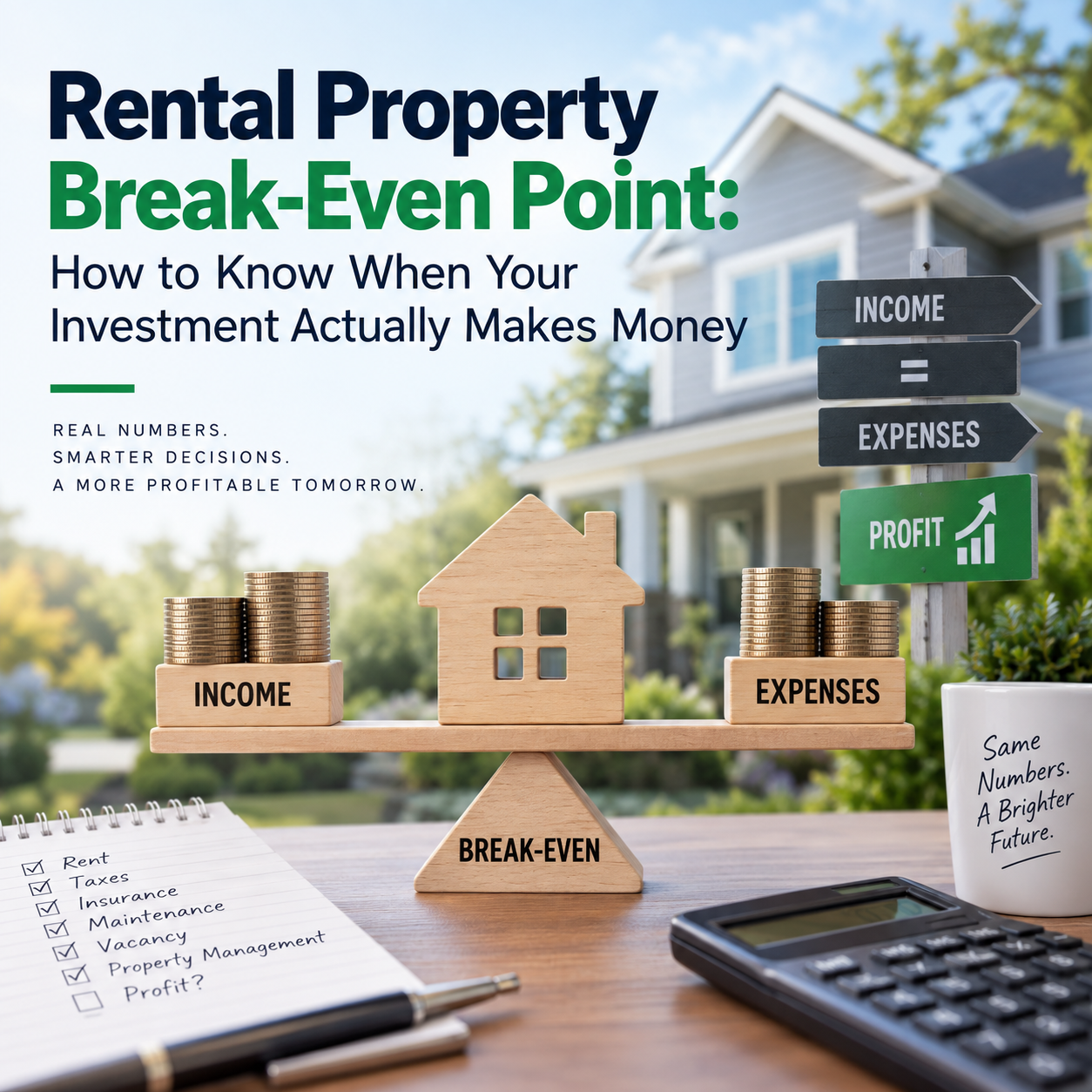
The break-even point is the point where your rental property's income is enough to cover its operating costs and other expenses included in your analysis.
In simple terms:
Rental Income = Total Expenses
At break-even, you aren't generating positive cash flow, but you aren't operating at a cash-flow loss either.
Once rental income rises above your break-even amount, the difference can become positive cash flow.
However, investors should be clear about which expenses they include. For example, a cash-flow break-even calculation may include mortgage payments, while an operating break-even analysis may focus only on operating expenses.
A property that collects $3,000 per month in rent may sound profitable. But what happens if its monthly costs are $2,900?
The property is producing only $100 in monthly cash flow before any additional unexpected expenses.
Understanding your break-even point gives you a clearer picture of your property's financial position. It can help you:
Instead of focusing only on gross rental income, break-even analysis encourages you to look at what remains after the bills are paid.
One straightforward approach is to calculate the monthly income needed to cover your property's recurring cash expenses.
Start with all recurring income generated by the property.
This may include:
For example:
Monthly rental income: $2,800
Next, calculate the property's recurring operating expenses.
These could include:
Suppose these costs average $900 per month.
If you're evaluating whether the property generates positive monthly cash flow, include the mortgage or other property-related debt payments.
For example:
Monthly mortgage payment: $1,400
Your total monthly cash expenses would be:
$900 + $1,400 = $2,300
That means your property needs approximately $2,300 per month in income to break even on this simplified cash-flow basis.
If the property generates $2,800 per month:
$2,800 − $2,300 = $500
Your simplified monthly cash flow would be $500.
A common mistake is assuming that a rental property will remain occupied and fully paid 12 months of the year.
Vacancies can significantly change the numbers.
Imagine your property generates $2,800 per month when occupied.
Annual potential rent would be:
$2,800 × 12 = $33,600
But if you experience one month of vacancy, your collected rent could fall to approximately:
$30,800
Meanwhile, many expenses—such as your mortgage, taxes, insurance, and HOA fees—continue even when the property is vacant.
Building a vacancy assumption into your analysis can give you a more realistic picture of the property's financial performance.
Another useful metric is the break-even occupancy rate.
This tells you approximately what percentage of your potential rental income you need to collect to cover the expenses included in your calculation.
For example, suppose:
Annual expenses: $27,600
Potential annual rental income: $33,600
Your break-even occupancy rate would be approximately:
27,600 ÷ 33,600 × 100 = 82.1%
This means the property would need to collect roughly 82% of its potential rental income to cover those expenses.
The remaining margin provides some protection against vacancy, repairs, and other unexpected costs.
Reaching break-even is only the starting point.
A property that barely covers its monthly expenses may technically avoid negative cash flow, but it may provide very little financial cushion.
For example:
Property A
Monthly income: $3,000
Monthly cash expenses: $2,950
Cash flow: $50
Property B
Monthly income: $3,000
Monthly cash expenses: $2,300
Cash flow: $700
Both properties are above break-even, but their cash-flow positions are very different.
This is why investors should consider break-even alongside other metrics such as:
Together, these metrics can provide a more complete view of an investment's financial performance.
Your calculation is only as useful as the numbers you put into it.
Depending on your goal, consider accounting for expenses such as mortgage payments, taxes, insurance, maintenance, property management, HOA fees, utilities, vacancy assumptions, and capital expenditure reserves.
Large expenses can be especially easy to overlook.
A roof replacement may not happen every year, but that doesn't mean the long-term cost is zero. Setting aside money for major repairs and replacements can make your break-even estimate more realistic.
Suppose you own a rental property generating $2,500 per month.
Your average monthly costs are:
Mortgage: $1,200
Property taxes: $300
Insurance: $120
Maintenance reserve: $200
Property management: $200
HOA: $100
Vacancy reserve: $125
Total monthly costs: $2,245
Your estimated monthly cash flow is:
$2,500 − $2,245 = $255
Your break-even income is therefore approximately $2,245 per month under these assumptions.
That leaves a margin of only $255.
A major repair, longer vacancy, insurance increase, or other unexpected cost could quickly eliminate that positive cash flow.
Knowing this allows you to evaluate the property based on the actual numbers rather than rent alone.
If your property is operating too close to break-even—or below it—there are several areas worth reviewing.
You might evaluate whether current rent reflects the local market, identify unnecessary recurring expenses, reduce vacancy through stronger tenant retention, review insurance and service-provider costs, or find opportunities to generate additional property income.
The goal isn't simply to increase rent. It's to create a healthier gap between the income the property generates and the cash required to operate and finance it.
Break-even analysis is useful when purchasing a property, but it shouldn't end there.
Expenses change.
Property taxes can increase. Insurance premiums can rise. Maintenance costs fluctuate. Rents change. Financing costs may change depending on the loan.
Tracking your property's actual income and expenses throughout the year makes it easier to see whether your investment is performing the way you expected.
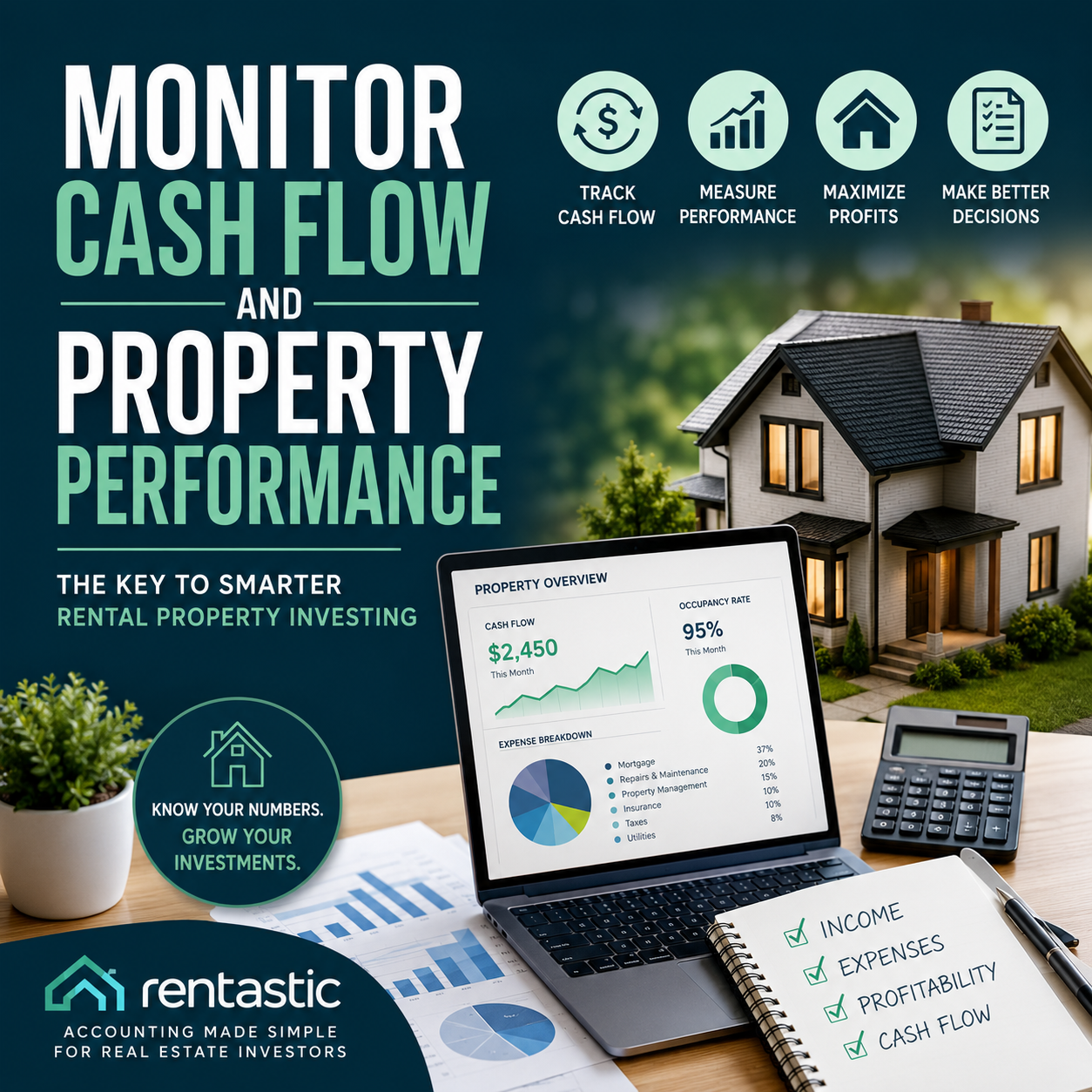
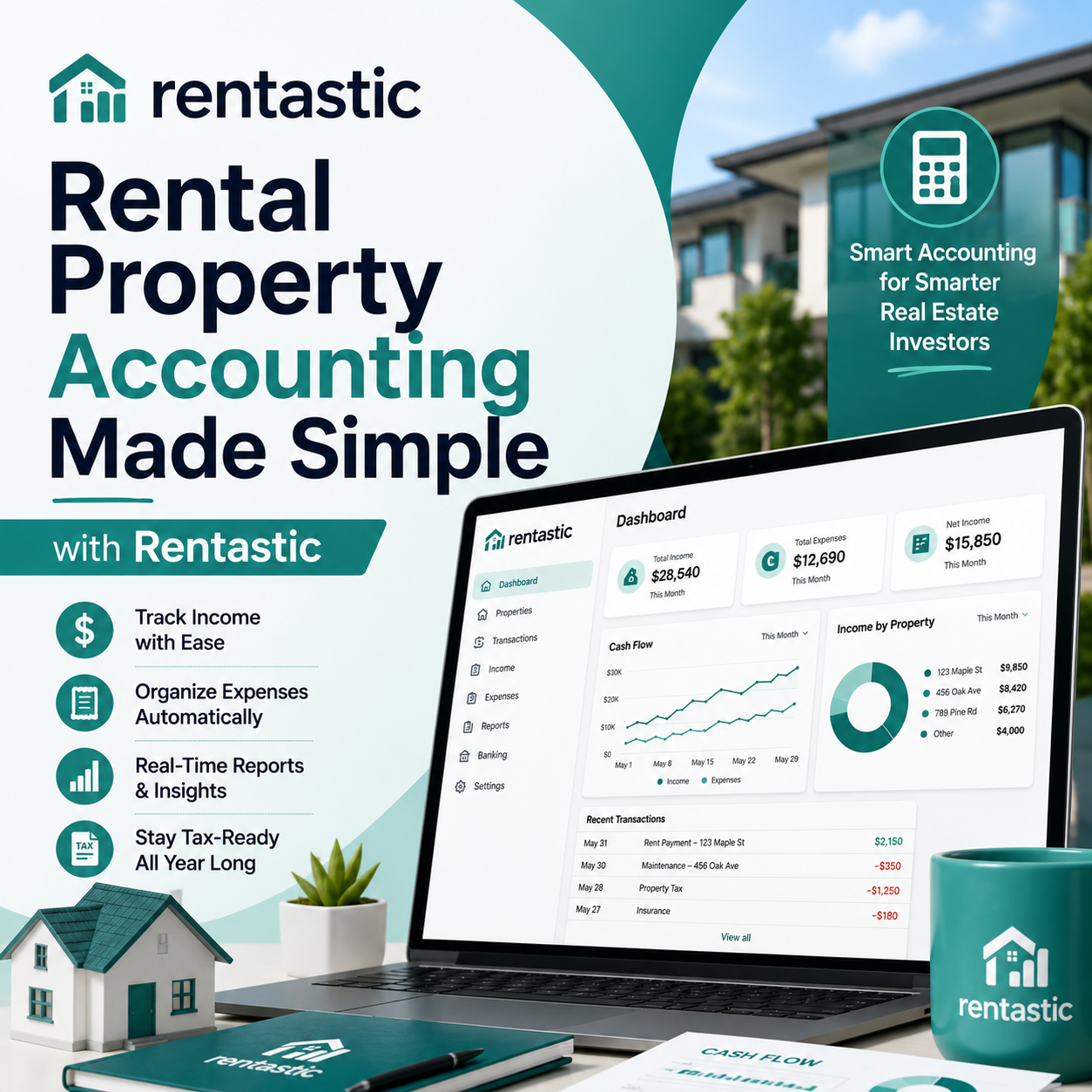
With Rentastic, rental property owners can organize income and expenses, monitor cash flow, and review property performance without relying on scattered spreadsheets.
When your financial information is organized in one place, it's easier to understand how your rental properties are actually performing.
The rental property break-even point answers one of the most important questions a landlord or real estate investor can ask:
How much does this property need to generate before it starts producing positive cash flow?
Knowing that number can help you evaluate new investments, monitor existing properties, prepare for vacancies, and identify when expenses are consuming too much of your rental income.
A property can look profitable when you focus only on rent. The clearer picture appears when you compare that income against the full cost of owning and operating the investment.
Track the numbers. Know your break-even point. And make investment decisions based on what your property is actually producing—not just what it's collecting.
RECENT POSTS


© 2025 Rentastic
Rentastic is registered as a trademark. Terms and conditions, features, support, pricing, and service options subject to change without notice.
















.png)


























.png)








Comments