
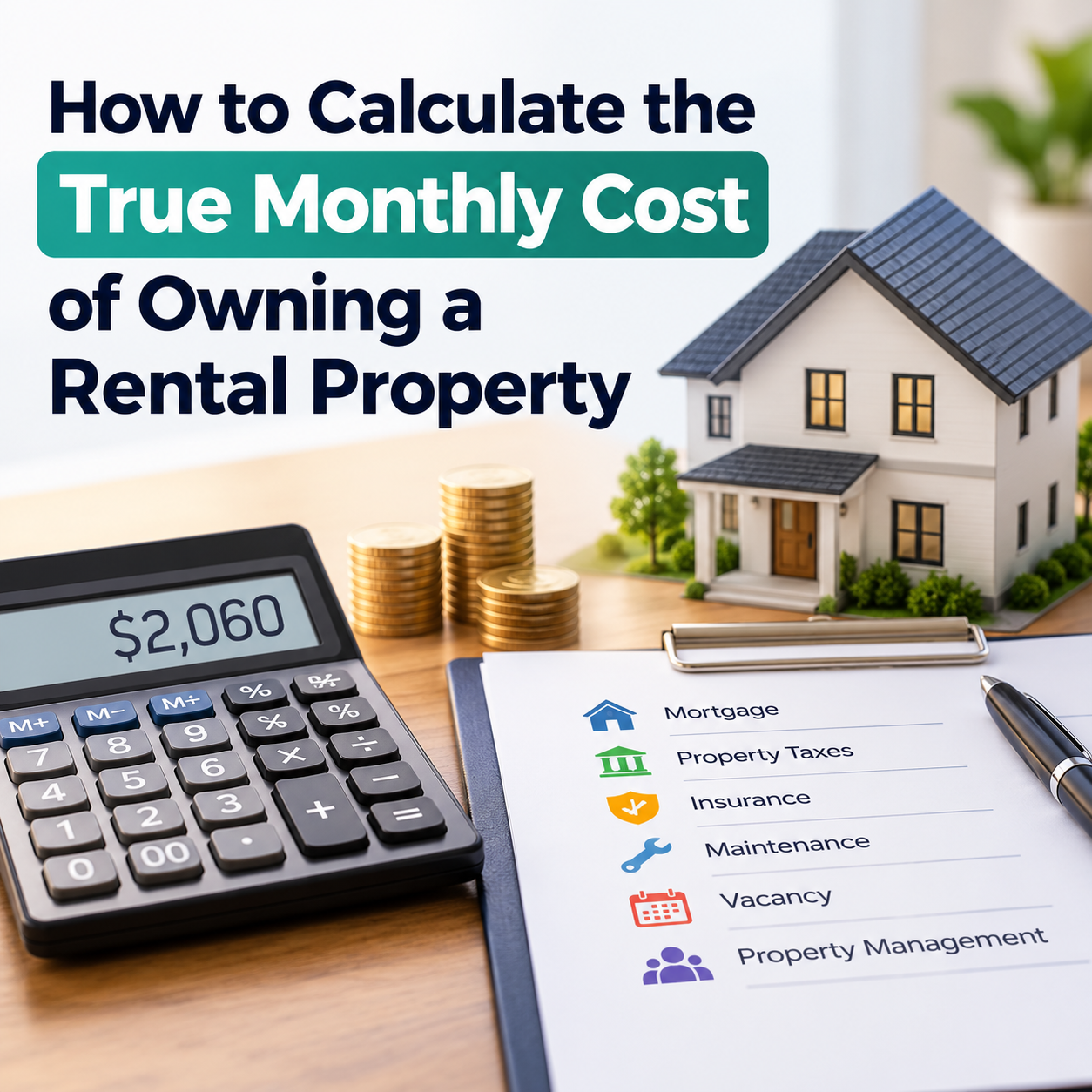
Owning a rental property can be a great way to build wealth and generate passive income. But collecting rent doesn't automatically mean you're making a profit.
Many landlords focus on their monthly mortgage payment and overlook other expenses that affect their bottom line. From property taxes and insurance to maintenance and vacancies, these costs can quickly add up.
Understanding the true monthly cost of owning a rental property helps you set realistic rental prices, manage expenses, and protect your cash flow.
For landlords who finance their properties, the mortgage is often the largest monthly expense.
Your mortgage payment typically includes principal and interest. Depending on your loan, property taxes and insurance may also be included through escrow.
For example, if your monthly mortgage payment is $1,200, that's your starting point.
Tip: Avoid counting property taxes and insurance twice if they're already included in your mortgage payment.
Property taxes and landlord insurance are essential expenses that should be included in your calculations.
Even if you pay these annually, divide the total by 12 to determine their monthly cost.
For example:
Your combined monthly expense is $400.
Every rental property requires maintenance. Appliances break, plumbing leaks, and major systems eventually need replacement.
A common starting point is to set aside approximately 5%–10% of monthly rental income for routine maintenance, although older properties may require more.
If your property generates $2,000 in monthly rent, setting aside 10% means budgeting $200 each month.
You should also plan separately for major replacements, such as a new roof or HVAC system.
Even well-managed rental properties may experience periods without tenants.
Vacancies mean lost rental income while expenses like mortgage payments, taxes, and insurance continue.
One way to prepare is to budget 5% of your expected rental income for vacancy.
For a property renting at $2,000 per month:
$2,000 × 5% = $100 per month
This reserve helps you plan for occasional gaps between tenants.
Depending on your property, additional monthly costs may include:
Even smaller expenses can significantly affect your annual profitability.
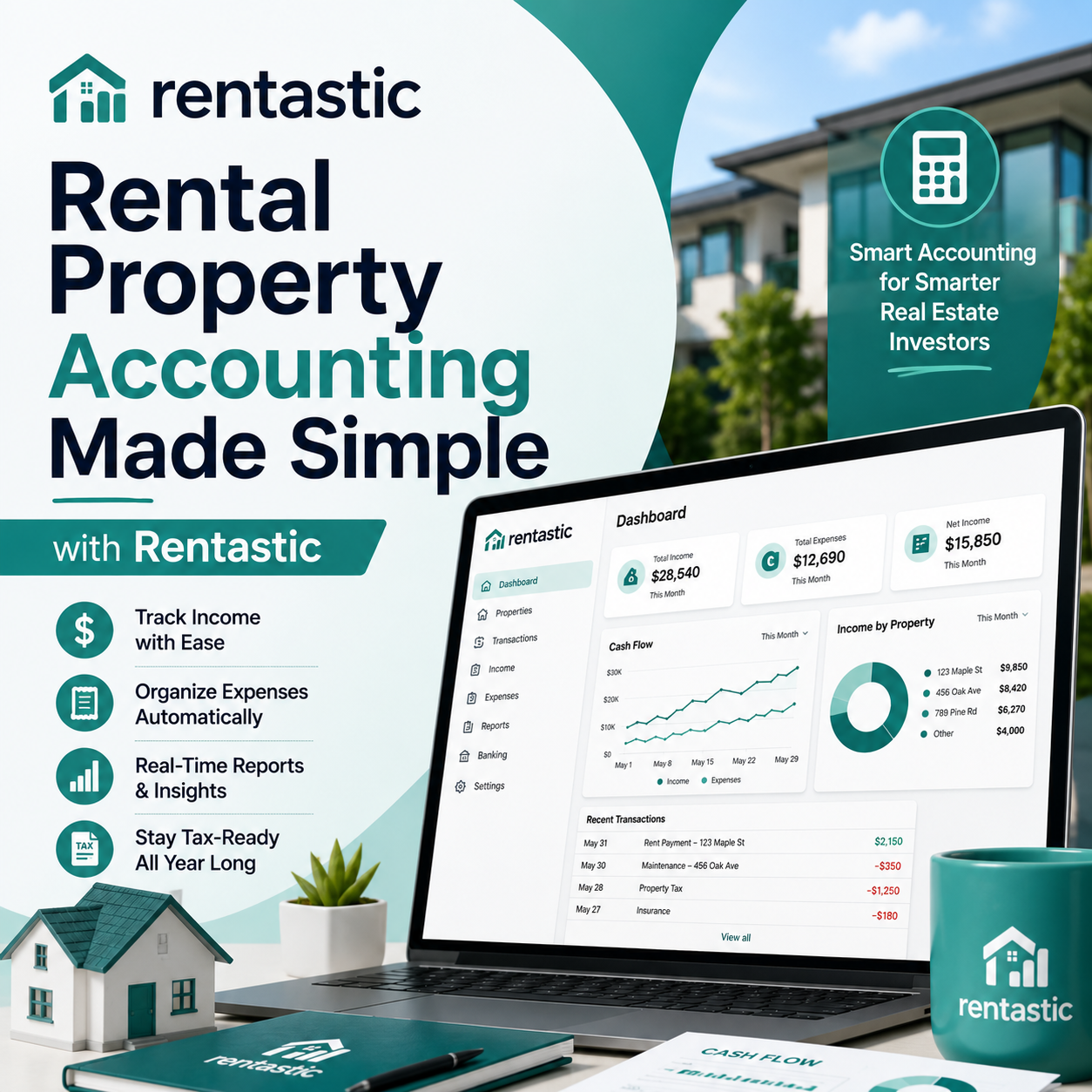
Manually tracking rental income and expenses can become challenging, especially when managing multiple properties.
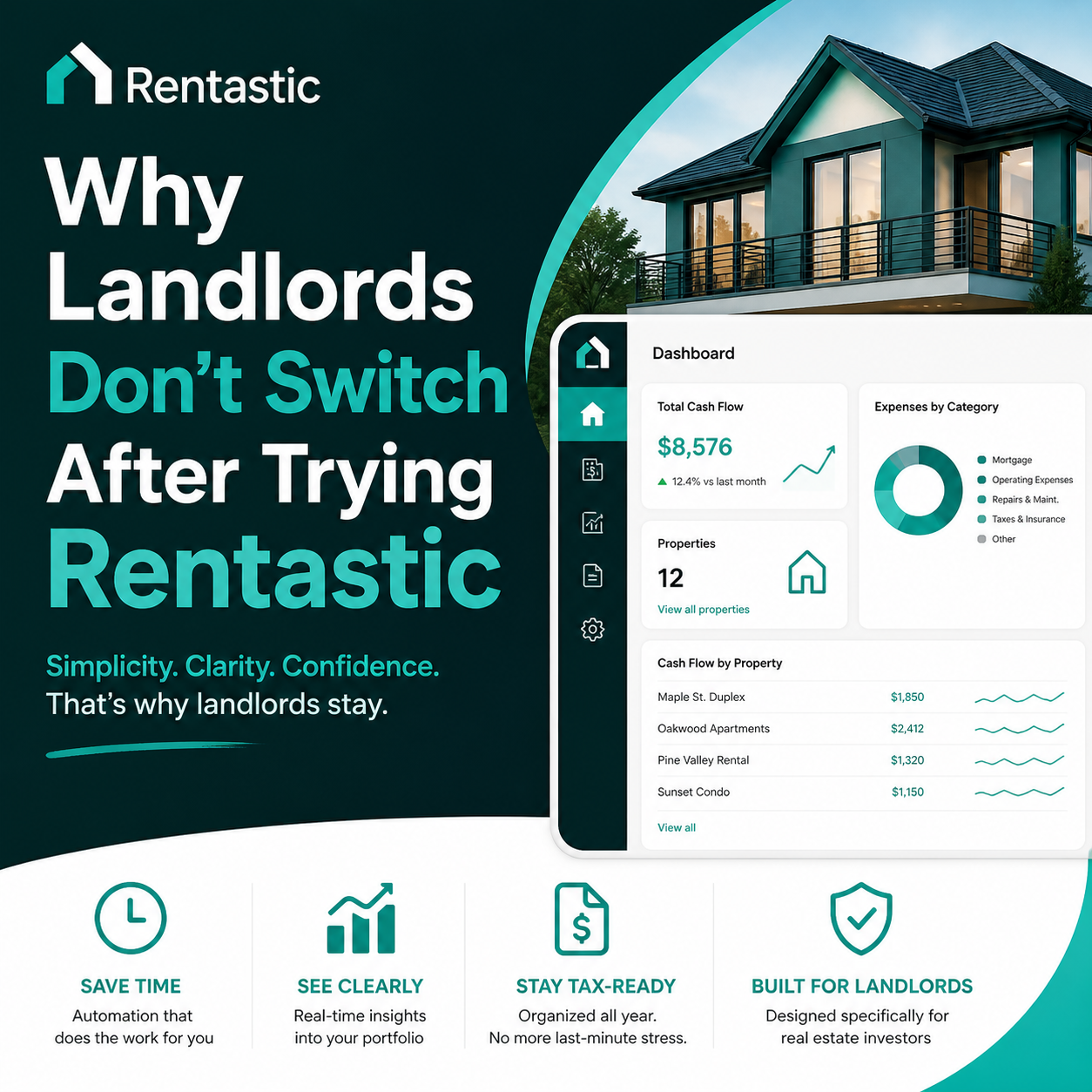
With Rentastic, landlords and real estate investors can simplify their financial management by:
Having a clearer picture of your property's finances makes it easier to budget, adjust rental prices, and make informed investment decisions.
The true monthly cost of owning a rental property goes far beyond your mortgage payment.
By accounting for taxes, insurance, maintenance, vacancies, and other operating expenses, you can better understand how much your property actually costs and whether it's generating positive cash flow.
The more accurately you track your expenses, the better you can protect your rental property's profitability.
Start taking control of your rental property finances with Rentastic and make smarter decisions with confidence.
RECENT POSTS


© 2025 Rentastic
Rentastic is registered as a trademark. Terms and conditions, features, support, pricing, and service options subject to change without notice.
















































Comments