

Refinancing a rental property can be a smart financial move, but getting a lower interest rate doesn't always mean you're saving money.
For real estate investors, refinancing can help reduce monthly mortgage payments, improve rental cash flow, access equity, or restructure existing debt. However, refinancing also comes with closing costs, potential loan term extensions, and other expenses that can affect your overall return on investment (ROI).
The key question isn't simply whether you can refinance. It's whether refinancing will actually improve your rental property's financial performance.
Here's how to determine when refinancing makes sense and when it's better to keep your existing mortgage.
One of the most common reasons landlords refinance is to secure a lower mortgage interest rate.
A lower rate can reduce monthly payments, leaving more rental income available after expenses.
Example:
Suppose you have a rental property with the following mortgage:
Illustrative example assuming a new 30-year term for both loans, excluding taxes, insurance, and refinancing costs.
In this scenario, refinancing could save approximately $2,388 annually in mortgage payments.
That extra cash flow could help cover maintenance, vacancies, or unexpected property expenses.
However, lower monthly payments don't automatically mean lower lifetime borrowing costs, especially if refinancing resets the mortgage term.
Refinancing isn't free. Lenders typically charge closing costs, which may include appraisal fees, origination fees, title expenses, and other charges.
Before refinancing, calculate how long it will take for your monthly savings to recover those costs.
Refinancing break-even formula:
For example:
If you plan to hold the property for another 10 years, refinancing may be worthwhile.
But if you're planning to sell within the next year, you might not recover your refinancing expenses.
This calculation is a starting point. A complete comparison should also consider remaining loan terms, total interest, tax effects, and the opportunity cost of upfront cash.
Positive cash flow is essential for maintaining a financially healthy rental property.
Refinancing can improve cash flow by reducing the monthly mortgage payment without requiring an increase in rental income.
Consider this example:
In this example, refinancing increases monthly cash flow by 50%, before accounting for refinancing costs.
That's an additional $2,400 annually that could be used for property improvements, emergency reserves, or future investments.
For landlords managing multiple rental properties, even modest improvements in monthly cash flow can make a meaningful difference across an entire portfolio.
A cash-out refinance allows investors to borrow against the equity they've built in a rental property.
Instead of simply replacing the existing mortgage, the investor takes out a larger loan and receives part of the difference in cash.
For example:
That money could be used to renovate the property, purchase another rental, or fund improvements that increase rental income.
However, cash-out refinancing increases your debt. It may also increase your monthly payments and reduce your cash flow.
Before proceeding, make sure the expected return from using the equity justifies the additional borrowing costs and risk.
Refinancing isn't always about lowering payments. Sometimes, it's about making your investment more predictable.
For example, landlords with adjustable-rate mortgages may refinance into fixed-rate loans to protect themselves from future interest rate increases.
This can be especially helpful when:
Even if the new mortgage doesn't provide immediate savings, greater payment stability may make refinancing worthwhile.
Not every refinancing opportunity is a good one.
You may want to avoid refinancing when:
Closing costs are too high. If the savings take too long to recover, refinancing may provide little financial benefit.
You plan to sell soon. A short ownership timeline may prevent you from reaching your break-even point.
Your existing mortgage already has a competitive rate. Refinancing into a similar or higher rate may not justify the expense.
You're extending your mortgage unnecessarily. Restarting a 30-year loan can reduce payments while increasing the total interest paid over time.
Cash-out refinancing creates excessive debt. Taking too much equity out of a property can leave you financially vulnerable during vacancies or unexpected repairs.
The goal should be to improve your overall investment performance, not simply obtain a new loan.
Before refinancing your rental property, compare your current mortgage against the proposed new loan.
Pay attention to these five financial factors:
Also consider how mortgage interest deductions, depreciation, and the use of cash-out proceeds may affect your taxes. A tax professional can help evaluate your specific situation.
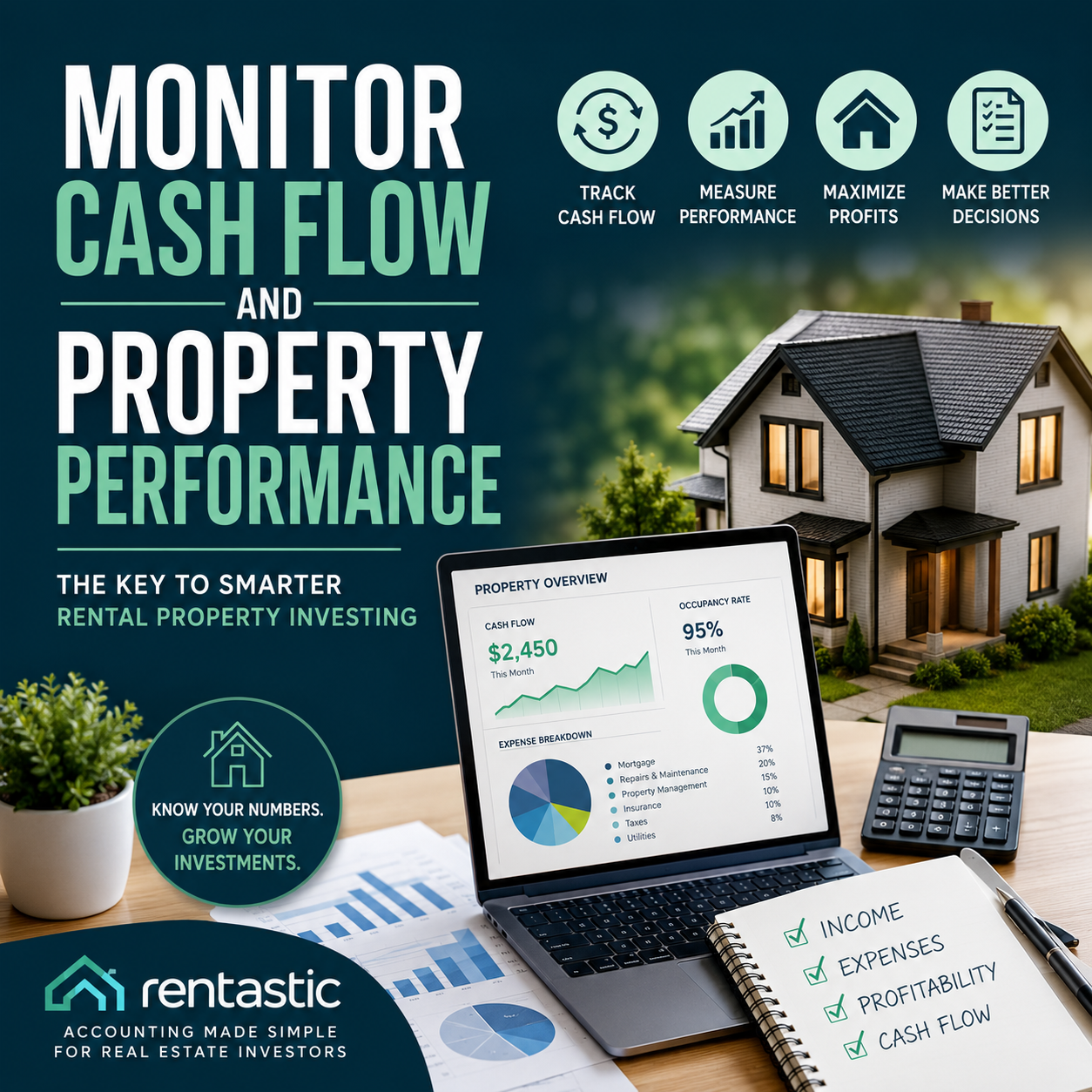
Before making a refinancing decision, you need a clear understanding of your rental property's income, expenses, and cash flow.
That's where Rentastic can help.
Rentastic makes it easier for landlords and real estate investors to organize rental finances, monitor income and expenses, and evaluate property performance.
With accurate financial records, you can better understand how changes in mortgage payments may affect your rental property's profitability.
Instead of relying on estimates, you can use your actual financial data to make more informed investment decisions.
Explore Rentastic to simplify your rental property accounting.
Refinancing a rental property makes financial sense when the long-term benefits outweigh the costs.
A lower mortgage rate, improved monthly cash flow, reduced financial risk, or access to investment capital can all be valid reasons to refinance.
However, the decision should always be based on actual numbers rather than interest rates alone.
The best refinancing decision is one that strengthens your rental property's financial position and supports your long-term investment goals.
Before signing a new loan agreement, calculate your savings, evaluate the costs, and make sure refinancing moves your investment in the right direction.
RECENT POSTS


© 2025 Rentastic
Rentastic is registered as a trademark. Terms and conditions, features, support, pricing, and service options subject to change without notice.







































































Comments