
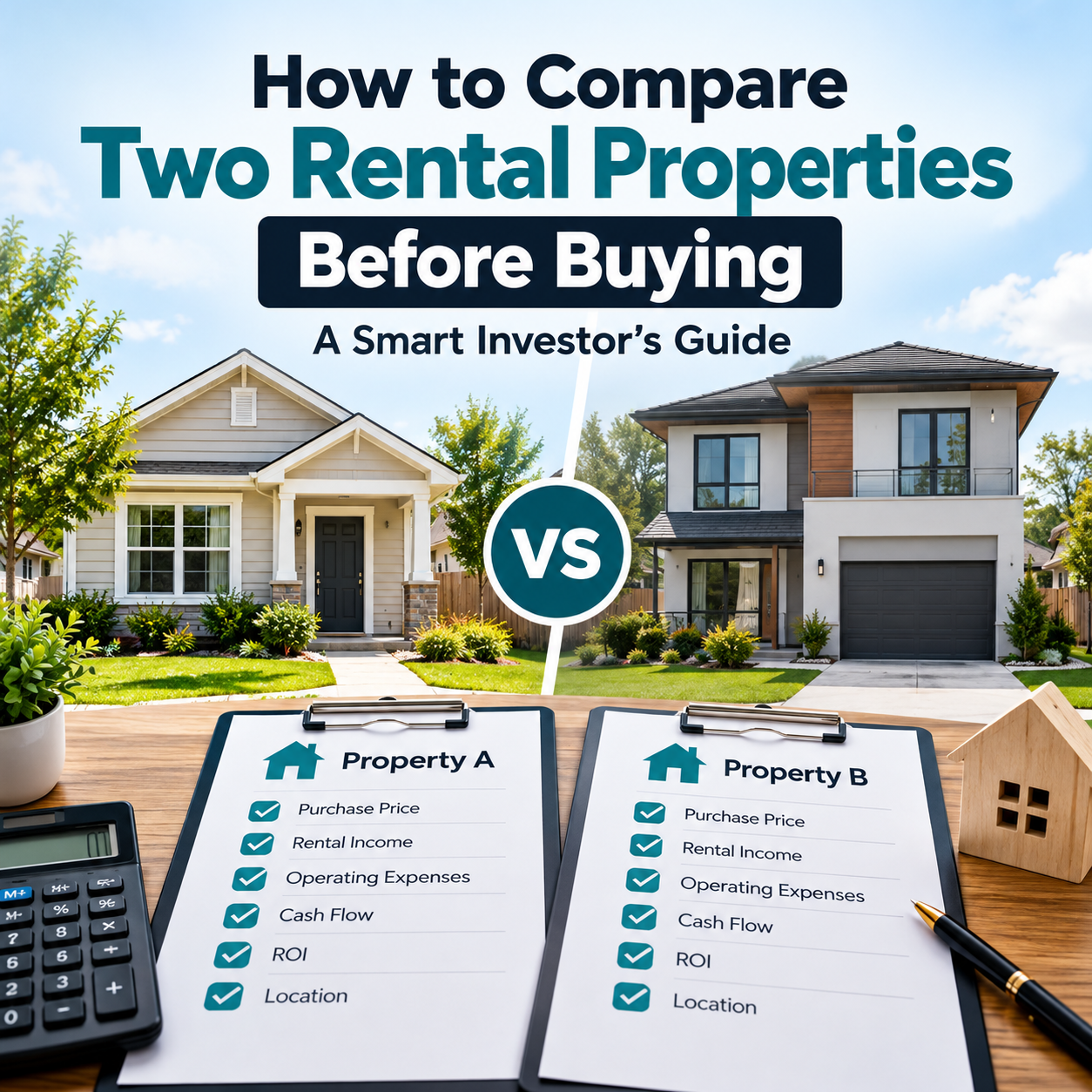
Buying a rental property is a major investment, but choosing between two properties can be challenging.
One property might have a lower purchase price but higher maintenance costs. Another might generate more rental income but require a larger upfront investment.
So, how do you know which rental property is the better investment?
The key is to compare more than just the asking price. Cash flow, operating expenses, return on investment (ROI), location, and long-term profitability all play important roles.
Here's how to compare two rental properties before buying.
The purchase price is important, but it doesn't represent the full cost of buying a rental property.
You should also consider the down payment, closing costs, immediate repairs, and other upfront expenses.
Although Property A costs $50,000 less, the difference in initial cash investment is only $4,000.
Investor Tip: Always compare the total cash required, not just the listing price.
A property generating higher rent isn't automatically more profitable.
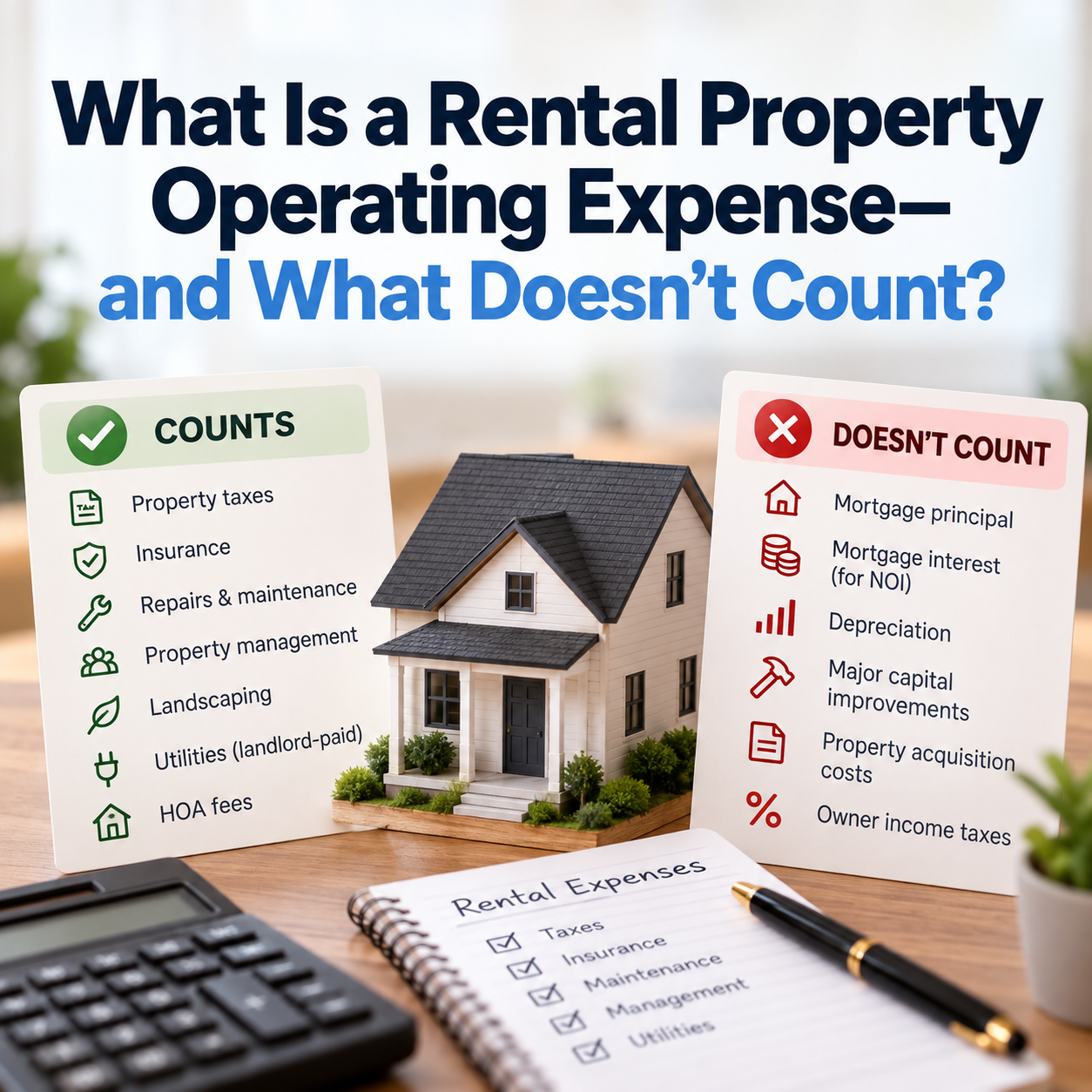
You also need to account for ongoing expenses such as:
For example, Property A generates $1,800 monthly rent with $600 in operating expenses, while Property B generates $2,200 with $850 in expenses.
Property B earns more rental income, but its operating costs are also higher.
This is why understanding your property's actual expenses is essential before making an investment decision.
Cash flow represents the money remaining after paying operating expenses and mortgage payments.
Monthly Cash Flow = Rental Income − Operating Expenses − Mortgage Payments
Let's compare both properties.
Despite having different purchase prices and rental income, both properties generate the same cash flow.
This demonstrates why higher rental income doesn't always mean higher profits.
These illustrative figures assume operating expenses include realistic allowances for routine maintenance and vacancy. Actual mortgage payments and expenses will depend on the property and financing terms.
Cash-on-cash return measures how much annual cash flow a property generates compared to the amount of money you invested.
Using our examples:
Property A:
$3,000 ÷ $55,000 × 100 = 5.45%
Property B:
$3,000 ÷ $59,000 × 100 = 5.08%
Property A offers a slightly higher cash-on-cash return because it generates the same annual cash flow with less invested capital.
For investors focused on maximizing returns from their initial investment, Property A may be the better option.
The capitalization rate helps investors compare a property's operating profitability without considering mortgage financing.
Net operating income (NOI) is rental income minus operating expenses, excluding mortgage payments.
Using our example:
Property A has a higher cap rate, meaning it generates more operating income relative to its purchase price.
However, cap rate alone shouldn't determine your decision. Property condition, location, and investment risks also matter.
Even a property with excellent financial projections can become a poor investment if it's located in an area with weak rental demand.
Before buying, consider:
A property with slightly lower cash flow today may offer better long-term potential if it's located in a desirable neighborhood.
Two properties with similar cash flow can have very different maintenance requirements.
An older property may need expensive repairs to its roof, HVAC system, plumbing, or electrical systems.
Before purchasing, review the property's condition and estimate potential repair costs.
A cheaper property requiring major renovations may ultimately cost more than a slightly more expensive property in better condition.
Investor Tip: Set aside funds for unexpected repairs and major replacements to avoid losing months of rental profits.
Rental properties can generate wealth through monthly cash flow, property appreciation, and mortgage principal repayment.
For example, a $250,000 property appreciating at 3% annually would be worth approximately $289,819 after five years.
However, appreciation isn't guaranteed.
Research neighborhood growth, local housing demand, and historical property values before relying on future appreciation.
The ideal investment balances current profitability with reasonable long-term growth potential.
Before making your final decision, consider how each property would perform under less favorable conditions.
Ask yourself:
A property generating $250 in monthly cash flow earns only $3,000 annually before unexpected costs.
One major repair could eliminate an entire year's projected cash flow.
This is why maintaining cash reserves and evaluating potential risks are essential.
Comparing rental properties becomes easier when you have organized financial records.
With Rentastic, landlords and real estate investors can:
Whether you're purchasing your first rental property or expanding your portfolio, understanding your numbers helps you make smarter investment decisions.
Based on our examples, both properties generate $250 in monthly cash flow.
However, Property A requires less initial capital and offers a higher cash-on-cash return and cap rate.
From a purely financial perspective, Property A appears to be the stronger investment.
But remember, the best rental property isn't necessarily the cheapest or the one generating the highest rent.
It's the property that offers the right balance of consistent cash flow, manageable expenses, lower risk, and long-term growth potential.
Understanding your rental property's financial performance is essential for building a profitable real estate portfolio.
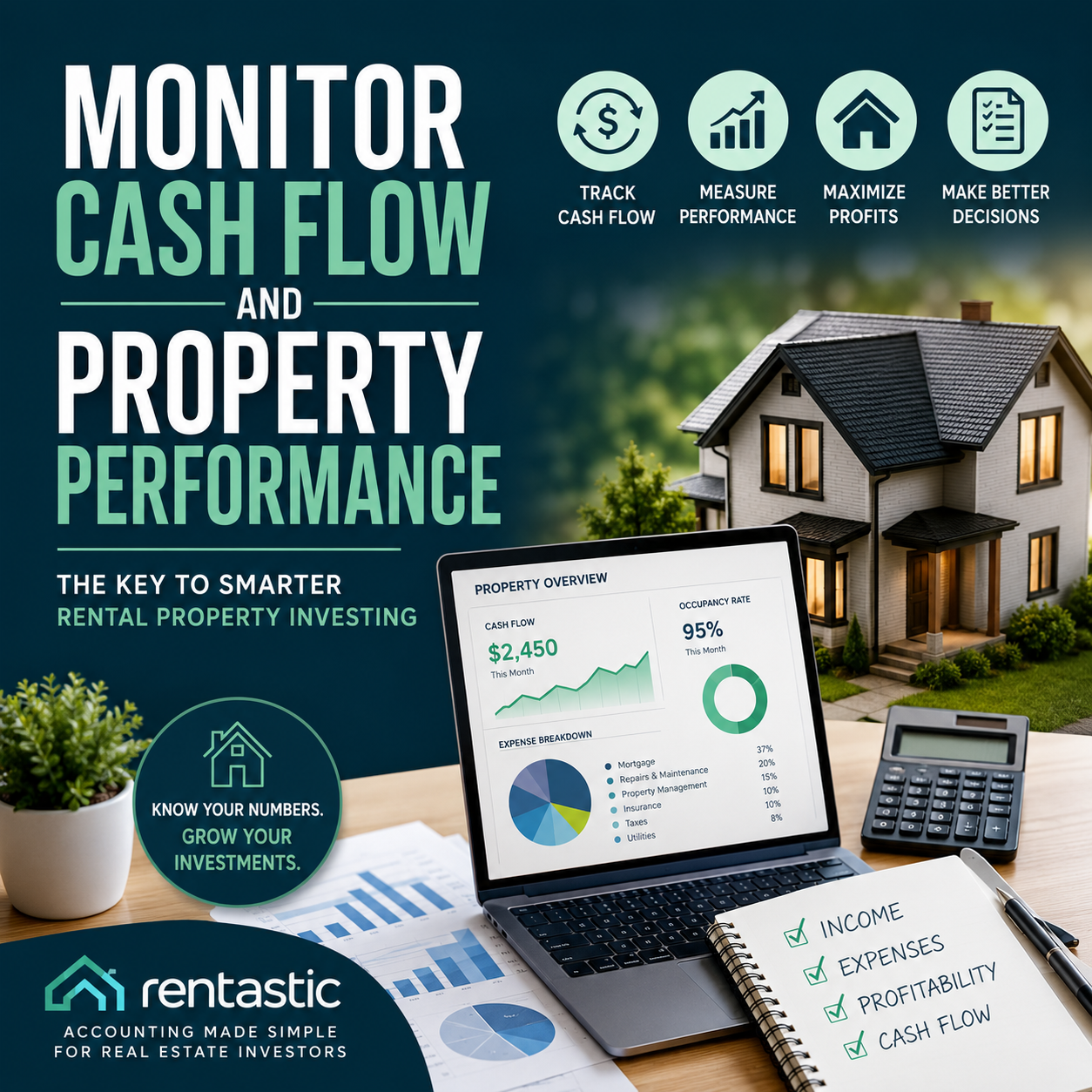
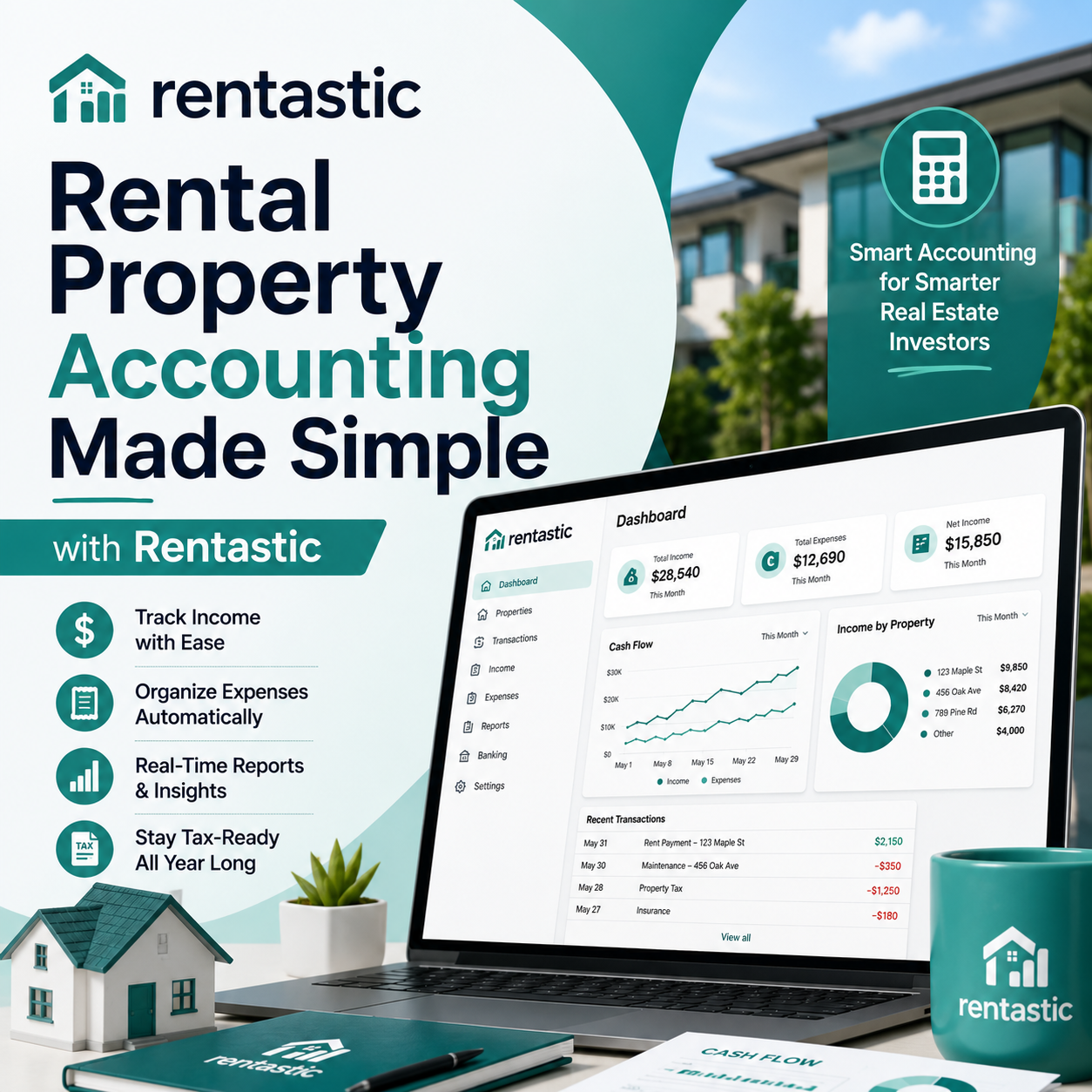
Rentastic simplifies rental property accounting, helping you track income, manage expenses, and monitor profitability in one place.
Whether you're managing one property or several, having accurate financial records can help you make more confident investment decisions.
Start tracking your rental property finances with Rentastic today!
RECENT POSTS


© 2025 Rentastic
Rentastic is registered as a trademark. Terms and conditions, features, support, pricing, and service options subject to change without notice.




























































Comments