
Owning a rental property comes with plenty of expenses, but not every dollar you spend should be treated the same way.
Some costs are operating expenses—the recurring costs required to keep a rental property running. Others, such as mortgage principal payments, major improvements, and certain acquisition costs, generally fall into different accounting or tax categories.
Understanding the difference matters because operating expenses directly affect your property's Net Operating Income (NOI) and can influence how you evaluate profitability, cash flow, and investment performance.
Here’s how rental property operating expenses work, what usually counts, and what generally doesn’t.
A rental property operating expense is a cost associated with the day-to-day operation and maintenance of an income-producing property.
Think of these as the expenses necessary to keep the property functioning, maintained, insured, managed, and available to tenants.
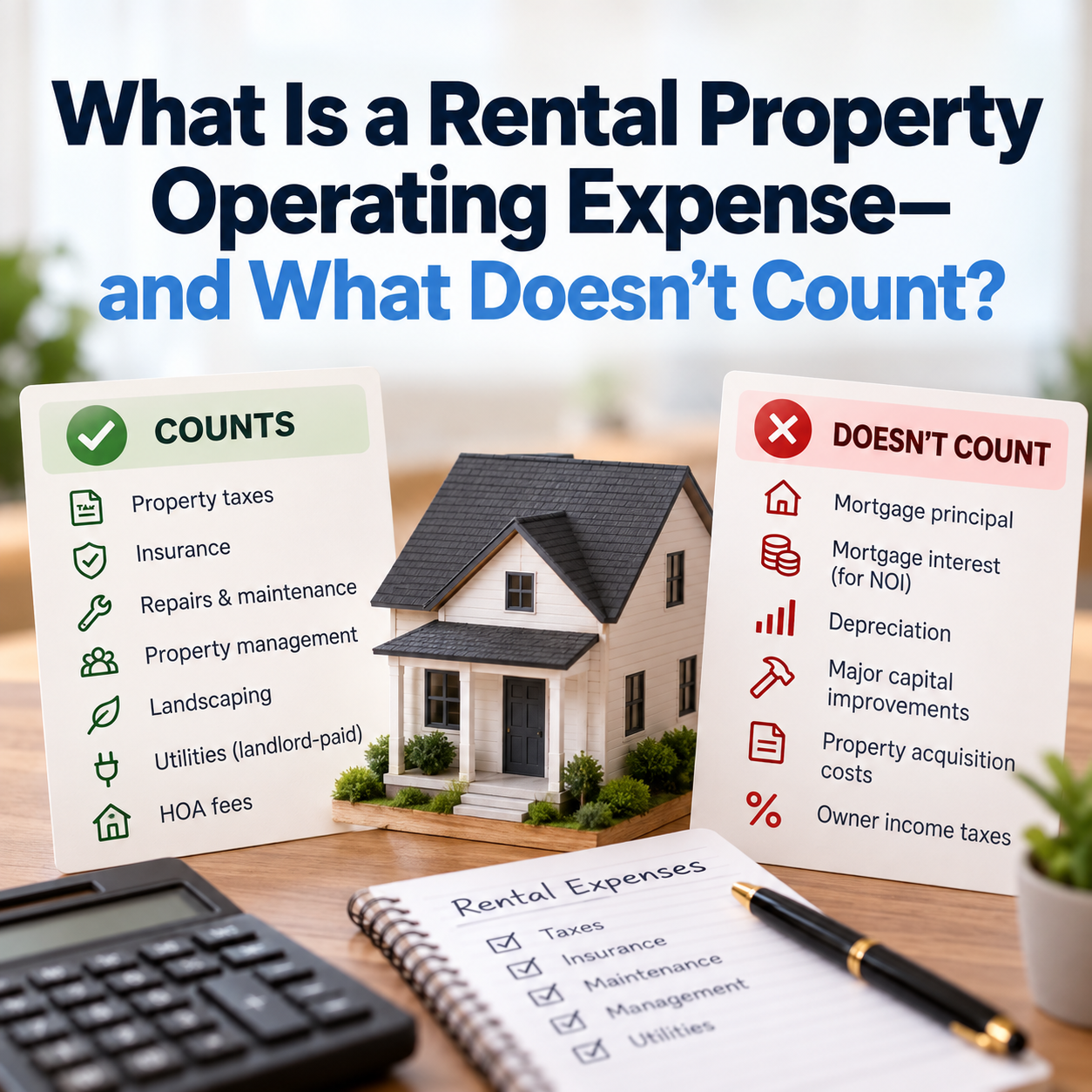
Common examples include:
These costs are commonly used when calculating a property's NOI.
Net Operating Income measures how much income a rental property generates after its operating expenses.
A simple formula is:
NOI = Rental Property Income − Operating Expenses
For example, suppose a rental generates $30,000 in annual income and has the following annual operating expenses:
ExpenseAnnual CostProperty taxes$4,000Insurance$1,500Repairs and maintenance$2,000Property management$2,400Landscaping$600Total Operating Expenses$10,500
The property's NOI would be:
$30,000 − $10,500 = $19,500
That $19,500 provides a clearer picture of the property's operating performance before financing costs, income taxes, depreciation, and certain other non-operating items.
Property taxes are one of the most common operating expenses for rental properties.
Even if the property has no mortgage, the owner generally must continue paying property taxes, making them part of the ongoing cost of operating the investment.
Landlord insurance and other property-related insurance premiums are generally part of the property's operating costs.
Insurance protects against risks such as property damage and liability and is an ongoing expense of owning the rental.
Routine repairs and maintenance generally count as operating expenses.
Examples might include:
The key word is routine. A repair that keeps the property in normal operating condition is different from a major improvement that significantly increases the property's value or useful life.
If you hire a property manager to handle tenant communication, rent collection, maintenance coordination, or other management responsibilities, those fees are generally operating expenses.
Even self-managing landlords should understand this cost when comparing their property's performance with professionally managed investments.
If the landlord is responsible for expenses such as:
those costs are typically part of the property's operating expenses.
If tenants pay their own utilities directly, those bills generally aren't expenses of the landlord.
Recurring costs associated with maintaining the property can also qualify as operating expenses.
Examples include lawn care, snow removal, pest control, pool maintenance, and common-area cleaning.
For rental properties located within a homeowners association or condominium association, recurring HOA dues are generally considered part of the cost of operating the property.
Special assessments may need to be treated differently depending on what the assessment is funding.
This is where rental property accounting can become confusing.
An expense can involve your rental property without necessarily being an operating expense for NOI purposes.
Mortgage payments contain two major components: principal and interest.
The principal portion reduces the amount you owe on the loan. It is not considered an operating expense when calculating NOI.
This is one reason NOI and cash flow aren't the same thing.
A property could have strong NOI but much lower cash flow after making its mortgage payments.
Mortgage interest is a real cost and may have tax implications, but it is generally excluded from operating expenses when calculating NOI because NOI measures property performance before financing costs.
This distinction is especially important when comparing two properties financed differently.
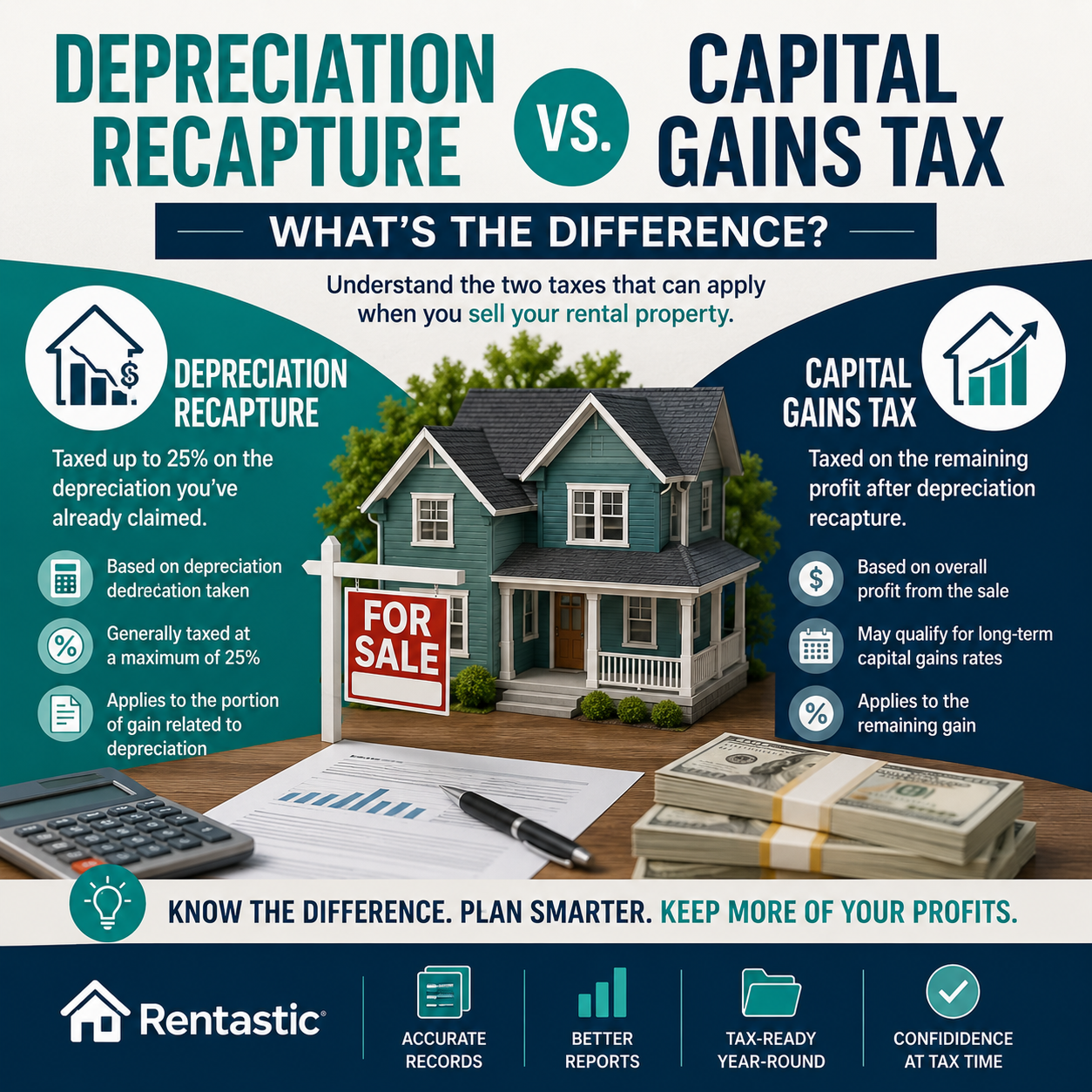
Depreciation is an accounting and tax concept that allows the cost of certain property to be allocated over time.
However, depreciation doesn't represent cash leaving your bank account each month and is generally excluded from NOI operating expenses.
Not every repair or renovation should automatically be categorized as an operating expense.
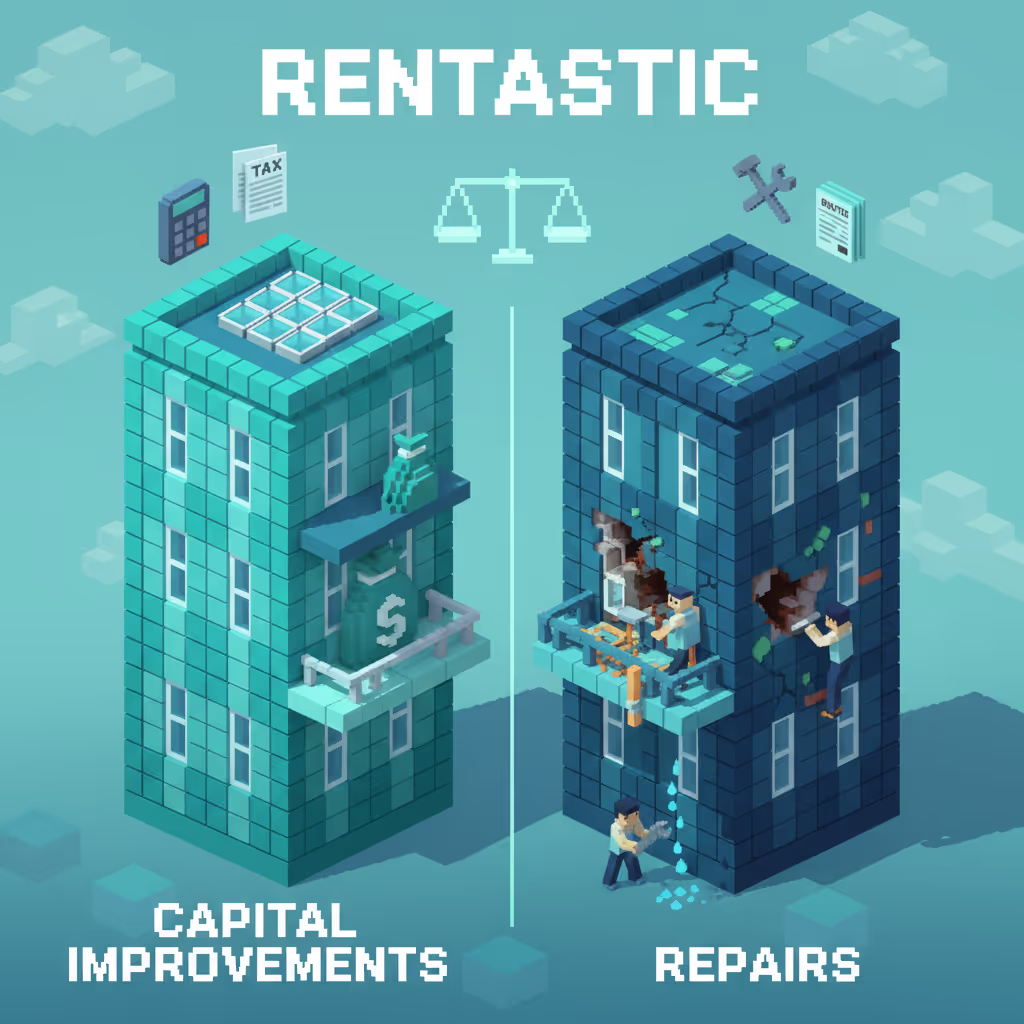
Large improvements that add value, extend the property's useful life, or substantially improve the property may be considered capital expenditures (CapEx) instead.
Examples may include:
The distinction between a repair and an improvement can also have tax consequences, so landlords should consult a qualified tax professional when classification isn't clear.
Expenses associated with purchasing a rental property aren't typically part of its ongoing operating expenses.
Certain closing costs, loan fees, and other acquisition-related expenses may receive different accounting or tax treatment.
Personal federal and state income taxes paid by the property owner generally aren't included when calculating a property's NOI.
NOI is designed to measure the property's operating performance independently of the owner's individual tax situation.
One of the most important distinctions landlords should understand is the difference between operating expenses and capital expenditures.
An operating expense generally keeps the property functioning in its current condition.
A capital expenditure generally improves the property, adds significant value, or extends the useful life of an asset.
For example:
Repairing part of a damaged roof may be a repair.
Replacing the entire roof may be a capital improvement.
The exact tax treatment depends on the circumstances and applicable tax rules, so don't rely solely on the size of the expense when deciding how it should be classified.
Another common mistake is assuming operating expenses represent every expense that affects your bank account.
They don't.
Suppose your property produces:
You might still have:
Your actual cash flow could therefore be substantially lower than your NOI.
This is why landlords should monitor multiple metrics instead of relying on a single number.
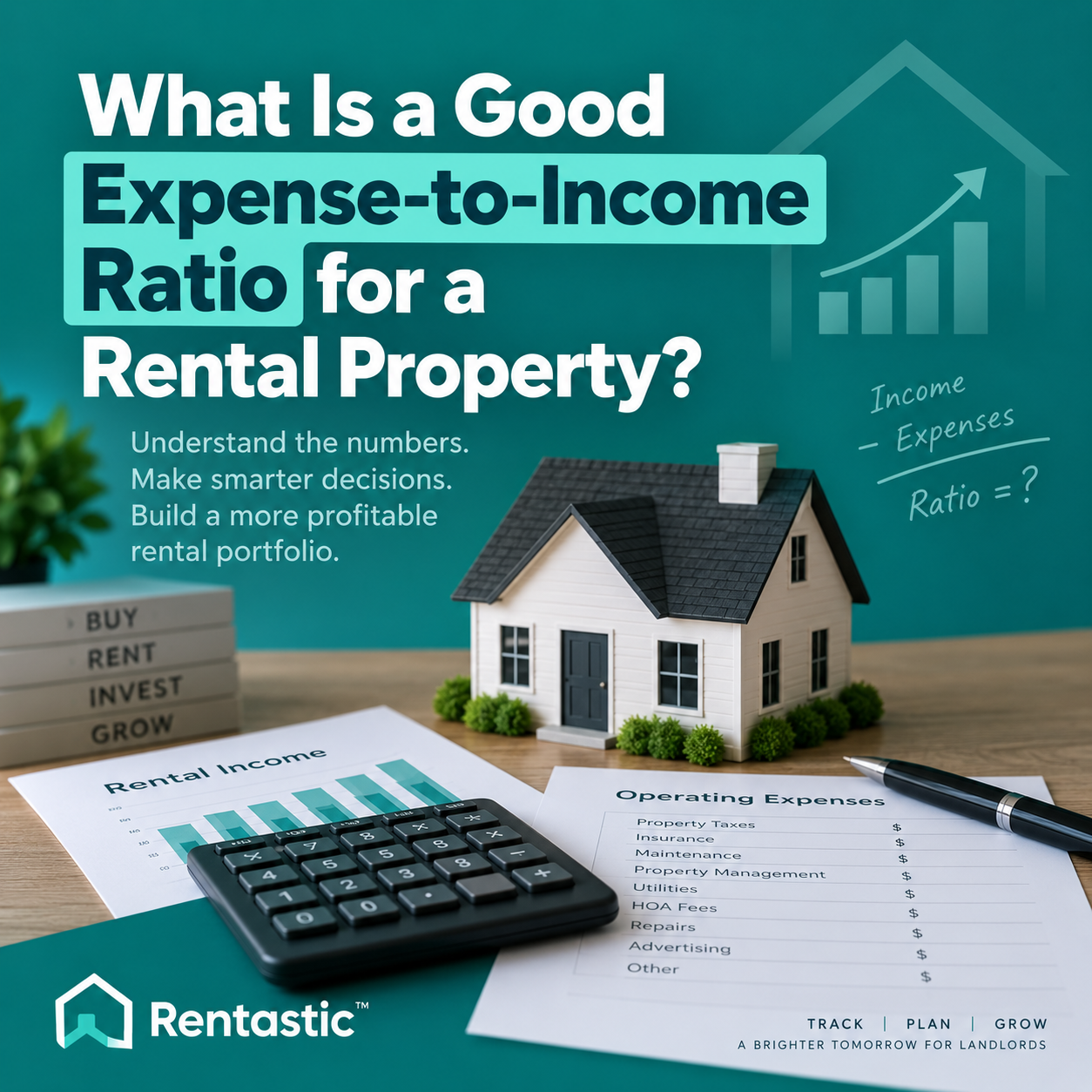
One useful metric is the Operating Expense Ratio (OER).
The basic formula is:
Operating Expense Ratio = Operating Expenses ÷ Operating Income × 100
If a property generates $30,000 in income and has $10,500 in operating expenses:
$10,500 ÷ $30,000 × 100 = 35%
That means approximately 35% of the property's income is being consumed by operating expenses.
There isn't one ideal percentage for every rental property. Operating costs vary depending on property type, age, location, utilities, insurance costs, taxes, management structure, and maintenance requirements.
Instead of relying on a universal benchmark, compare your property's ratio over time and against similar properties in your market.
Putting every rental expense into one large "expenses" category makes it harder to understand how your investment is actually performing.
Separating expenses correctly can help you:
It can also help reveal problems that aren't obvious from rental income alone.
A property may collect more rent every year while becoming less profitable because insurance, taxes, maintenance, and management expenses are rising even faster.
Keeping operating expenses organized becomes increasingly important as your rental portfolio grows.
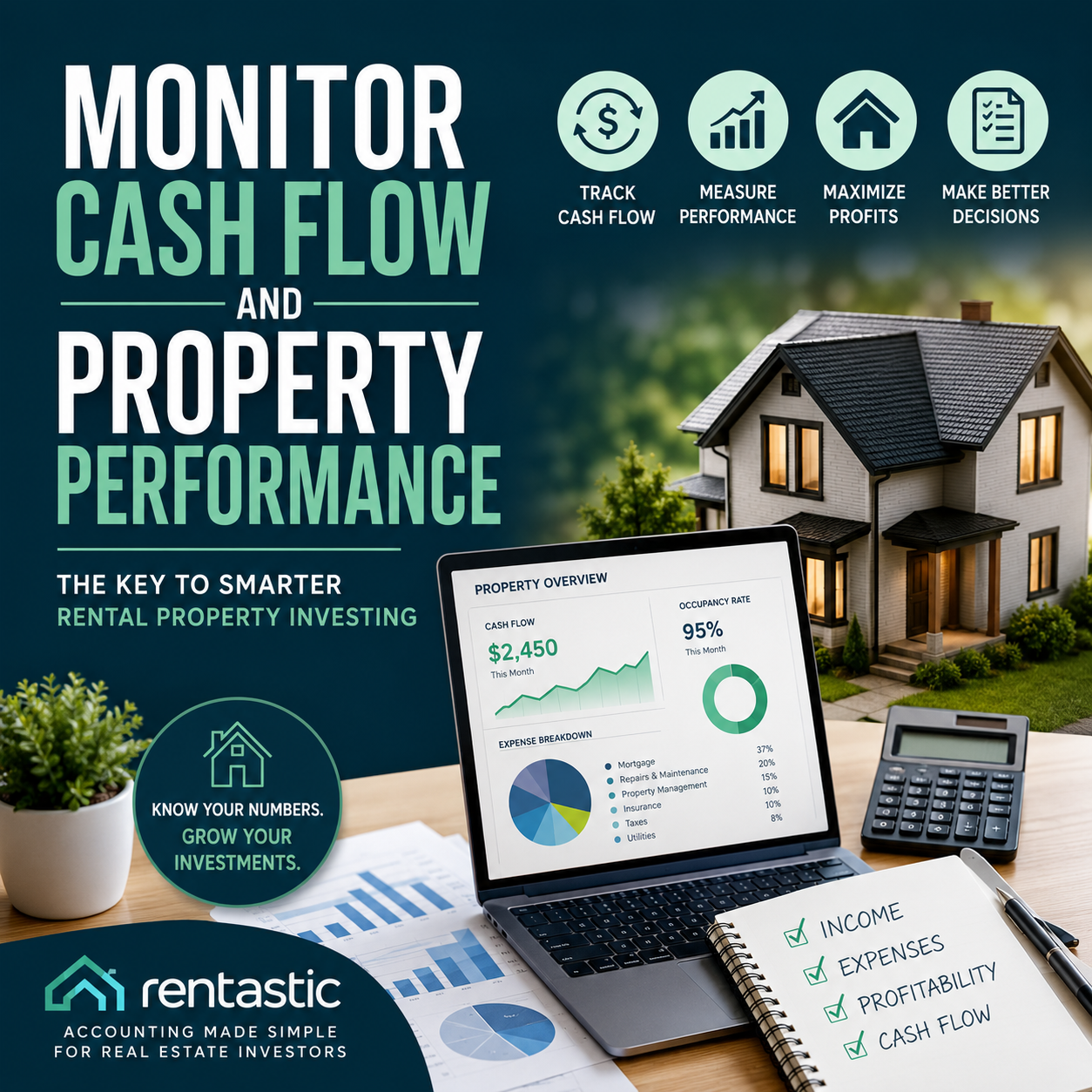
Instead of sorting through spreadsheets and bank statements at the end of the year, Rentastic helps landlords and real estate investors organize rental income and expenses, categorize transactions, and monitor property performance in one place.
Keeping accurate records throughout the year makes it easier to understand where your money is going—and gives you cleaner financial information when tax season arrives.
A rental property operating expense is generally a cost required to keep an income-producing property running and maintained.
Property taxes, insurance, routine maintenance, management fees, and landlord-paid utilities are common examples.
Mortgage principal, financing costs when calculating NOI, depreciation, major capital improvements, and certain acquisition expenses generally don't belong in the same operating-expense bucket.
Knowing the difference gives you a more accurate picture of your property's performance.
Because accounting and tax treatment can differ from financial-performance calculations such as NOI—and can depend on the specific circumstances—consult a qualified CPA or tax professional when you're unsure how an expense should be classified.
The better you understand your expenses, the better you can understand what your rental property is actually earning.
RECENT POSTS


© 2025 Rentastic
Rentastic is registered as a trademark. Terms and conditions, features, support, pricing, and service options subject to change without notice.
































.png)
































.png)








Comments