
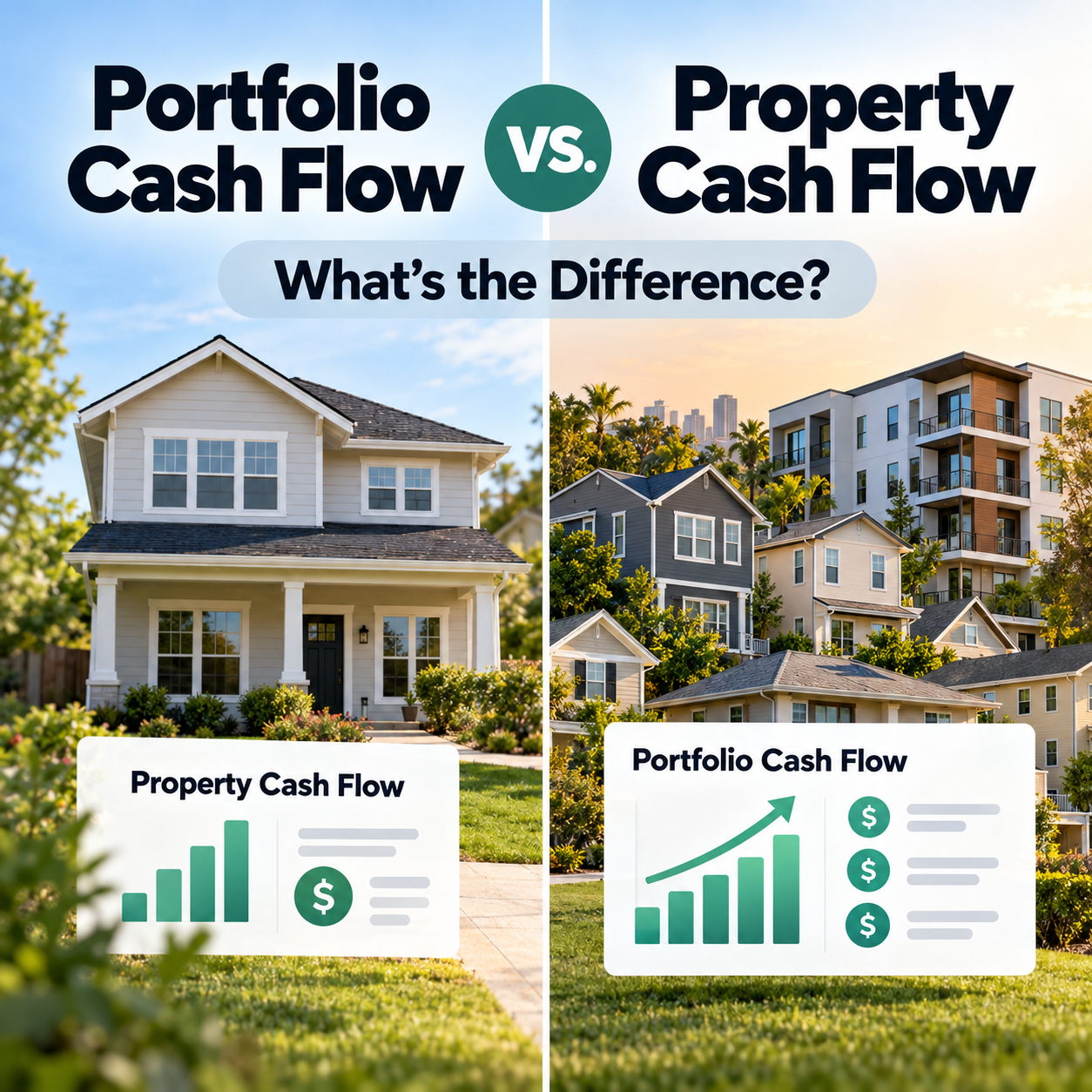
Owning multiple rental properties can be a great way to build long-term wealth, but managing the finances of an entire portfolio can quickly become complicated.
One property might generate strong monthly profits, while another barely breaks even. Meanwhile, your overall rental business could still appear financially healthy.
This is where understanding the difference between portfolio cash flow and property cash flow becomes essential.
Both metrics help landlords understand their rental income and expenses, but they answer different questions. Knowing how to analyze each one can help you make smarter investment decisions, identify underperforming properties, and improve your overall profitability.
Property cash flow is the amount of money a single rental property generates after paying its operating expenses and mortgage payments.
It tells you whether an individual property is putting money into your pocket or costing you money each month.
The basic formula is:
Property Cash Flow = Rental Income − Operating Expenses − Mortgage Payments
For example, imagine you own a rental property with the following monthly finances:
Your total monthly expenses are $1,950.
That leaves you with:
$2,500 − $1,950 = $550 monthly cash flow
This property generates $550 in positive monthly cash flow, or $6,600 annually, assuming those monthly figures remain consistent.
However, this calculation only tells you how one property is performing.
It doesn't reveal the financial health of your entire rental portfolio.
Portfolio cash flow measures the combined cash flow generated by all rental properties you own.
Instead of analyzing each property individually, it provides a broader picture of how your rental investments perform together.
The formula is:
Portfolio Cash Flow = Total Rental Portfolio Income − Total Portfolio Expenses and Debt Payments
You can also calculate it by adding the cash flow of every property in your portfolio, provided all income and expenses are consistently allocated.
For example, imagine you own four rental properties:
Your total portfolio cash flow would be:
$550 + $400 − $150 + $700 = $1,500 per month
Even though Property C is losing $150 monthly, your overall portfolio still generates $1,500 in positive cash flow.
This is an important distinction because a profitable portfolio doesn't necessarily mean every property within it is profitable.
Tracking cash flow at the individual property level helps landlords understand which investments are performing well and which may need attention.
A property generating negative cash flow can quietly reduce your overall profitability.
For example, one rental might consistently require additional maintenance, experience frequent vacancies, or carry a higher mortgage payment.
Without property-level tracking, those problems can be hidden by stronger-performing investments.
Tracking individual property cash flow helps you determine whether rental income is sufficient to cover expenses.
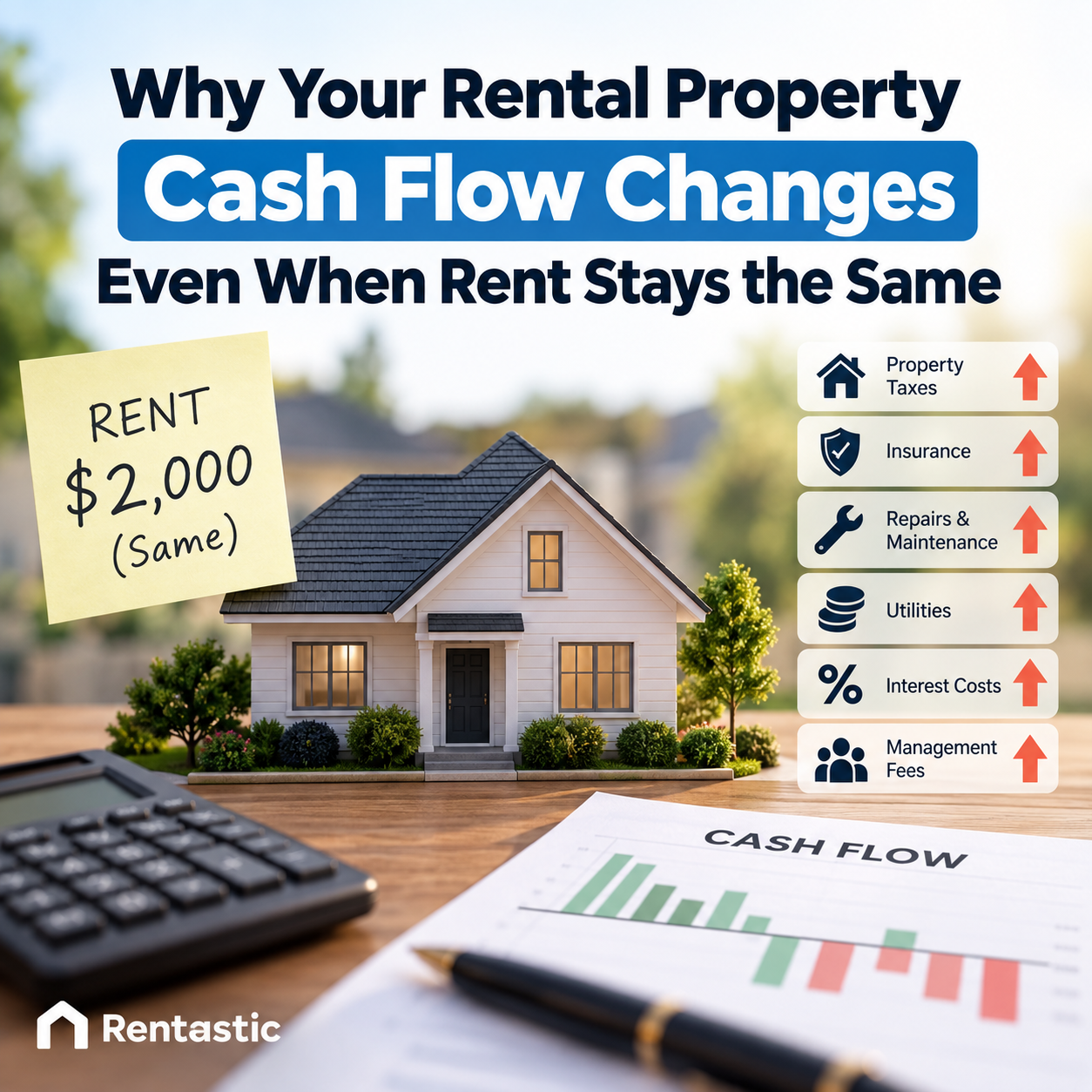
If property taxes, insurance, and maintenance costs increase while rent stays the same, your cash flow gradually shrinks.
Monitoring these changes can help you evaluate when a rent adjustment may be appropriate, based on market conditions and applicable laws.
Not every rental investment performs as expected.
If a property consistently generates negative cash flow, you may need to consider refinancing, reducing expenses, improving occupancy, or selling.
However, cash flow shouldn't be the only deciding factor. Property appreciation, equity growth, taxes, and future investment potential also matter.
Every rental property has different maintenance requirements.
An older property may need more frequent repairs than a newer one, even when both generate similar rental income.
Tracking cash flow separately allows you to understand how these costs affect each property's performance.
While individual property performance is important, landlords also need to understand the financial health of their rental business as a whole.
Portfolio cash flow provides that broader perspective.
A portfolio might include properties with different rental rates, mortgage balances, and operating costs.
Combining their cash flows helps you see how much money your investments collectively generate each month.
This becomes particularly important as you acquire more properties.
Before purchasing another rental property, it's important to understand whether your existing portfolio generates enough cash to support additional financial obligations.
Strong portfolio cash flow may give you more flexibility to build reserves, manage unexpected expenses, or save toward another investment.
However, lenders will also consider factors such as your debt, income, creditworthiness, and reserves.
Rental property ownership comes with unpredictable costs.
A major HVAC replacement, extended vacancy, or emergency plumbing repair can significantly affect your finances.
Positive portfolio cash flow can help you build financial reserves to handle these situations without relying entirely on personal savings.
As your portfolio grows, tracking total cash flow helps you evaluate whether your rental business is becoming financially stronger.
For example, increasing from $2,000 to $4,000 in monthly portfolio cash flow may indicate progress.
But it's still important to understand how much additional debt, capital, and financial risk were required to achieve that growth.
One common mistake landlords make is focusing exclusively on the total cash flow generated by their rental properties.
Consider this scenario:
You own five rental properties that collectively generate $3,000 in monthly cash flow.
At first glance, that sounds like a healthy rental business.
However, after reviewing each property separately, you discover that two properties are consistently losing money while the other three generate enough profit to offset those losses.
Your portfolio remains cash-flow positive, but some investments may be dragging down your overall returns.
This doesn't automatically mean the losing properties should be sold.
A temporary vacancy, major one-time repair, or recent renovation can create short-term negative cash flow even when a property has strong long-term potential.
The key is understanding why a property is underperforming instead of allowing its losses to disappear inside your portfolio totals.
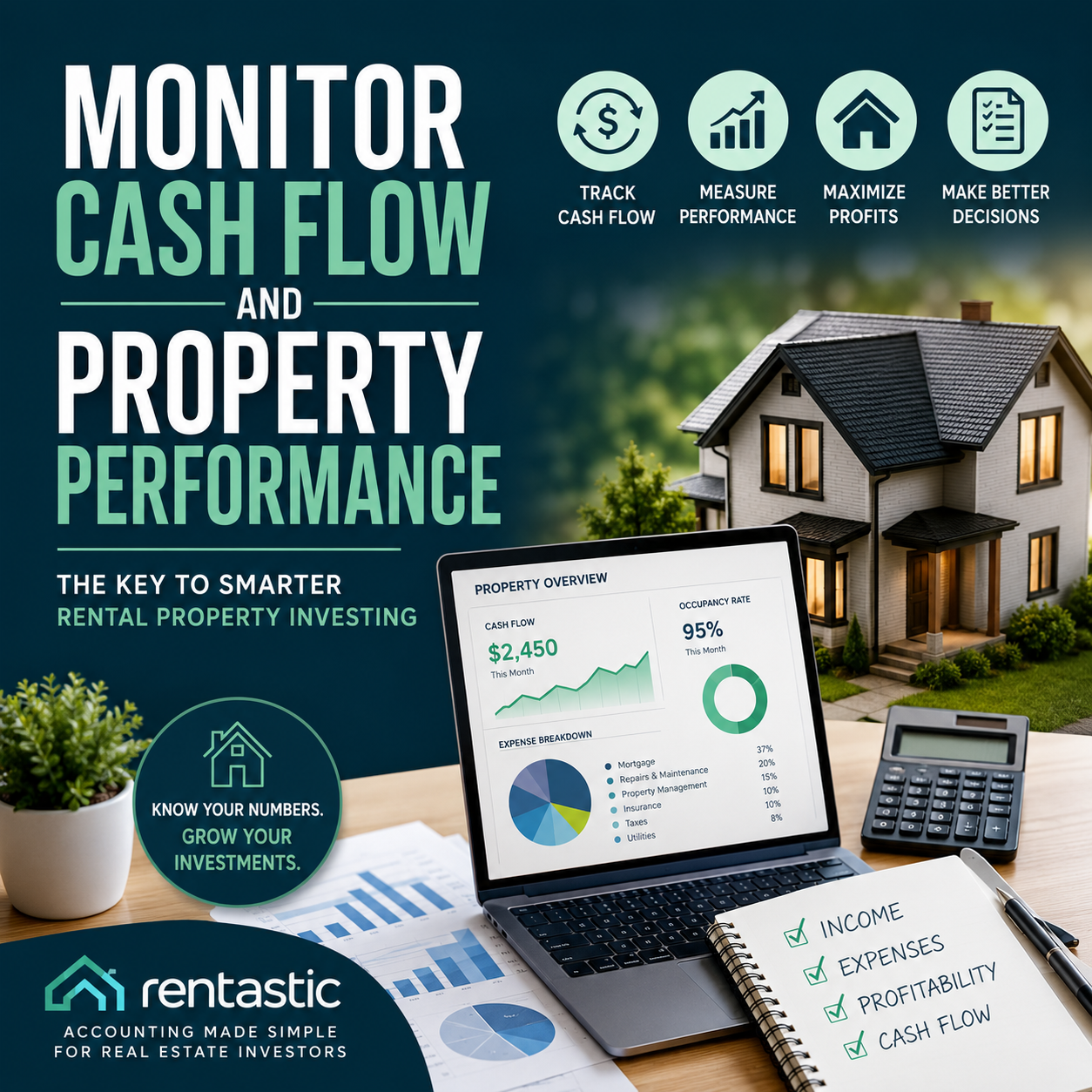
The most effective approach is to monitor property cash flow and portfolio cash flow side by side.
Here's how to do it.
Record rental income, property taxes, insurance, repairs, maintenance, utilities, management fees, and mortgage payments separately for each property.
This helps ensure that every property has an accurate financial picture.
Subtract each property's operating expenses and mortgage payments from its rental income.
Pay particular attention to properties with declining or negative cash flow.
Add together the net cash flow from all your properties.
Include any portfolio-wide expenses that haven't already been allocated to individual properties.
This provides a consolidated view of your rental business.
Don't rely on a single month's results.
Rental property expenses often fluctuate because of seasonal maintenance, vacancies, insurance renewals, and unexpected repairs.
Comparing monthly and annual performance can help you identify recurring problems and distinguish them from temporary expenses.
Once you understand both metrics, you can make more informed decisions about rent adjustments, refinancing, property improvements, future acquisitions, and potential sales.
One important detail landlords sometimes overlook is the difference between current cash flow and money that's truly available to spend.
A property might generate $500 in monthly cash flow, but that doesn't mean the entire $500 should be treated as profit available for withdrawal.
You may still need to set aside money for:
For example, if your property generates $500 in monthly cash flow but you reserve $150 for future expenses, only $350 remains after that allocation.
Reserve contributions aren't necessarily current operating expenses, but accounting for them helps create a more realistic picture of spendable cash.
This is especially important when evaluating portfolio-wide financial stability.
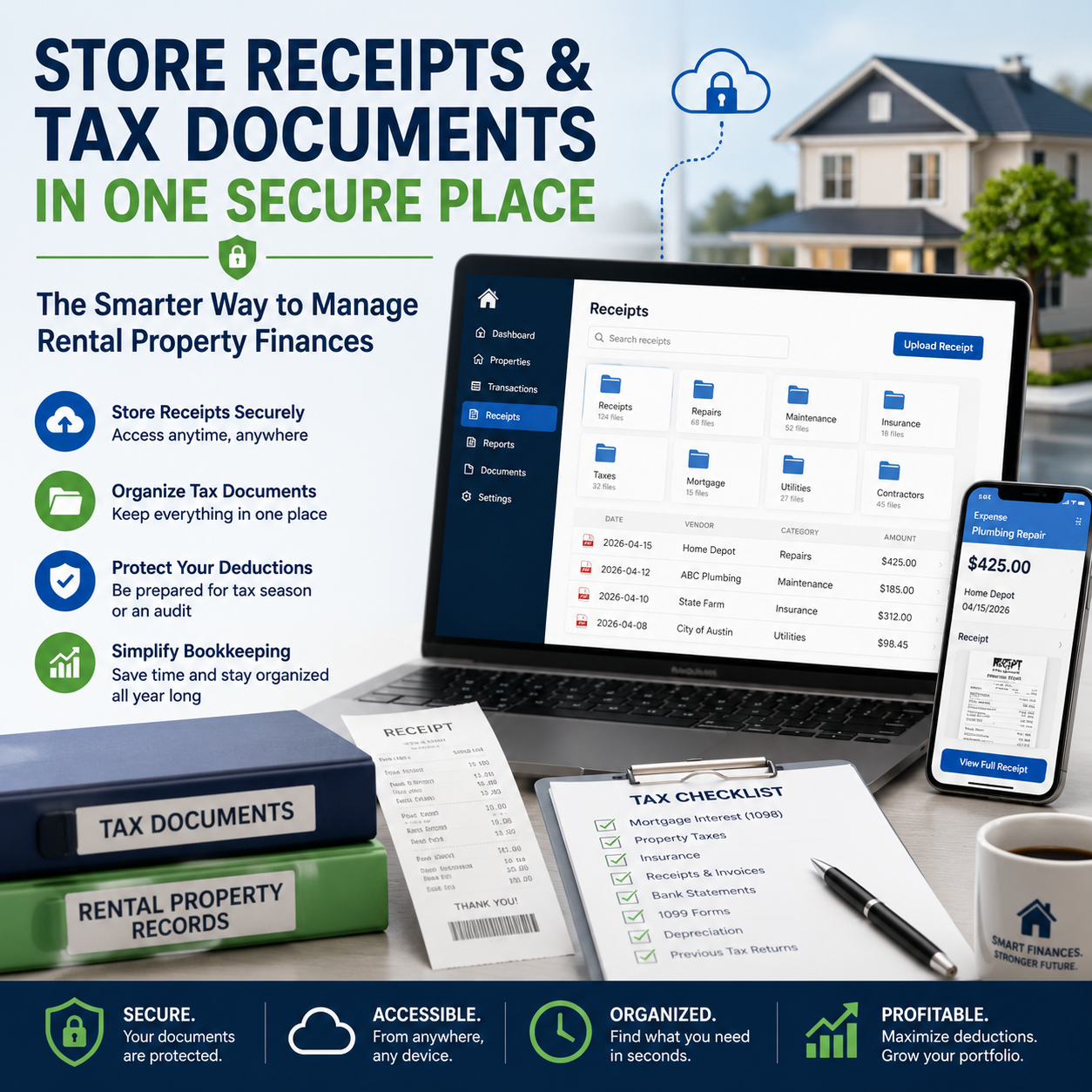
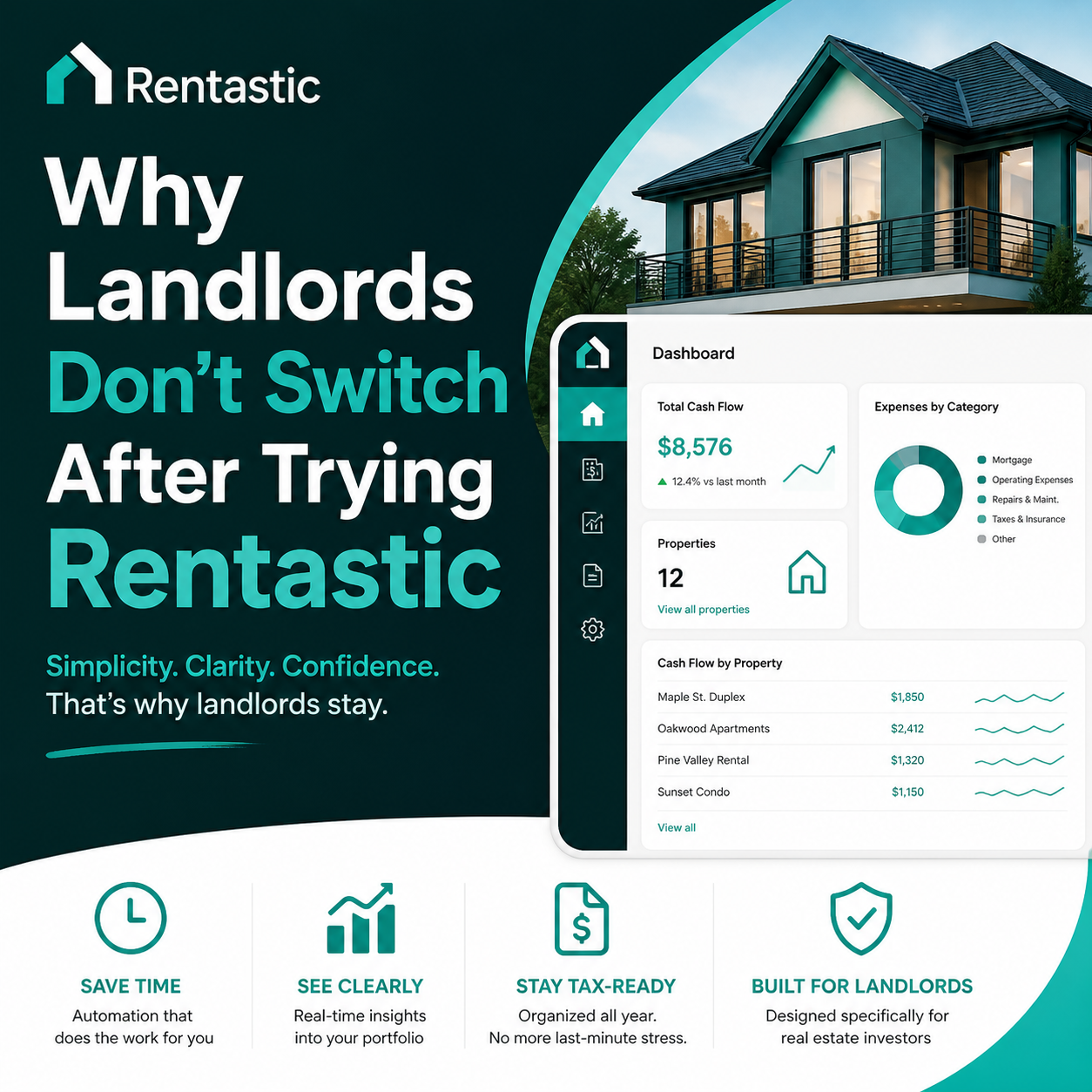
Managing multiple rental properties becomes much easier when your financial information is organized in one place.
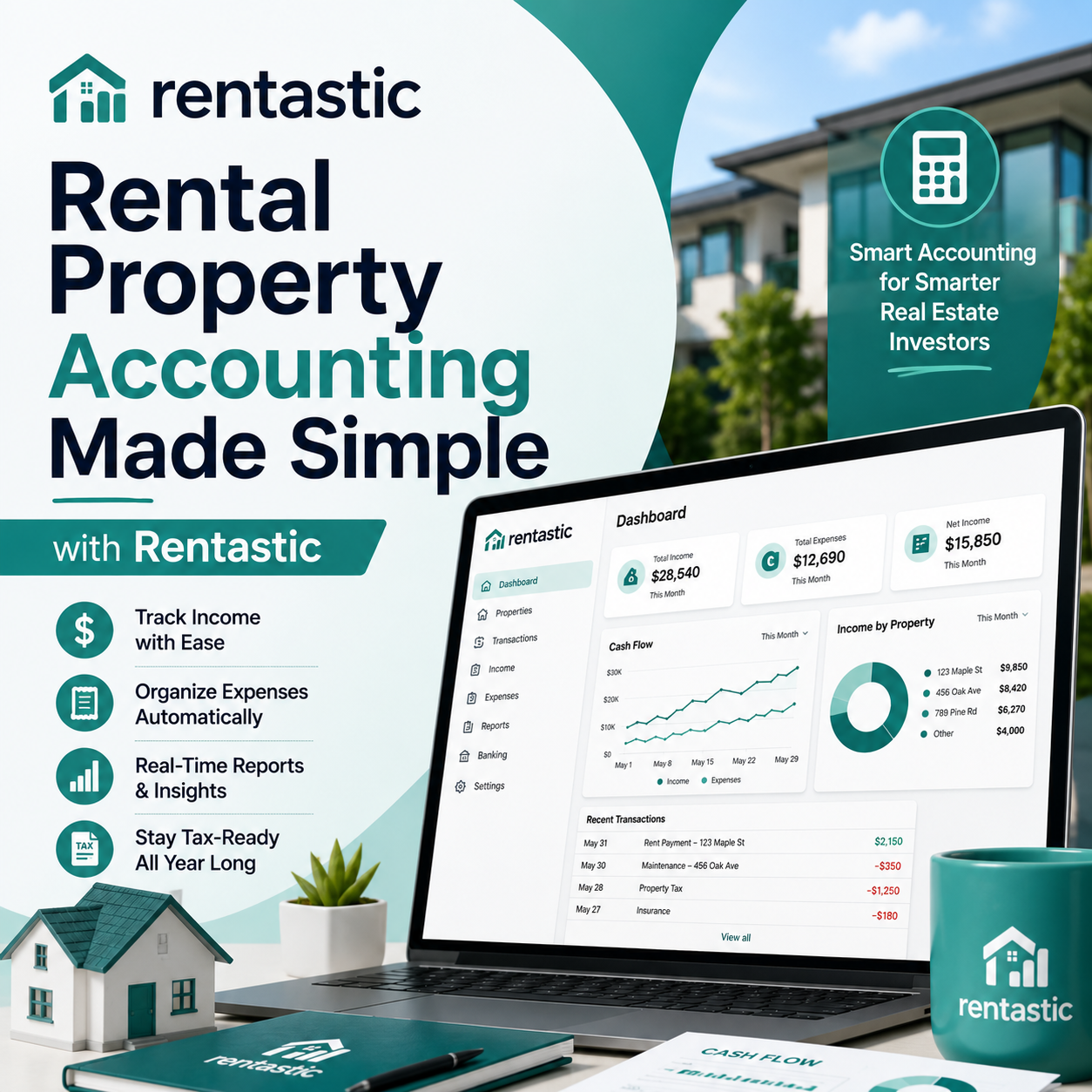
Instead of relying on separate spreadsheets or manually reviewing bank statements, Rentastic helps landlords organize rental income and expenses and monitor financial performance.
With Rentastic, you can:
By keeping your rental finances organized, you can more easily identify which properties contribute to your portfolio's financial performance and where improvements may be needed.
Learn more at www.rentastic.io.
Portfolio cash flow and property cash flow serve different but equally important purposes.
Property cash flow tells you how each rental investment is performing. Portfolio cash flow tells you how your rental business is performing as a whole.
Looking at only one metric can give you an incomplete picture.
A property may struggle financially while your overall portfolio remains profitable. Likewise, several individually profitable properties may still leave you with limited cash after portfolio-wide obligations and future reserves are considered.
The most successful rental property strategies rely on understanding both the details and the bigger picture.
By consistently monitoring cash flow at the property and portfolio levels, you can spot financial problems earlier, make more confident investment decisions, and build a healthier rental business over time.
Ready to take control of your rental property finances?
Start tracking your rental income and expenses with Rentastic and gain better visibility into your rental portfolio.
SUGGESTED SEO DETAILS
SEO Title: Portfolio Cash Flow vs. Property Cash Flow: Key Differences for Landlords
Meta Description: Learn the difference between portfolio cash flow and property cash flow, how to calculate each, and why landlords should track both to improve rental profitability.
Suggested URL Slug: portfolio-cash-flow-vs-property-cash-flow
Primary Keyword: portfolio cash flow vs property cash flow
Secondary Keywords: rental property cash flow, portfolio cash flow, rental portfolio management, property cash flow calculation, rental property profitability
RECENT POSTS


© 2025 Rentastic
Rentastic is registered as a trademark. Terms and conditions, features, support, pricing, and service options subject to change without notice.


































































Comments