

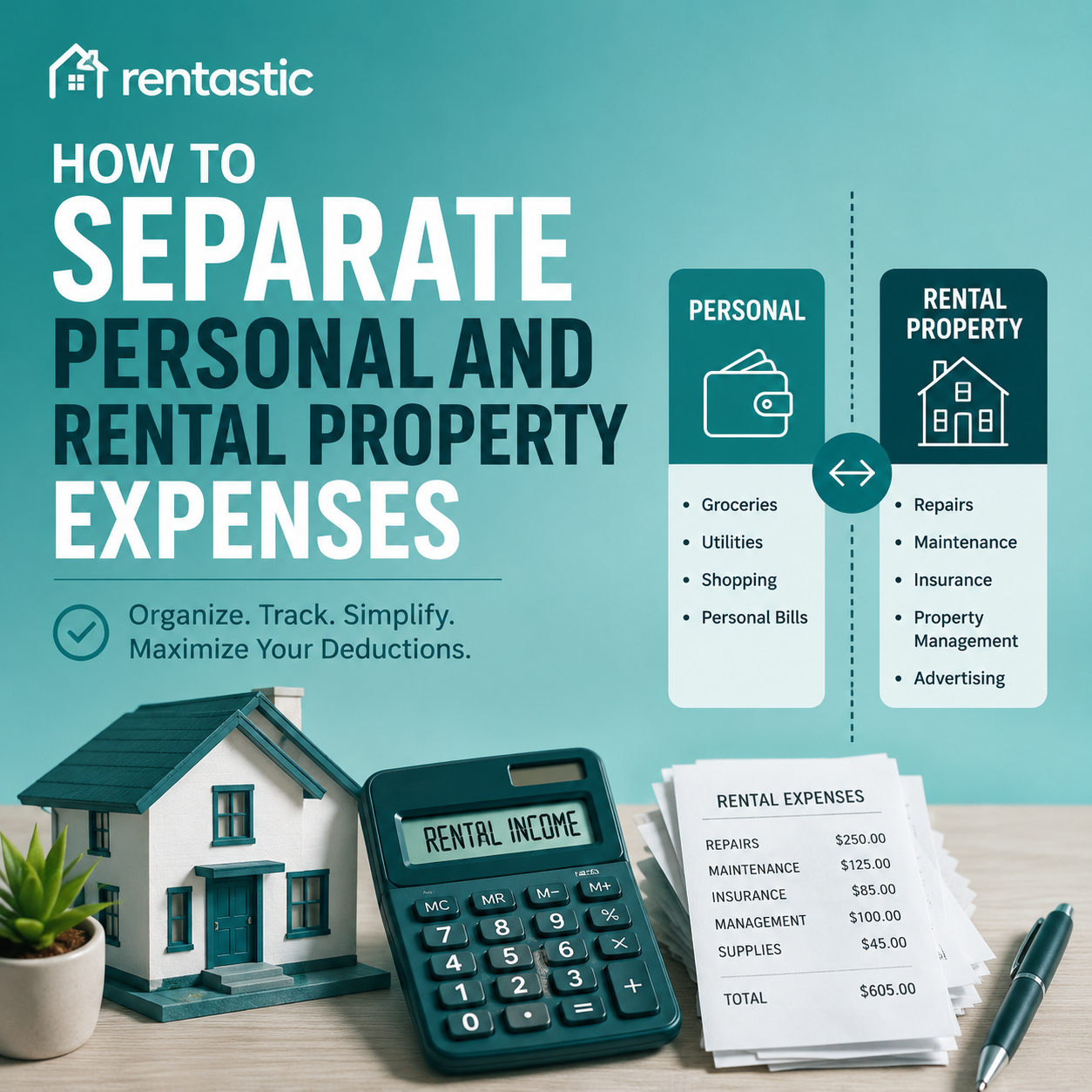
Managing rental property finances becomes much easier when you keep your personal and business expenses separate. But what happens when you accidentally pay for a rental property repair, maintenance service, or utility bill using your personal bank account?
It happens more often than you might think, especially among landlords managing just one or two rental properties.
The good news is that paying a rental property expense from your personal bank account doesn't automatically make it a personal expense. What matters is properly documenting the transaction, recording it in your rental property books, and understanding how the payment should be classified.
In this guide, we'll explain how to handle rental expenses paid with personal funds, how to reimburse yourself correctly, and how to keep your rental property accounting accurate.
Yes. Landlords can generally use personal funds to pay legitimate rental property expenses.
For example, you might use your personal debit card to purchase plumbing supplies, pay a contractor using your personal checking account, or cover an emergency repair before transferring money into your rental property's bank account.
These payments may still qualify as rental property expenses for tax purposes, provided they meet the applicable requirements and are properly documented.
However, the way you record these transactions matters.
If you don't track them correctly, you could end up with:
The goal is to make sure every legitimate rental expense is accounted for without mixing your personal finances into your rental property's financial reports.
Before recording anything, determine whether the payment was made for a legitimate rental property purpose.
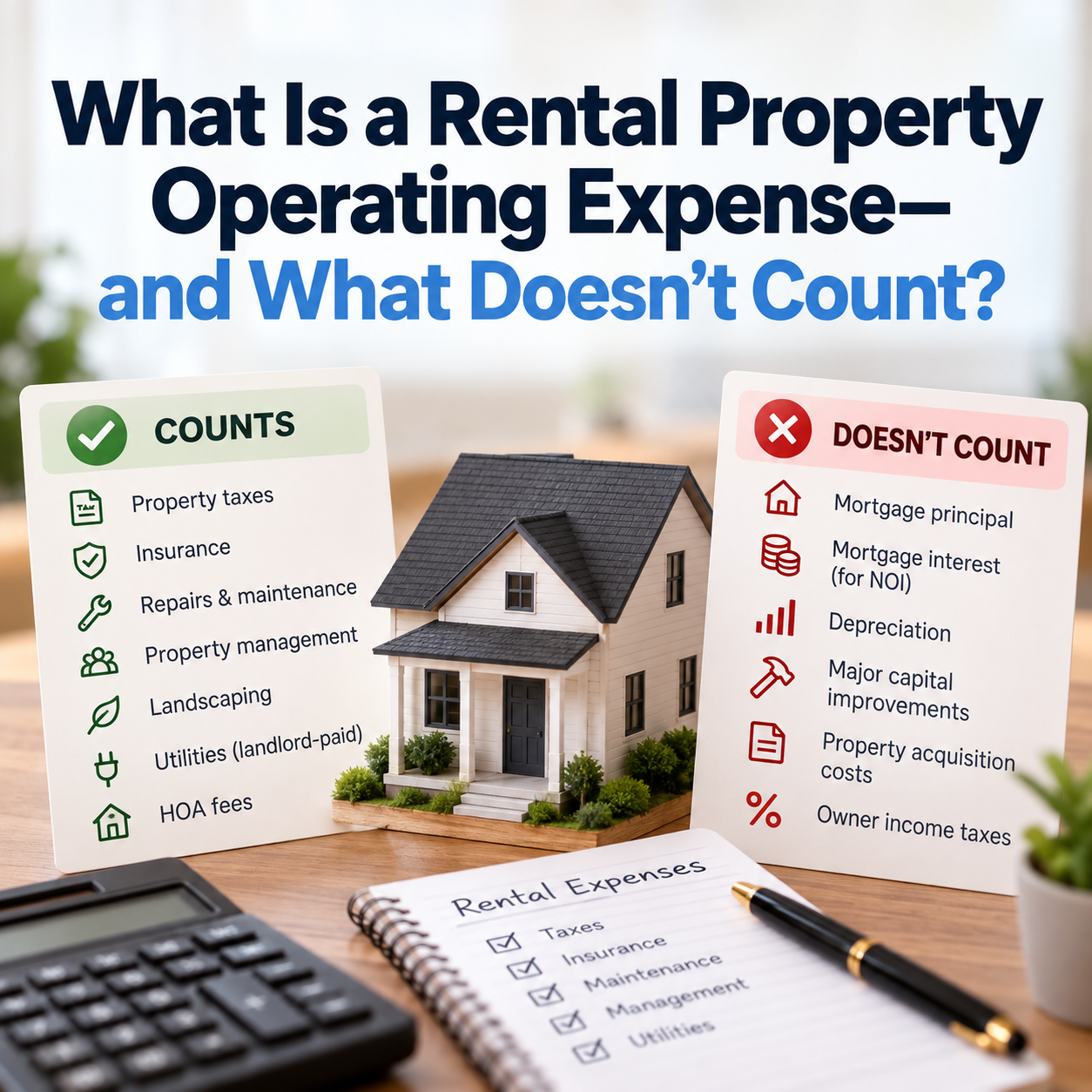
Common examples include:
For example, imagine you spend $250 from your personal checking account to repair a leaking faucet at your rental property.
Even though the money came from your personal account, the repair is still a rental-related expense.
However, if you purchase supplies for both your personal residence and rental property in the same transaction, you'll need to separate the rental portion from the personal portion.
Tip: Only record the amount attributable to the rental property in your rental expense records.
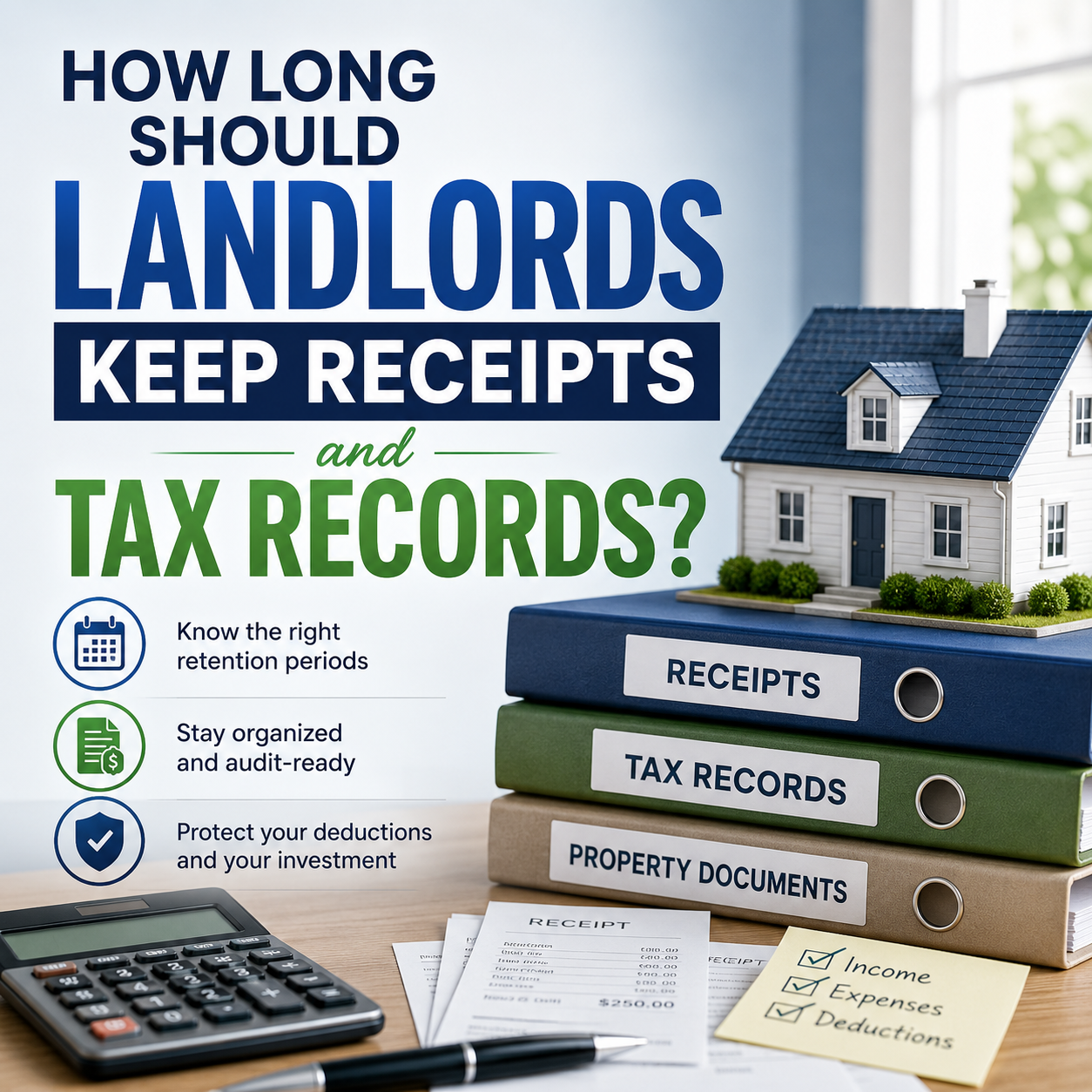
Documentation is essential whenever you pay rental expenses using personal funds.
You should keep records showing what was purchased, how much was paid, when the payment occurred, and which rental property benefited.
Useful documentation includes receipts, invoices, contractor bills, payment confirmations, and bank or credit card statements.
For example, if you paid $450 for an HVAC repair using your personal credit card, save the contractor's invoice and the payment confirmation.
When recording the transaction, include a description such as:
HVAC repair – Paid using personal credit card – Property A.
This makes the transaction easier to identify during bookkeeping reviews or tax preparation.
It also provides supporting documentation if you ever need to explain the expense to your accountant or tax professional.
One of the biggest mistakes landlords make is ignoring rental expenses simply because they weren't paid from a dedicated rental bank account.
Doing so can make your property appear more profitable than it actually is.
Let's say your rental property generated $2,000 in rent during the month, and you paid $300 for plumbing repairs from your personal bank account.
If you don't record the repair, your books will show $2,000 in rental income with no corresponding repair expense.
But once the $300 repair is recorded, your property's income after that expense is $1,700.
The important distinction is that the expense affects your property's profitability even though the payment didn't come from your rental bank account.
The appropriate accounting treatment depends on how the rental property is owned and how its books are maintained.
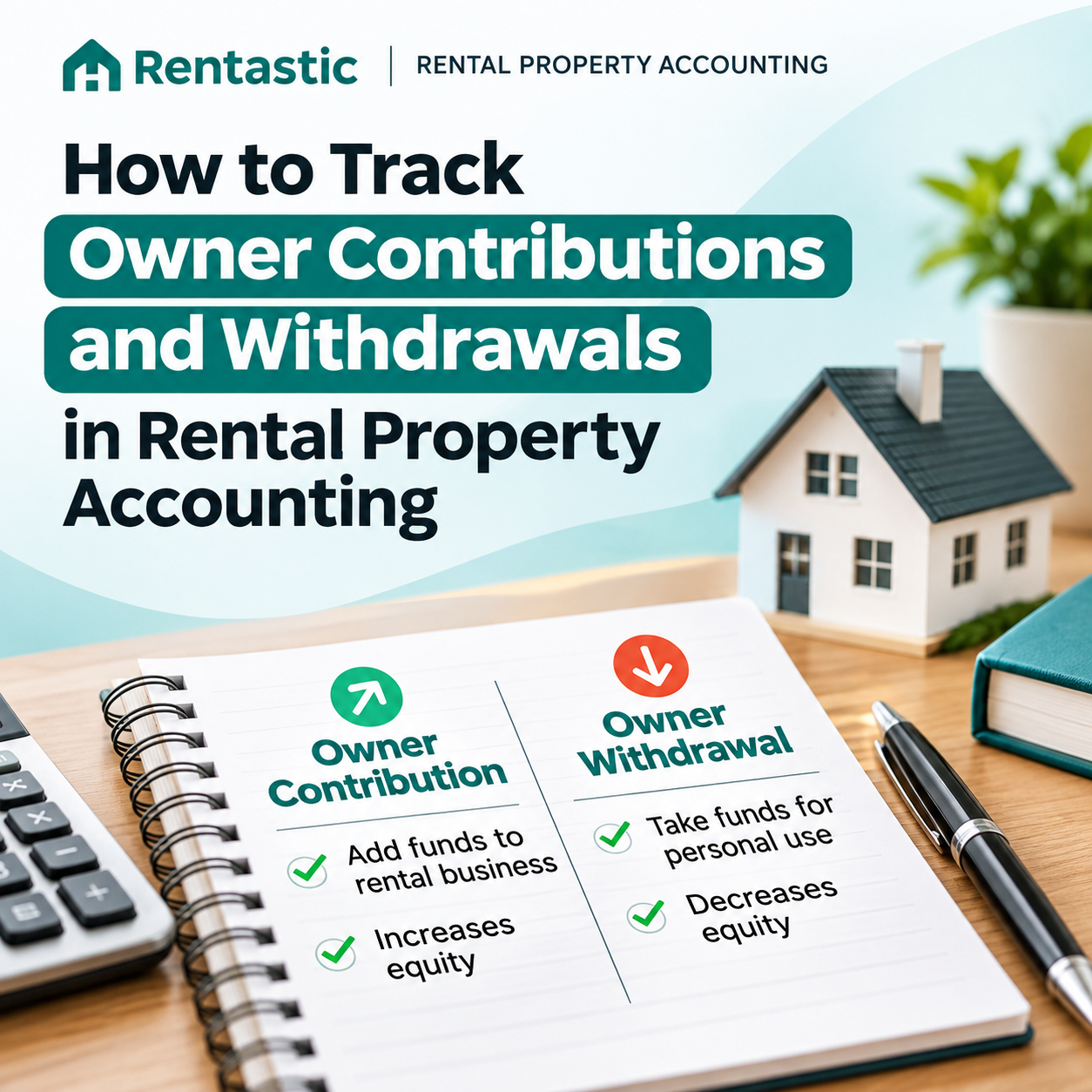
For an individually owned rental, the payment may be recorded as a rental expense funded by an owner's contribution.
For a rental held in an LLC or another business entity, the payment may need to be recorded as an owner contribution or as an amount owed to the owner.
The expense category itself should reflect the actual purchase, such as repairs, maintenance, utilities, or professional fees.
After paying a rental property expense using personal funds, you might want to transfer money from your rental property bank account back to your personal account.
This is where accurate bookkeeping becomes especially important.
Consider this example:
If you don't reimburse yourself, the original expense still needs to be recorded appropriately.
For LLCs and other entities, the classification of contributions, reimbursements, and owner loans can have additional accounting and legal implications. Your accountant can help determine the correct treatment.
Double-counting is one of the most common bookkeeping mistakes when personal and rental property funds are mixed.
Here's how it happens:
A landlord pays $400 for property maintenance using a personal credit card.
They manually record the $400 maintenance expense in their rental property books.
A few days later, they transfer $400 from their rental checking account to their personal account as reimbursement.
If they categorize that transfer as another maintenance expense, their books will incorrectly show $800 in expenses.
In reality, only $400 was spent on maintenance.
To prevent this mistake, always distinguish between the original expense and the movement of money used to reimburse yourself.
The original payment represents the actual rental expense. The reimbursement represents the return of personal funds.
An expense paid from your personal bank account can affect your rental property's profitability without immediately reducing the balance in its dedicated bank account.
This distinction is important.
Imagine your rental property generates $2,500 in monthly rental income.
You pay $600 in property expenses from your rental checking account and another $400 in repairs from your personal checking account.
If you only review the transactions from your rental bank account, you might assume you have $1,900 remaining.
But after including the personally paid repair, your income after the listed expenses is actually $1,500.
That's why landlords should track expenses based on which property incurred them, not just which bank account paid them.
While occasional personal payments are manageable, regularly mixing personal and rental expenses creates unnecessary bookkeeping complications.
A dedicated rental property bank account can help you maintain cleaner financial records and make it easier to understand how your investment is performing.
Consider adopting these habits:
For properties owned through an LLC, keeping business and personal finances separate is especially important. Consistent separation helps maintain clear entity records and supports the legal distinction between the owner and the business, although separate accounts alone do not guarantee liability protection.
Tracking rental property expenses becomes more complicated when payments come from multiple bank accounts, credit cards, or personal funds.
That's where Rentastic can help simplify your bookkeeping.
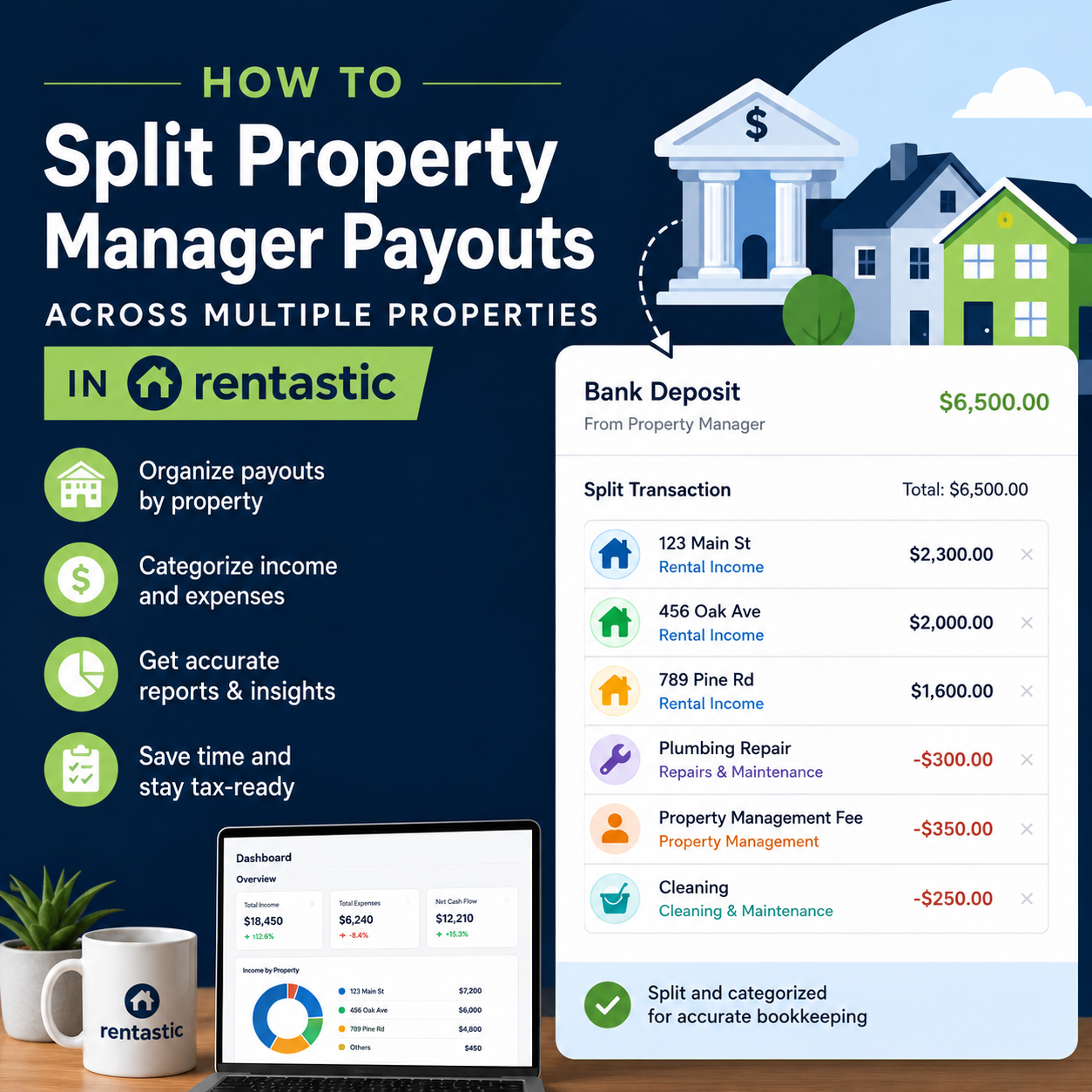
With Rentastic, landlords can manually add transactions, assign expenses to specific rental properties, organize transactions into categories, and review property-level financial reports.
For example, if you purchase $200 worth of maintenance supplies using your personal credit card, you can manually enter the expense and assign it to the appropriate rental property.
This helps ensure the expense is reflected in your property's financial records even if the payment doesn't appear in your connected rental bank account.
You can also add transaction details to help identify personally paid expenses during future reviews.
When recording reimbursements, make sure they are classified appropriately so the original expense isn't counted twice. Rentastic's transaction tracking can help organize the records, but it does not automatically determine the correct owner-equity or liability treatment for every ownership structure.
Helpful resource: How to Manually Add Transactions in Rentastic
In many cases, yes.
For U.S. rental properties, an otherwise deductible rental expense generally doesn't lose its eligibility simply because it was paid from a personal bank account.
What matters is whether the expense qualifies under IRS rules and whether you have adequate documentation.
For example, ordinary repairs and maintenance may generally be deductible as rental expenses, while certain improvements must be capitalized and recovered through depreciation rather than deducted immediately.
Ownership structure, personal use, and other circumstances can also affect the treatment.
The IRS provides additional guidance in Publication 527: Residential Rental Property.
Consult a qualified tax professional if you're unsure how to classify a payment or reimbursement.
Paying a rental property expense from your personal bank account isn't necessarily a problem. The real issue arises when those payments aren't properly tracked.
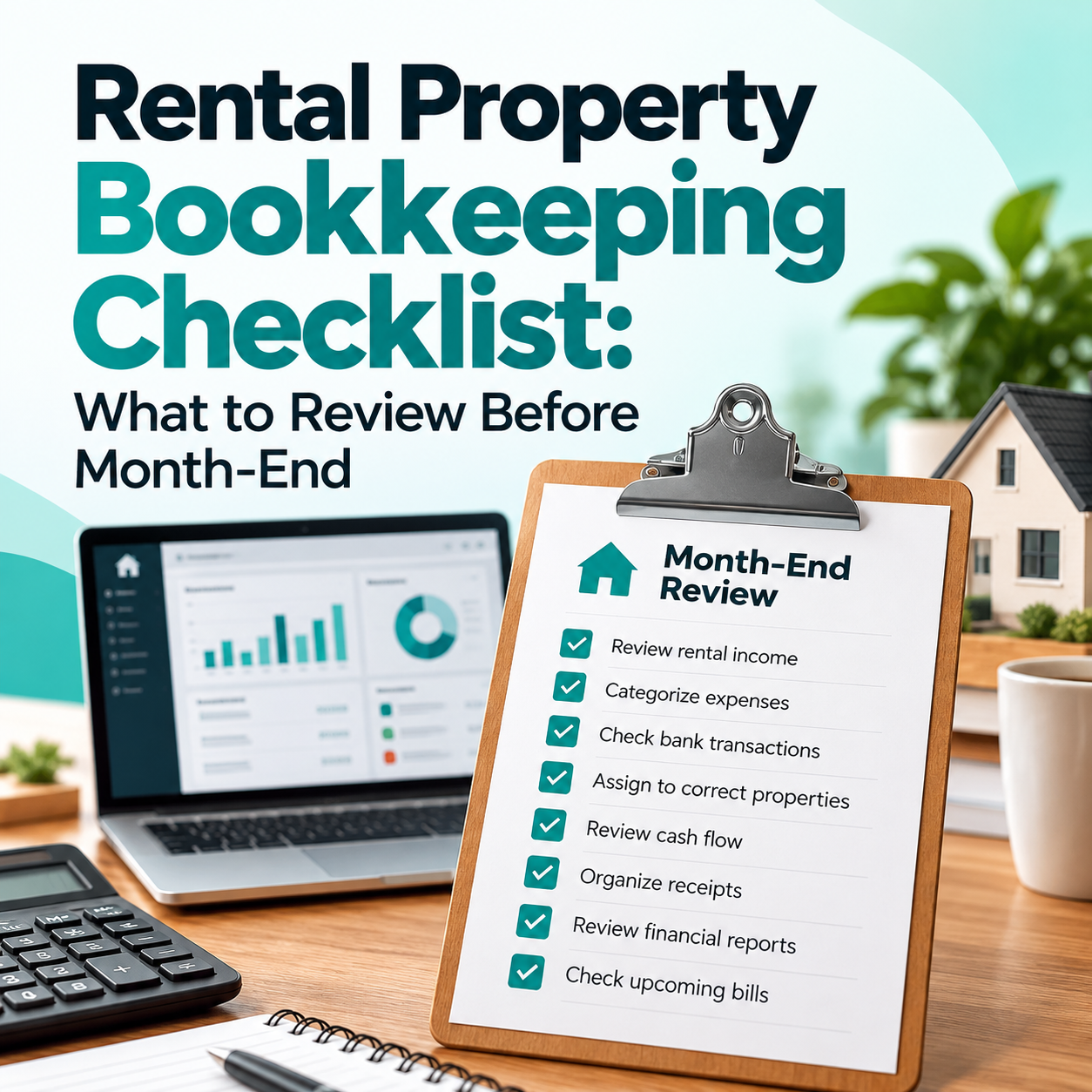
By documenting each expense, assigning it to the correct property, recording reimbursements appropriately, and reviewing your books regularly, you can maintain a more accurate picture of your rental property's financial performance.
Remember, your rental property's profitability should reflect all legitimate property expenses, regardless of which account was used to pay them.
If you're looking for a simpler way to organize rental property income and expenses, explore Rentastic and start keeping your rental property finances organized in one place.
RECENT POSTS


© 2025 Rentastic
Rentastic is registered as a trademark. Terms and conditions, features, support, pricing, and service options subject to change without notice.




































































Comments