

Managing rental properties isn't just about collecting rent and paying bills. It's about understanding how much money your properties actually make.
Unfortunately, many landlords unknowingly make bookkeeping mistakes that distort their financial picture. A rental property might appear profitable when it's actually losing money, or look like a poor investment when it's performing better than expected.
The problem isn't always the property itself. Sometimes, it's how the financial information is recorded.
In this guide, we'll explore the most common rental property bookkeeping mistakes, how they affect your profits, and what you can do to avoid them.
One of the most common bookkeeping mistakes landlords make is combining personal and rental-related transactions.
This often happens when property owners use the same bank account or credit card for personal purchases and rental property expenses.
For example, imagine you use your personal credit card to purchase $500 worth of materials for a rental property renovation. If that expense isn't properly recorded, your rental property's financial reports may show $500 more profit than your actual spending would suggest.
The opposite can also happen. If personal expenses are accidentally categorized as rental expenses, your property may appear less profitable than it really is.
How to avoid this mistake:
Keeping rental finances separate makes bookkeeping easier and provides a clearer understanding of your investment performance.
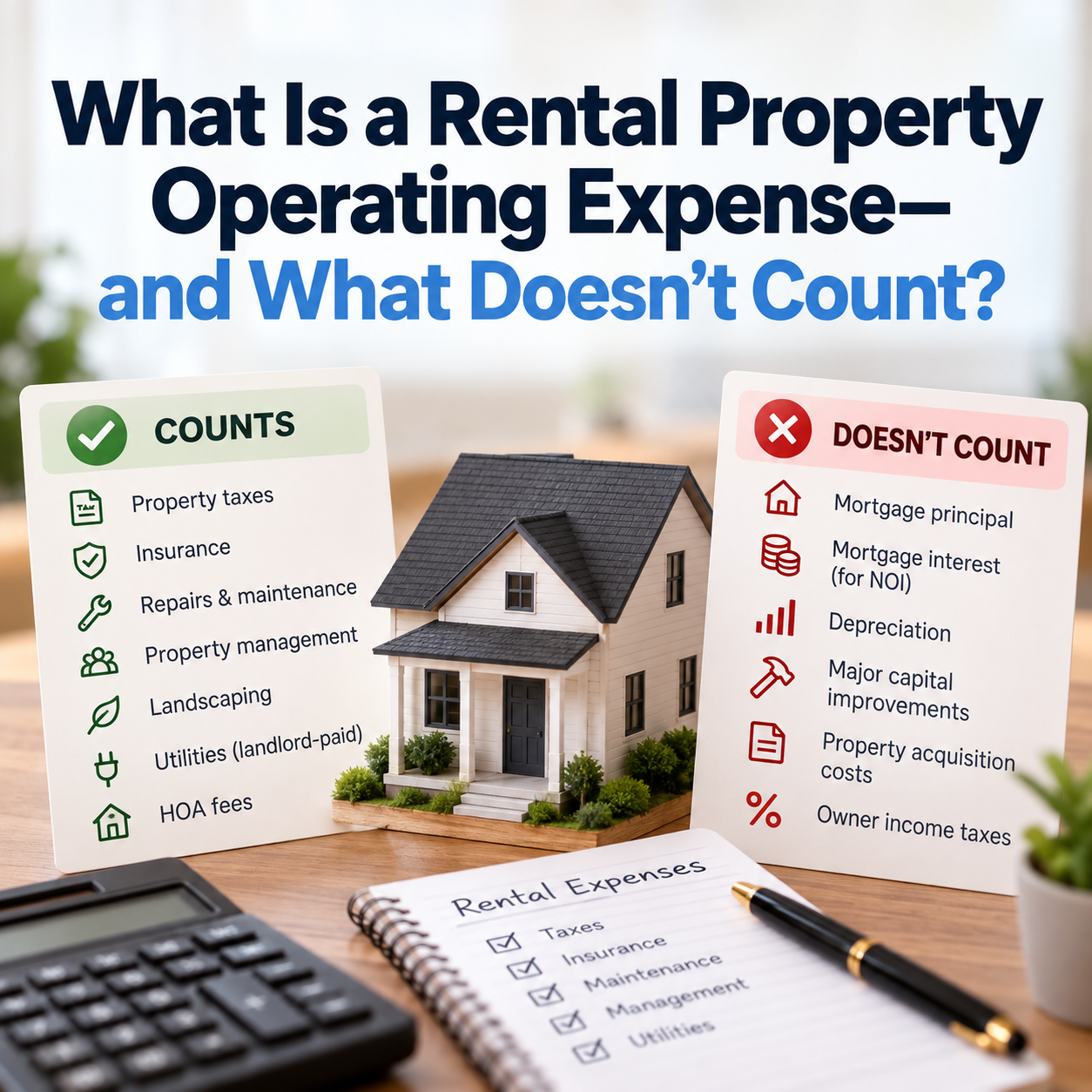
Mortgage payments are often among the largest monthly costs of owning a rental property. However, recording the entire mortgage payment as an operating expense can distort your financial reports.
A mortgage payment generally includes two components:
For tax and accounting purposes, these components are treated differently. Mortgage interest is generally deductible for qualifying rental properties, while principal repayment reduces your loan liability rather than creating an expense.
If you record the entire $1,800 as an expense on your income statement, you'll understate accounting profit by $650.
However, the full $1,800 still affects your actual cash flow.
The solution: Track mortgage principal, interest, and cash flow separately. This helps you distinguish between operating profitability and the amount of cash remaining after debt payments.
Small expenses are easy to overlook, especially when you're managing multiple rental properties.
Things like replacement locks, cleaning supplies, minor plumbing repairs, parking fees, and maintenance materials may not seem significant individually.
But over time, these expenses add up.
Imagine overlooking just $75 in expenses each month.
That's $900 in unrecorded expenses annually.
If you own five rental properties with similar unrecorded costs, you could be overstating your portfolio's annual profit by $4,500.
How to avoid this mistake:
Record expenses as soon as they occur, save receipts digitally, and reconcile transactions against your bank and credit card statements.
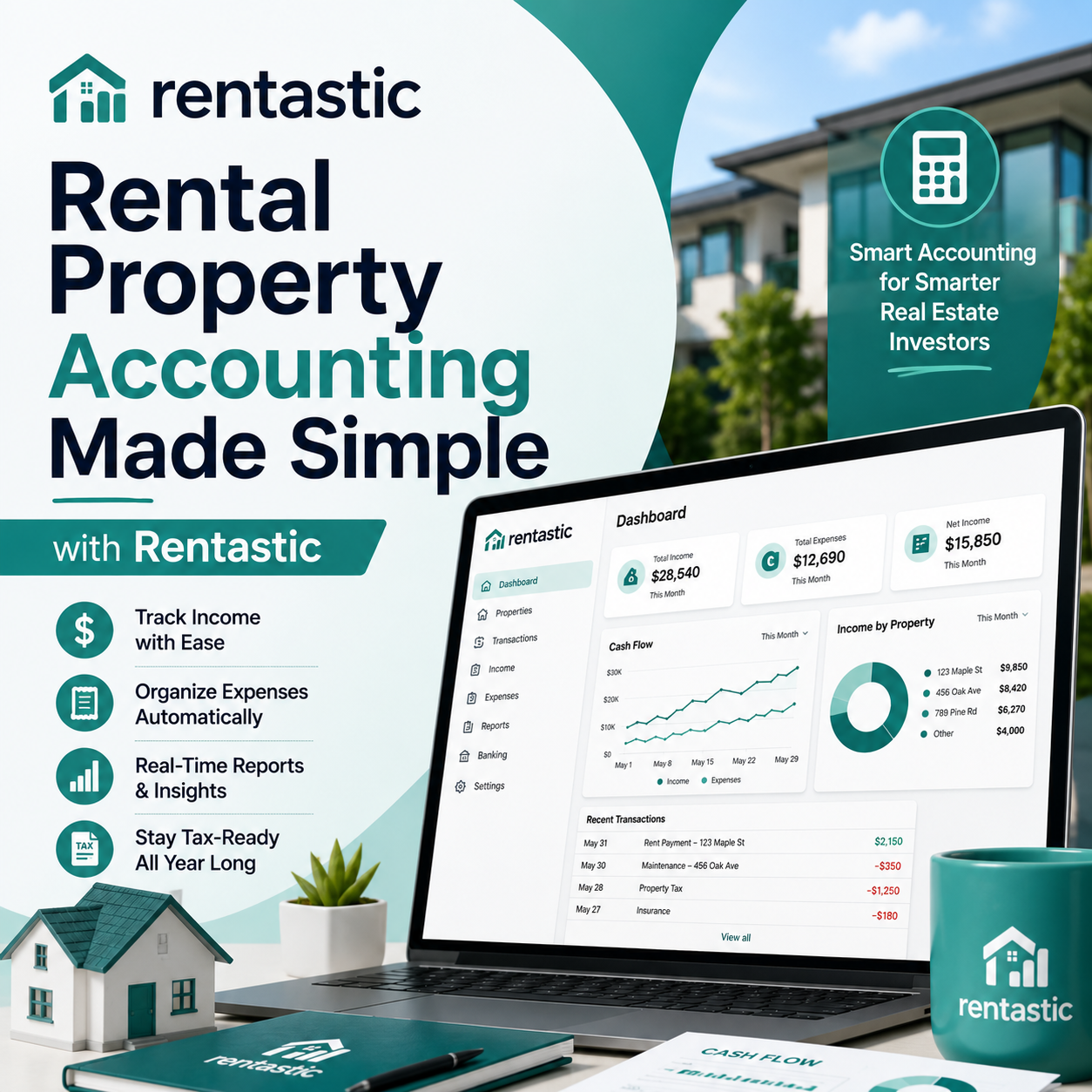
Using rental property accounting software like Rentastic can also help you organize transactions and monitor expenses without relying entirely on spreadsheets.
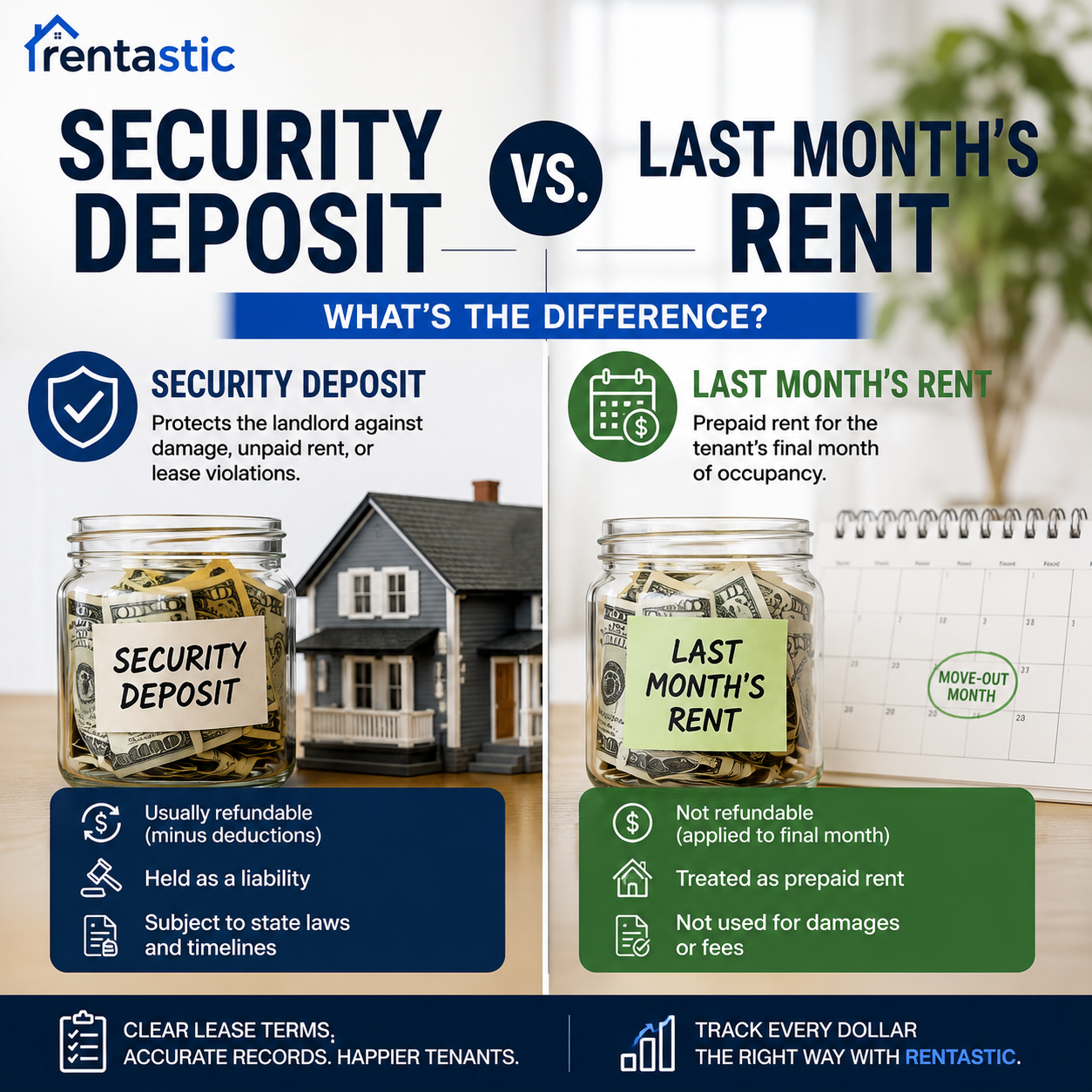
Security deposits are another common source of bookkeeping confusion.
When a tenant pays a refundable security deposit, that money generally isn't rental income. Instead, it represents a liability because you may need to return it when the tenant moves out.
For example, suppose a tenant pays:
You receive $3,000 in your bank account, but only $1,500 is rental income at that point.
If you mistakenly record the entire amount as income, your rental revenue will appear significantly higher than it actually is.
Security deposits generally become income for federal tax purposes when they are applied to rent or retained under circumstances that make them taxable, such as certain deductions for tenant damages.
The solution: Track refundable security deposits separately from rental income and record any retained amounts according to their actual purpose and applicable tax rules.
Not every expense related to maintaining or upgrading a rental property should be treated the same way.
A routine repair generally maintains the property's existing condition, while a capital improvement may add value, extend its useful life, or adapt it to a new use.
For example:
Common repairs:
Potential capital improvements:
Why does this matter?
Repairs are often deductible as current expenses, while capital improvements generally must be capitalized and recovered through depreciation, subject to applicable tax rules and exceptions.
Recording a major improvement as a routine repair could make your operating profit appear much lower than it actually is.
The solution: Separate routine maintenance from capital expenditures and consult a tax professional when an expense's classification is unclear.
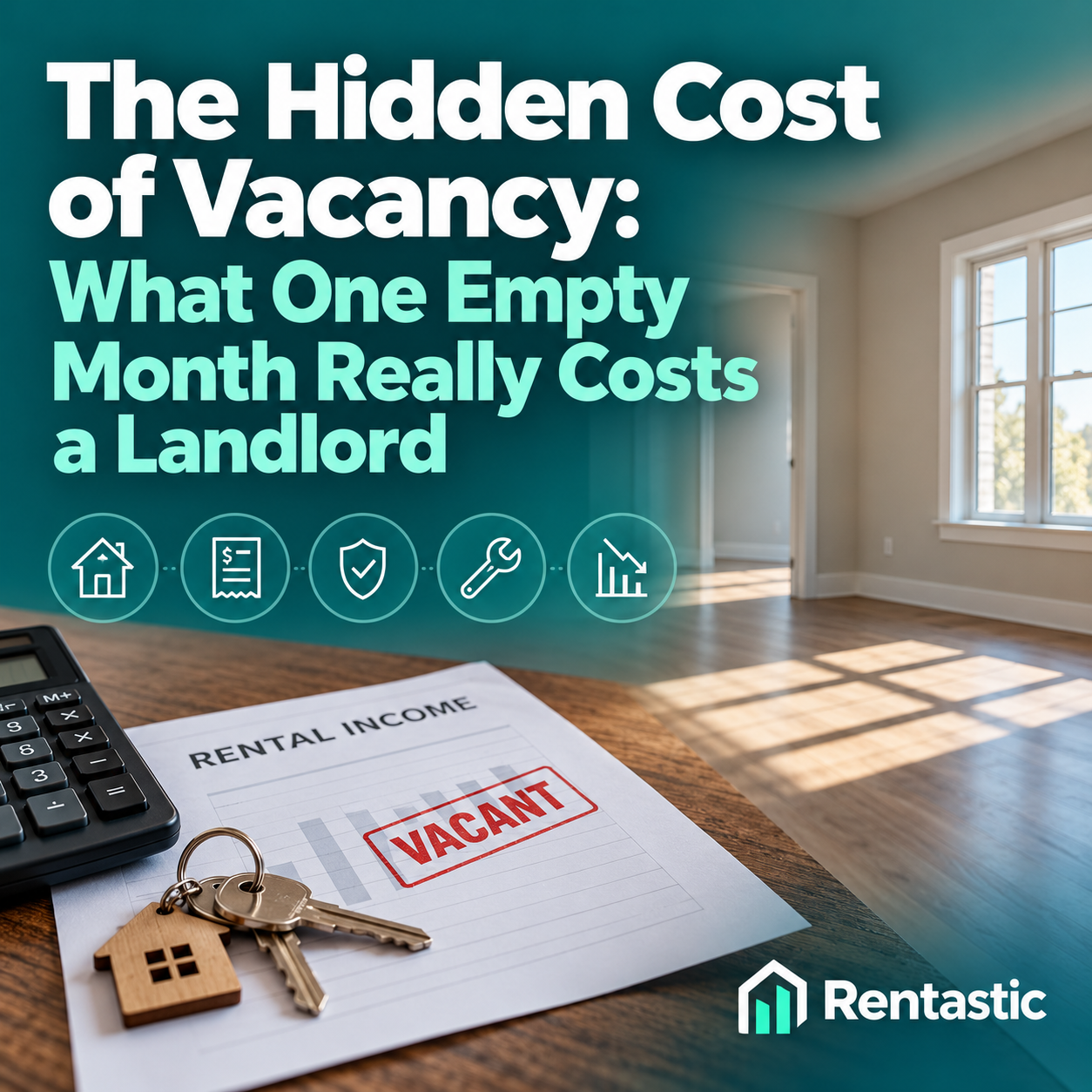
A rental property's advertised rent isn't necessarily the amount of income it generates.
For example, a property renting for $2,000 per month has a potential annual rental income of $24,000.
But if the property sits vacant for two months, actual rent collected falls to $20,000, assuming the other months are fully paid.
That's a $4,000 difference.
Some landlords make the mistake of evaluating profitability using expected rental income rather than actual collections.
Unpaid rent can create additional confusion, particularly when landlords don't distinguish between rent billed, rent received, and outstanding tenant balances.
The solution: Track actual rental collections, vacancy periods, and unpaid balances separately. Most individual landlords use cash-basis tax reporting, under which unpaid rent generally isn't included as income until received.
This provides a more realistic picture of rental performance.
If you own multiple rental properties, recording expenses under the wrong property can significantly distort your financial reports.
Imagine you own two properties:
Now suppose $2,000 in repairs belonging to Property B are accidentally assigned to Property A.
Your records would incorrectly show Property A earning $6,000 and Property B earning $5,000.
Your portfolio's combined profit remains unchanged, but the individual property reports become misleading.
This can influence important decisions, including which property to renovate, refinance, or sell.
The solution: Assign every income and expense transaction to the correct rental property. Review property-level reports regularly to identify unusual changes or inconsistencies.
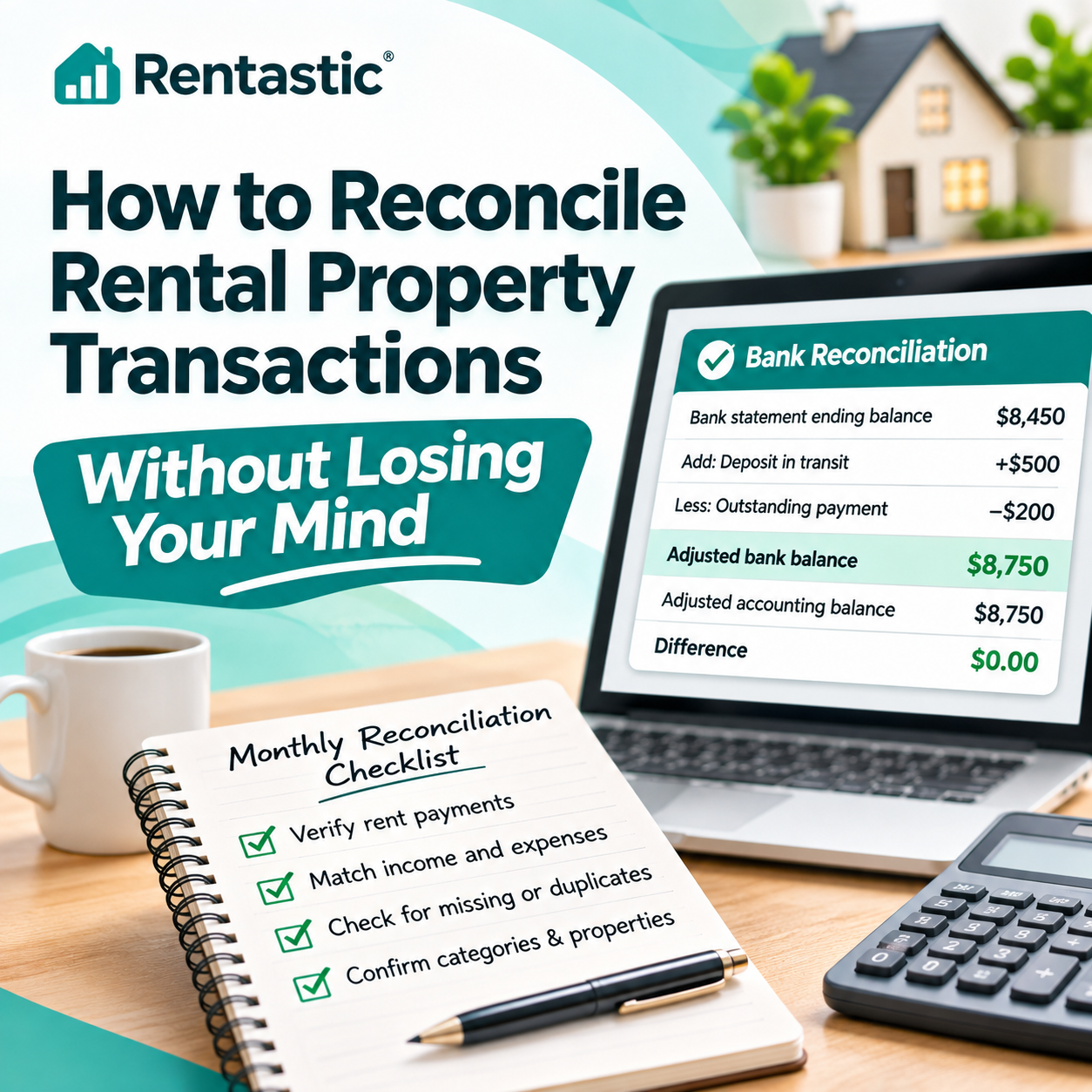
Bank reconciliation is the process of comparing your bookkeeping records with actual bank and credit card activity.
Without regular reconciliation, missing transactions, duplicate entries, and incorrect amounts can go unnoticed.
For example, a landlord might manually enter a $1,200 insurance payment and later import the same transaction from a connected bank account.
If both entries remain in the records, expenses are overstated by $1,200.
The property appears less profitable even though the actual payment occurred only once.
The solution: Reconcile your financial records monthly. Check for duplicate transactions, missing payments, incorrect categories, and unmatched bank activity.
A consistent reconciliation process helps ensure your reports reflect what actually happened.
Landlords sometimes focus heavily on mortgage payments, repairs, and property taxes while overlooking other recurring ownership costs.
These can include property management fees, leasing commissions, insurance premiums, HOA dues, software subscriptions, and professional service fees.
For example, a property generating $2,500 in monthly rent might seem highly profitable until you account for a property management fee of 10%.
That's $250 per month, or $3,000 annually.
Ignoring this cost can substantially overstate your operating profit.
The solution: Maintain a complete list of recurring and occasional expenses. Make sure each cost is recorded in the correct period and assigned to the appropriate property.
Perhaps the biggest mistake landlords make is assuming that the money left in their bank account equals rental property profit.
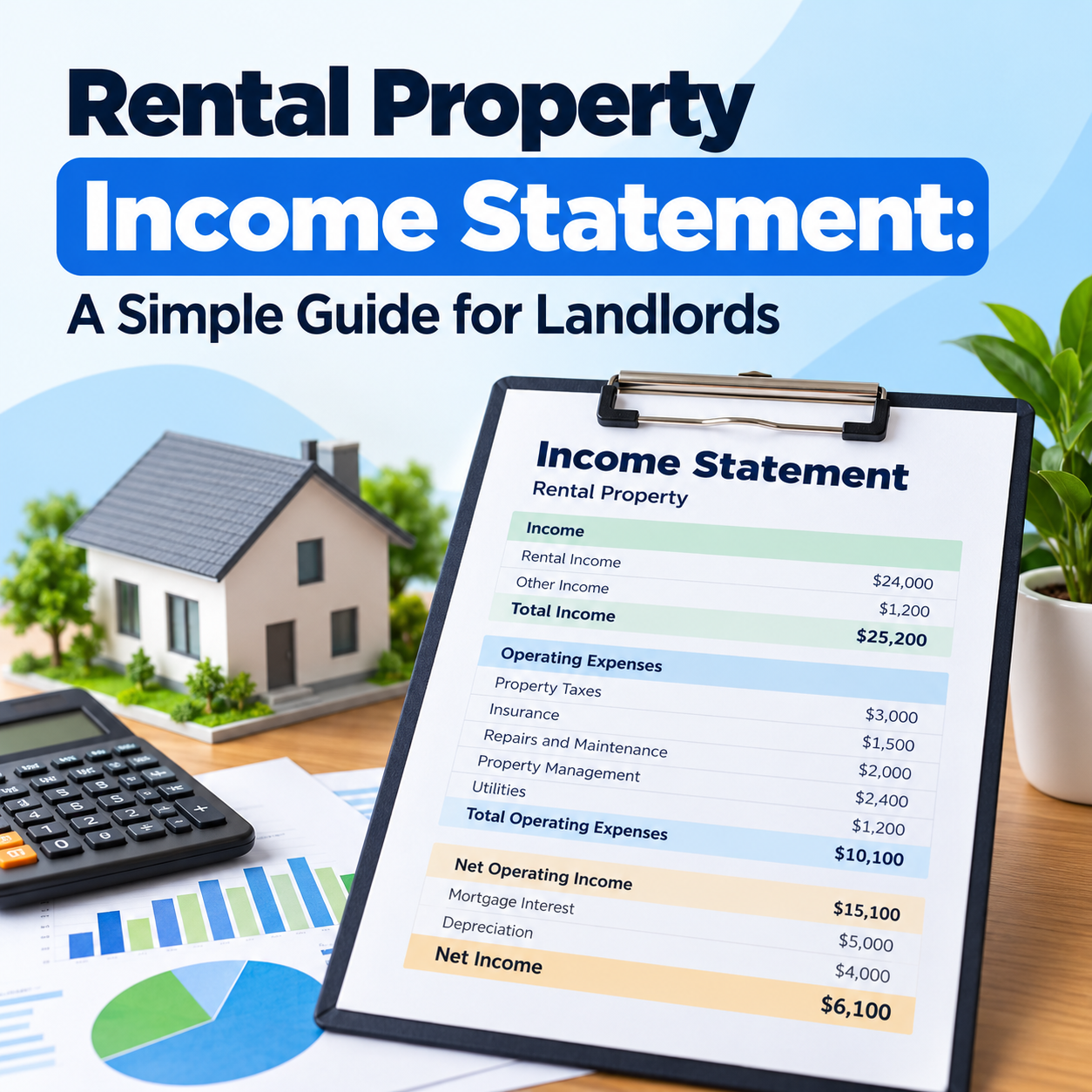
But cash flow and accounting profit measure different things.
Accounting profit considers recognized income and expenses, including noncash expenses such as depreciation.
Cash flow measures money actually received and paid during a period.
For example, mortgage principal repayments reduce available cash but don't count as expenses on an income statement. Meanwhile, depreciation can reduce accounting profit without requiring a current cash payment.
This means a property can show positive accounting profit while experiencing negative cash flow, or vice versa.
The solution: Review both cash flow statements and income statements rather than relying on one number to measure financial performance.
Understanding the difference helps landlords make better decisions about financing, spending, and long-term investments.
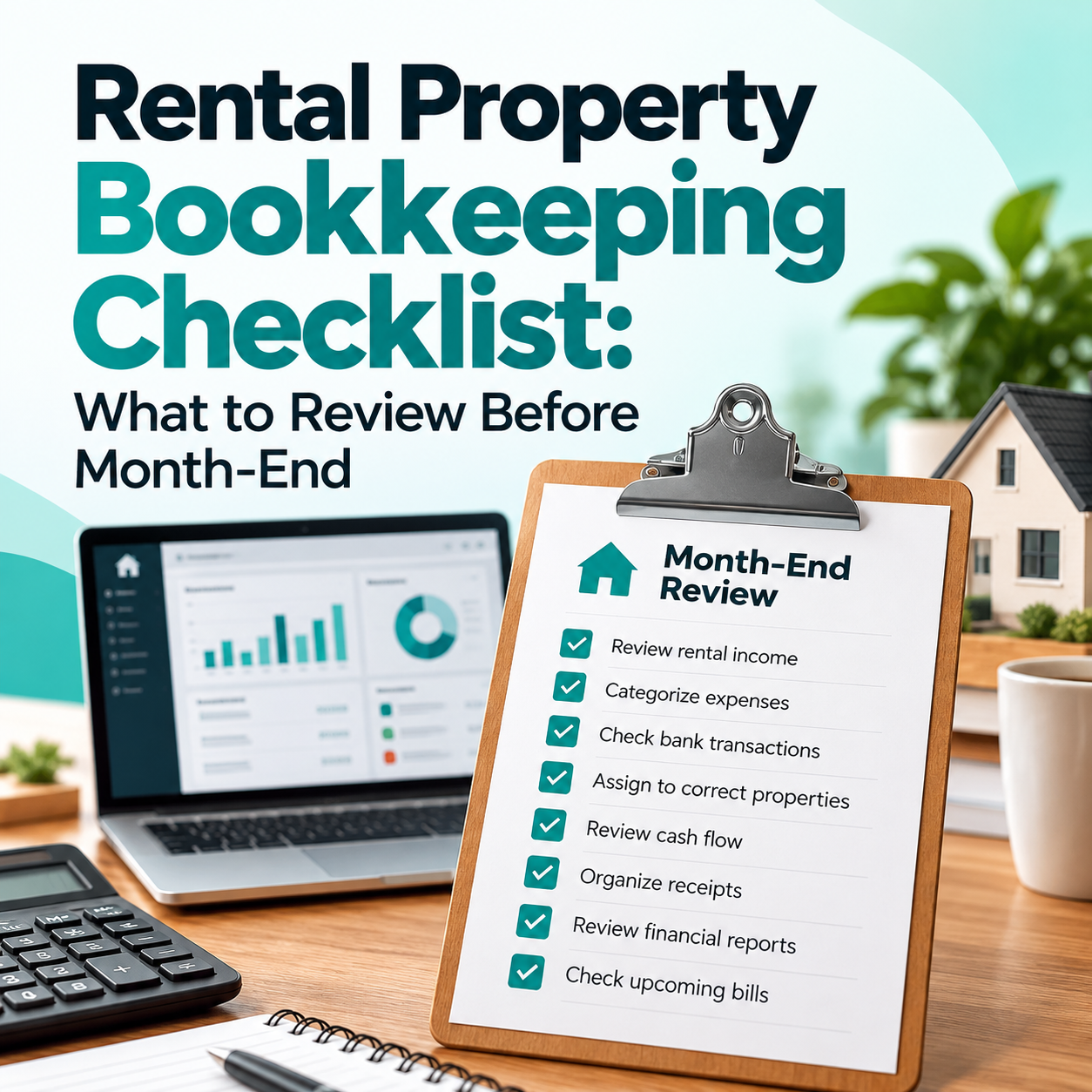
Correcting bookkeeping mistakes doesn't require becoming an accounting expert. What matters most is building a consistent process.
Start with these five habits:
Following these steps can help prevent small bookkeeping errors from turning into expensive investment decisions.
Managing rental property finances becomes increasingly complicated as your portfolio grows.
Between tracking rent payments, organizing expenses, reviewing bank transactions, and evaluating individual properties, it's easy for important details to slip through the cracks.
That's where Rentastic can help.
Rentastic is designed specifically for real estate investors who want a simpler way to manage rental property finances.
With Rentastic, landlords can:
Instead of relying on scattered spreadsheets and manual calculations, landlords can keep their rental financial information organized in one place.
While accounting software doesn't eliminate the need to review transactions, it can make identifying and correcting bookkeeping mistakes much easier.
Rental property profitability isn't just about how much rent you collect. It's about how accurately you track the money coming in and going out.
Mistakes like misclassifying mortgage payments, overlooking expenses, recording security deposits as income, or assigning transactions to the wrong property can create a misleading picture of your investments.
And when your financial reports are inaccurate, your decisions may be too.
The good news is that most bookkeeping mistakes are preventable with consistent tracking, regular reconciliation, and the right financial tools.
The goal isn't just to keep clean books. It's to understand what your rental properties are truly earning.
Ready to simplify your rental property bookkeeping?
Try Rentastic and take control of your rental property finances.
RECENT POSTS


© 2025 Rentastic
Rentastic is registered as a trademark. Terms and conditions, features, support, pricing, and service options subject to change without notice.














































































Comments